Destin and Aruba both make a strong case. Aruba has some of the most reliably beautiful beaches in the Caribbean, trade-wind weather that rarely disappoints, and a well-developed tourism infrastructure. Destin has some of the clearest, most genuinely stunning Gulf water in the continental US, a fraction of the total trip cost, no passport required, and the kind of private vacation rental options — private pools, full kitchens, backyard grills — that resort-only destinations simply can't match.
This guide doesn't declare a winner. Both are legitimately excellent beach vacations. It lays out the real tradeoffs — cost, weather, travel logistics, beach quality, and activities — so you can make an honest call for your specific trip.

The Honest Overview: Two Very Different Trips
The core difference matters more than any individual comparison. Aruba is a self-contained island resort destination. You fly to Oranjestad, stay in or near a resort strip on Palm Beach or Eagle Beach, do resort-adjacent activities, eat at hotel restaurants or nearby establishments, and return. The experience is designed to be self-contained and low-friction — everything is walkable from your hotel, vendors are everywhere, and you rarely need to rent a car or navigate unfamiliar roads.
Destin is a coastal town you actually navigate. You drive or fly in, rent a house or condo, buy groceries at Publix, make your own breakfast, go to different beaches across the week, try five different restaurants, rent a pontoon, and build the trip yourself. There's more choice and more flexibility. For people who find resort enclaves limiting, Destin's autonomy is a major advantage. For people who want an all-inclusive-adjacent experience, Destin asks more of you.
Cost and access gap: For most American visitors, a Destin trip costs 40–60% less than Aruba when you account for flights, lodging, food, and activities. And for much of the Southeast and Midwest, Destin is reachable by car — no passport, no international flight, no airline weight restrictions on the beach gear you want to bring.
Aruba wins on one key dimension: its trade winds keep it reliably comfortable year-round (average 82°F, rarely over 90°F), and it sits well outside the main hurricane belt. If you need guaranteed good weather for any month of the year, Aruba is hard to beat. Destin has gorgeous shoulder seasons — May, September, October — but can feel genuinely hot and crowded in peak July and has a slower, cooler winter that limits beach swimming December through February.

Beaches and Water: How They Actually Compare
This is where most people assume Aruba wins automatically. It's not as lopsided as you'd think.
Aruba's beaches: Eagle Beach is legitimately one of the finest beaches in the Caribbean — wide, uncrowded relative to resort beaches, with fine white-to-coral sand and Caribbean blue water that's consistently clear. Palm Beach is more developed, with resort umbrellas, jet ski operators, and beach bars lined up. Baby Beach on the south end is shallow, calm, and perfect for children. Water visibility is typically 25–50 feet in calm conditions. Aruba's trade winds keep the beach breezy and temperatures from getting oppressive, but they also kick up chop on the north and east shores.
Destin's beaches: The white quartz sand here is some of the most iconic in the country — finely ground Appalachian quartz, bright white, cool to the touch even in summer. The Gulf water is a distinctive emerald green produced by the white sand bottom and specific water chemistry. Visibility is typically 10–20 feet on calm days. Henderson Beach State Park is the best beach in the immediate Destin area — undeveloped, naturally beautiful, and entry at $6/car keeps the density noticeably lower. Grayton Beach State Park (40 minutes east on 30A) is one of the most spectacular stretches of coastline in the entire Southeast.
Honest take: Aruba's water is more reliably clear and a more recognizable Caribbean blue. Destin's water is distinctively emerald-green, not blue, and is significantly closer to the Caribbean in quality than most people expect from a Gulf Coast destination. For pure beach aesthetics, both are genuinely exceptional — Aruba's is more consistent throughout the year, while Destin at its best (early morning at Henderson on a calm day) rivals anything in the Caribbean.
Safety note: Aruba's leeward west-coast beaches are calm year-round. Destin's rip currents can be significant in rough conditions — always check the beach flag system before swimming. Red flag days happen a handful of times per season, typically during passing storm systems.

Weather, Timing, and Getting There
Aruba's weather is its most consistent selling point. The island sits south of the main Caribbean hurricane belt (roughly 12° north latitude, well below most storm tracks), and northeast trade winds keep it breezy and comfortable at 82–88°F year-round. Annual rainfall is only about 17 inches, mostly in short afternoon bursts during November and December. Any month works — which is why Aruba is a popular winter escape and why it rarely has a true shoulder season with meaningfully lower prices.
Destin's weather follows a clear seasonal pattern. Summer (June–August) is hot and humid — highs 88–93°F — but the Gulf water is at its warmest (82–85°F) and afternoon thunderstorms are common. Spring (April–May) and fall (September–October) are the sweet spots: warm, sunny, moderate humidity, Gulf water still warm enough for comfortable swimming, crowds thinner, and prices 20–40% lower than peak. Winter (December–February) is mild but cool — highs in the low 60s, water too cold for most people to swim comfortably.
Getting to Aruba: Direct flights from most major US cities run $400–800 round-trip per person, 4–5 hours from the East Coast, longer from the Midwest and West. A valid US passport is required. For a family of four, you're looking at $1,600–3,200 in airfare alone before lodging. Aruba uses the US dollar widely, so currency exchange isn't a concern once you arrive.
Getting to Destin: Destin is driveable from Atlanta in about 4.5 hours, Nashville in 5.5 hours, Birmingham in 3.5 hours, and most of the Southeast and lower Midwest. No passport, no international flight, no airline baggage restrictions on beach gear. Drive from Atlanta or Nashville and the per-person transportation cost is essentially gas money. Destin-Fort Walton Beach Airport (VPS) also has direct service from Atlanta, Dallas, and Chicago at fares that are typically lower than Aruba for most Southeast travelers. More on getting to Destin by air.
Logistics bottom line: Aruba requires a passport, planning, and international flight budget. Destin is accessible in a way Aruba simply isn't — a last-minute long-weekend trip to Destin is genuinely doable from much of the Southeast. A last-minute Aruba trip is rarely cost-effective, and it requires everyone to have current passports.

Cost Comparison: What You'll Actually Spend
This is where the gap between Aruba and Destin is most significant. A realistic comparison for a family of four, seven nights:
| Expense | Aruba | Destin |
|---|---|---|
| Flights (4 people, round-trip) | $2,400–4,000 | $800–2,000 or $0 if driving |
| Lodging (7 nights) | $2,800–5,600 (resort) | $1,575–3,500 (vacation rental) |
| Food (7 days) | $1,400–2,100 (restaurant-heavy) | $600–1,200 (kitchen + 3–4 dinners out) |
| Activities & tours | $600–1,200 | $400–800 |
| In-destination ground transport | $200–400 (taxis/rental car) | $0 (drove; rental has parking) |
| Total — family of four, 7 nights | $7,400–$13,300 | $3,375–$7,500 |
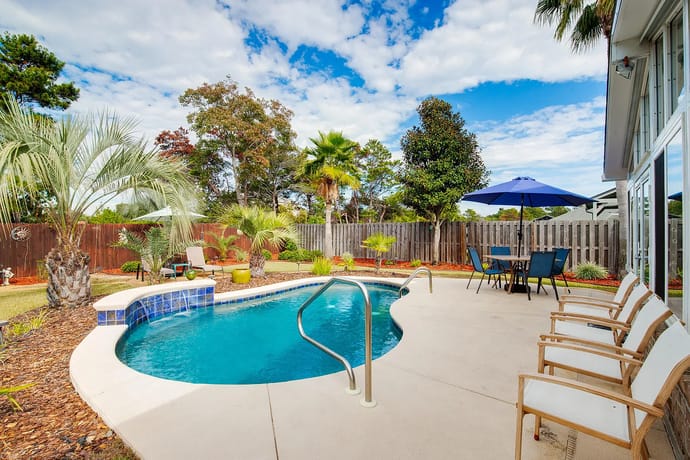
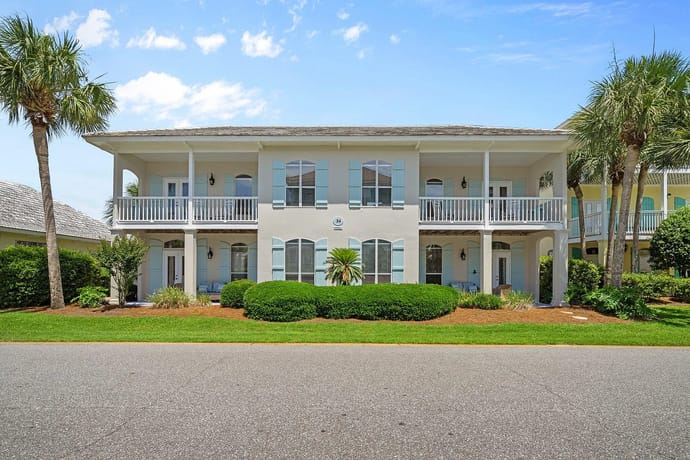
The vacation rental advantage in Destin is significant: a 4-bedroom house with a private pool starts around $225/night in Miramar Beach and sleeps a family of four comfortably. You cook breakfast and lunch at home, buy groceries at Publix at normal prices, and save the dining budget for 3–4 real waterfront dinners out. That model doesn't exist in Aruba's resort-centric landscape.
The practical implication: For the same $10,000 family trip budget, Aruba delivers a 5-night stay with tight daily spending. Destin at that budget delivers a full week with room for a fishing charter, a sunset sailing cruise, a Crab Island pontoon day, and real dinners out every evening without stressing the numbers.

Activities, Food, and Things to Do
Water activities: Both destinations have a full menu. Aruba has the edge on reef diving — the water is consistently 60-foot visibility year-round, multiple coral reef sites, and the ANTILLA shipwreck (one of the largest wreck dives in the Caribbean). Snorkeling at Mangel Halto reef is exceptional. Kitesurfing in Aruba is world-class due to the reliable trade winds. Parasailing, jet ski rentals, and sailing charters are all well-organized and easy to book.
Destin has one distinct advantage that's hard to overstate: world-class fishing. The 100-fathom depth curve — where the Gulf floor drops sharply to 600 feet — sits just 10 miles offshore of Destin, closer than anywhere else on the Gulf Coast. That proximity puts red snapper, grouper, mahi-mahi, king mackerel, and amberjack within reach of a half-day charter. Shared fishing charters run $80–130/person; private boats for six people run $800–1,200 for a half day split six ways. Aruba has fishing, but it's not a primary draw in the same way.
Crab Island — the sandbar in Destin Harbor where boats raft up and people wade in 2–3 feet of warm emerald water — is a uniquely Destin experience with no Caribbean equivalent. Rent a pontoon for $250–350 for a half day and anchor wherever you want. Floating food vendors sell sandwiches and cocktails on the water. It's festive, it's fun, and nothing else on the Gulf Coast looks like it.
Food comparison: Aruba has a legitimate dining scene with Dutch-Caribbean fusion, good seafood, and international restaurants. Prices are elevated — $25–50+ for entrees at decent spots — and tourist-zone markup is real. Destin's food scene consistently punches above the beach-town average: fresh-caught grouper and Gulf shrimp at local institutions like Harbor Docks, The Back Porch, and Dewey Destin's run $15–30 for entrees. The fish was typically caught that morning. Grocery costs at the Publix on US-98 are completely normal — a major advantage for families who cook several meals at the rental.
Beyond the beach: Aruba has Arikok National Park, the natural pool on the rough north coast, and dramatic rock formation landscapes that make for good half-day inland trips. Destin has the 30A beach town corridor (Seaside, Rosemary Beach, WaterColor), Grayton Beach State Park, and several good day trips east into the 30A area and west toward Fort Walton Beach and Pensacola.

Which Trip Is Right for You?
Choose Aruba if:
- You need reliable good weather year-round — especially for a winter or early spring trip (December–March, when Destin's water is too cold for swimming)
- Scuba diving is the primary activity — Aruba's reefs and the ANTILLA wreck are genuinely world-class
- Kitesurfing is on the agenda — Aruba's consistent trade winds make it one of the best spots on the planet
- You want an international feel — different culture, Dutch-Caribbean cuisine, a genuinely foreign setting
- You're going on a honeymoon or special anniversary where the "Caribbean island" atmosphere is part of the point
- Budget is not a primary concern and you're after the premium resort experience
- Everyone has current passports and flight logistics aren't a barrier
Choose Destin if:
- You're within driving range — Atlanta, Nashville, Birmingham, New Orleans, Memphis, Charlotte — and want to avoid flying entirely
- You're traveling with a group of 5+ that can split a vacation rental, which brings per-person cost dramatically lower than any resort option
- Fishing is a priority — Destin's offshore fishing is in a different class from what's available in Aruba
- You want a private pool, full kitchen, and the flexibility of a self-paced vacation rental rather than a resort room
- You're bringing a pet — Destin has pet-friendly vacation rentals widely available; Aruba hotels charge significant pet fees or don't allow pets
- Passports are not current for all travelers, or the family includes children without passports
- Budget is a real constraint and you want an exceptional week, not a compromised one
- You're going in May, September, or October — Destin's shoulder seasons are exceptional and significantly cheaper than peak summer
The most useful framing: Aruba is the right pick when you want a trip — an event, a destination experience, something specifically international. Destin is often the better pick when you want a vacation — a full week at the beach, real food, flexibility, privacy, and value that lets you stay longer for the same money. Most people who've done both say Destin's beach water surprised them more than they expected, while the cost savings were larger than they'd estimated.
If you're comparing Destin to other Caribbean or international options, the framework is the same: see also our Destin vs Cancun, Destin vs Bahamas, and Destin vs Jamaica guides for parallel breakdowns.
Ready to Book Destin?
Both of our Emerald Coast rentals make a strong base for everything this guide describes. Our Miramar Beach property has a private pool, 4 bedrooms, and sleeps 8 — starting from $225/night. Quiet residential neighborhood with easy beach access and less noise than the main tourist corridor. Our Destin rental is 3 bedrooms plus a bunk room, sleeps up to 12, pet-friendly, and starts from $110/night — ideal for larger groups who want the value of splitting one house.