You'll see them on poles stuck in the sand at every public beach access in Destin and Miramar Beach — colored flags that tell you in about two seconds whether it's a great day to swim or a day to stay on shore. The flag system used in Okaloosa County (which covers all of Destin) is the universal BEACH program: Beach Environmental Assessment Communication and Hazard. Five colors, each one specific. Most visitors can name two or three. Knowing all five — and what they actually mean in practical terms — makes a real difference when you're deciding whether to let your kids run into the Gulf.
This guide explains every flag color, how often dangerous conditions occur in Destin by season, what rip currents look like and what to do if you're caught in one, purple flag marine life specifics, and how to check conditions before you leave your rental each morning.

The Five Flag Colors — What Each One Actually Means
Here's the complete system, from safest to most dangerous:
Green Flag — Low HazardCalm conditions. Currents are minimal, surf is gentle. Green is the flag families with young children hope to see every morning. This is the day you go all in — take the kids into the waves, snorkel over the sandbars, float on an inflatable without worrying about drift. Green days are more common in late April, May, September, and October; in summer they're a genuine gift.
Yellow Flag — Moderate HazardMedium surf and/or moderate currents present. Yellow is the most common flag you'll see in Destin during summer — it doesn't mean "don't swim," it means "pay attention." Strong adult swimmers are fine. Families with young children should stay in knee-to-waist-deep water and keep kids within arm's reach. Don't float far from shore on inflatable rafts; yellow can become single red without much warning as afternoon winds pick up.
Single Red Flag — High HazardHigh surf and/or strong currents. Swimming is strongly discouraged but not prohibited. This is the flag that catches the most visitors off guard — it often doesn't look that bad from shore, and a lot of people still go in. That's a mistake. Single red conditions account for the majority of beach rescues in Destin each year. Rip currents are active and strong. Only experienced adult swimmers should enter, staying close to shore and never swimming alone. Children should not enter the water.
Double Red Flag — Water ClosedThe water is legally closed to all swimmers. Under Okaloosa County ordinance, entering the Gulf when double red flags are flying is illegal and carries a fine of up to $500. This applies to wading too — ankle-deep is also prohibited on a double red day. Double red conditions are typically caused by a combination of extremely high surf, dangerously strong rip currents, or an approaching weather system. The beach itself is still accessible; you can walk, sit, and watch — but no one enters the water. Rangers enforce this.
Purple Flag — Dangerous Marine LifeHarmful marine life is present — most commonly jellyfish, but also Portuguese man-o-war, stingrays, or (rarely) sharks in unusual proximity to shore. Purple flags fly alongside the current-condition flag, not instead of it. You can have a yellow + purple day simultaneously. Purple doesn't mean the water is closed, but it means you should look carefully before entering and stay alert in the water. More on what's actually out there in the section below.

How Often Does Destin Fly Red Flags? (By Season)
This is the question most people actually want answered before booking a trip. The honest breakdown by season:
- May–June: Mostly green and yellow. Late spring and early summer before the Gulf fully charges up tend to have the calmest conditions. A single red day every 10–14 days is roughly average. Double red is rare in May or June outside of named storm systems.
- July–August: More yellow days, more single red days. Afternoon thunderstorms are frequent and can push conditions up rapidly — it's not unusual to start a morning on yellow and end it on single red after a storm passes. Double red comes up several times per month during peak storm activity. Most peak-summer families will see at least one red flag day during a week-long stay.
- September–October: More variable than any other season. You can get gorgeous green-flag days in September and October, but tropical storm systems are more common — when active, conditions go to red and double red for several days at a stretch. Outside of active storms, fall conditions are often excellent.
- November–April: Winter brings more persistent red flag days, especially January through March when cold fronts push through the Panhandle regularly. Green and yellow days exist but red flags are meaningfully more frequent than summer. Fewer total people on the beach during marginal conditions, which is some comfort.
Purple flag seasonality: Peak jellyfish season in the Gulf of Mexico is generally May through October, with the heaviest activity in July and August. A day without at least some jellyfish visible in the water in August is the exception. The stingray shuffle — sliding your feet along the sandy bottom rather than stepping — is standard practice for locals May through October regardless of whether a purple flag is flying.
A useful reference: the Destin–Fort Walton Beach area logs roughly 200–250 beach rescues per year. The majority occur on single red flag days — meaning people who saw the flag, assessed the conditions from shore, decided it looked manageable, and went in anyway. The flag is not decorative.

Purple Flags: Jellyfish, Stingrays & What's Actually in the Water
The purple flag causes more first-time visitor anxiety than anything else in the beach flag system. Here's what's actually out there and how much it matters:
Moon jellyfish are the most frequently seen species in Destin. They look like translucent discs, 6–12 inches across, and their sting is genuinely mild — more of an itch than a burn for most adults. Children are more sensitive. Cannonball jellyfish (brownish, dense, golf-ball to basketball sized) show up in large swarms some seasons and have a stickier, mildly irritating sting. Neither is dangerous to a healthy adult, though uncomfortable enough to cut a swim short.
Portuguese man-o-war are the ones worth real caution. They're blue or purple, buoyant, and look like a small balloon with long trailing tentacles. They're not technically jellyfish but pack a venomous punch — the tentacles can cause intense pain and, in rare cases, severe allergic reactions. They wash in during certain wind patterns, particularly northeast winds that push offshore water toward the beach. Don't touch them even washed ashore; tentacles remain venomous when dry. If stung, rinse with seawater (not fresh water), remove visible tentacles with a card or stick (not your hands), and seek medical attention if the reaction is severe.
Stingrays rest on the sandy bottom in shallow water, particularly near sandbars. They don't attack; they startle. A stingray will flick its barbed tail defensively if you step on it. The fix is the stingray shuffle: slide your feet forward through the sand rather than stepping. Any ray gets enough warning to swim away. This is standard practice for locals May through October. If stung, the proven treatment is hot water immersion (as hot as you can tolerate) for 30–60 minutes, which breaks down the venom protein. Then visit an urgent care center.
Sharks are present in Gulf waters near Destin. Bull sharks and blacktip sharks are the most common species in shallow coastal water. Unprovoked shark incidents in Destin are rare — a handful over the past decade — but they do happen. Practical risk reduction: avoid swimming at dawn, dusk, or night (peak feeding times), stay away from active fishing areas and piers, don't swim near bait fish schools, and avoid murky water near inlets.
Sea lice (swimmer's itch) are worth knowing about even though they don't trigger a flag. "Sea lice" in the Gulf are actually the tiny larvae of moon jellyfish and thimble jellyfish, which get trapped under swimwear and cause an itchy rash that develops an hour or two after swimming. Most common in spring and early summer. Rinse your suit off immediately after swimming and launder it before reuse if you've had an itchy session.

Rip Currents: The Real Hazard Behind the Red Flag
Rip currents account for about 80% of lifeguard rescues at surf beaches nationwide and are the primary hazard the red flag communicates. Understanding them — and what to do if you're caught in one — is legitimately important.
What is a rip current? Waves push water toward shore. That water has to go somewhere, so it drains back out through breaks in sandbars or near jetties, creating a narrow channel of water flowing away from shore. Rip currents are typically 20–100 feet wide and can move at up to 8 feet per second — faster than an Olympic swimmer. From shore they often look like a slightly darker, choppier strip of water through the surf. From water level they're nearly invisible, which is why they catch so many people.
If you're caught in a rip current:
- Don't panic and don't swim straight back to shore. Fighting directly against a rip current is exhausting and ineffective. The current typically only extends 50–200 feet offshore — it won't drag you to the middle of the Gulf.
- Swim parallel to shore. Rip currents are narrow. Swimming sideways (parallel to the beach) gets you out of the current channel within 20–30 seconds of actual effort. Once you're out of the pull, angle back toward shore.
- Float if you're too tired to swim parallel. Float on your back, conserve energy, and signal for help by waving one arm. Most drownings in rip currents happen from exhaustion after swimming directly against the current. Let yourself float. Lifeguards are watching.
- Return to shore at an angle. Once out of the rip channel, swim back at an angle away from where the current pulled you out — that same drain channel is still active in the same spot.
Destin-specific notes: The Destin Pass (the inlet between Destin and Okaloosa Island at the east end of Santa Rosa Island) creates strong lateral currents near the East and West Jetties — avoid swimming anywhere close to the jetty rocks even on low-flag days. The Crystal Beach neighborhood west of Destin Harbor has more complex sandbar topography and can develop rip current channels quickly after storms even when conditions appear calm.
Lifeguard coverage: Okaloosa County operates lifeguard towers at select public beach accesses roughly from Memorial Day through Labor Day, 9am–5pm. Not every beach access has a lifeguard. When in doubt, swim near a manned tower. Towers are marked on the county beach access maps available at most rental offices and at the beach access parking areas.

How to Check Beach Conditions Before You Leave Your Rental
Nobody wants to load up the beach cart, drive to the access, and find double red flags. Here's how to check conditions before leaving:
- Okaloosa County beach conditions page at myokaloosa.com — posts current flag status and beach safety updates throughout the day, especially on active weather days. This is the most official source.
- NOAA rip current forecast at weather.gov/mob (Mobile NWS office covers the Panhandle) — issues daily rip current outlooks specific to Okaloosa County beaches. If the outlook says "high risk," flags will likely be red regardless of what the surf looks like.
- Surfline or Magic Seaweed — neither is aimed at families, but wave height and swell period data directly translates to flag status. A 4-foot swell with 7-second period in Destin usually means single red or worse. The swell forecast is often more accurate 24–48 hours out than the flag update itself.
- Check the flag pole when you arrive. The flag pole is at or near every beach access parking area. Check it before you unload the car. If you don't see a flag, check nearby flag poles or ask someone who's already set up.
- Local Facebook groups — "Destin Beach & Weather Updates" and similar community groups are active and post real-time flag updates, jellyfish reports, and current condition photos throughout the day from people who live on the water and can see it in real time.
The afternoon rule: Afternoon thunderstorms hit Destin from June through August on a near-daily basis. Even if morning starts green or yellow, conditions can shift in 30 minutes when a storm builds. Be watching the sky by 2pm, off the water by 2:30–3pm on days with afternoon storm forecasts. Lightning is a greater risk than any beach flag color — the Gulf in a thunderstorm is the last place you want to be.
Red flag days aren't wasted days. Crab Island is in the harbor, fully protected from Gulf conditions — a red Gulf flag doesn't affect it at all. The Destin Harbor boardwalk, Henderson Beach State Park trails, kayaking in the protected backbay, waterfront dining, shopping, and any of the things to do on a red flag day are all available. The beach is still beautiful from dry sand, and the rough surf makes for genuinely dramatic photos.
A Home Base That Works on Any Flag Day
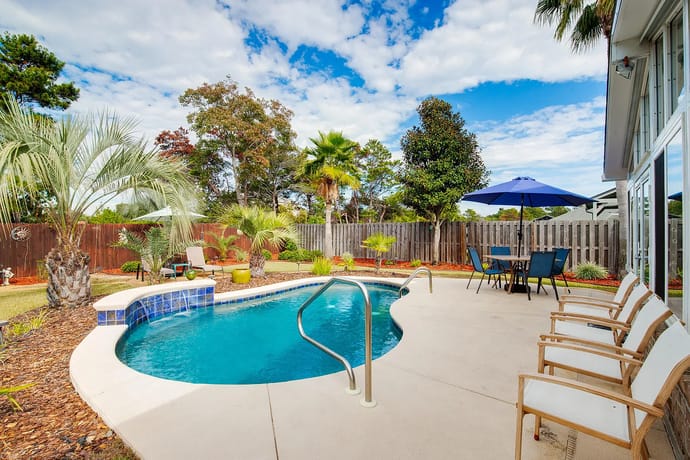
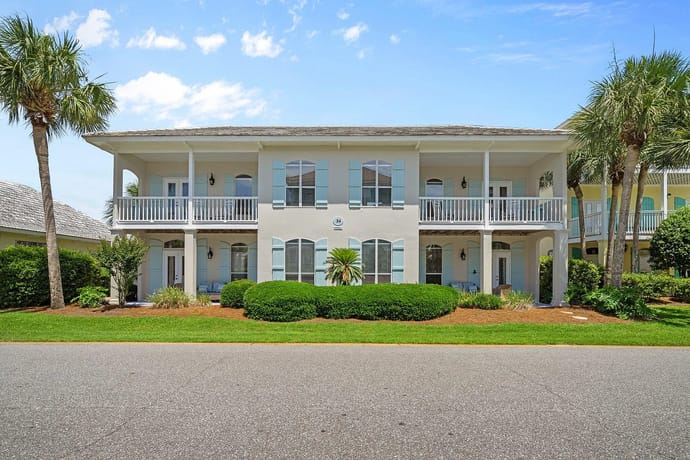
The best setup for a beach trip is one that gives you options when the Gulf doesn't cooperate. Our Miramar Beach rental has a private pool — so a double red day becomes a lazy pool morning instead of a wasted one. It sleeps 8 across 4 bedrooms and starts from $225/night. Our Destin rental is pet-friendly, sleeps up to 12, and starts from $110/night, giving a larger group plenty of space whether you're chasing waves or retreating from them.