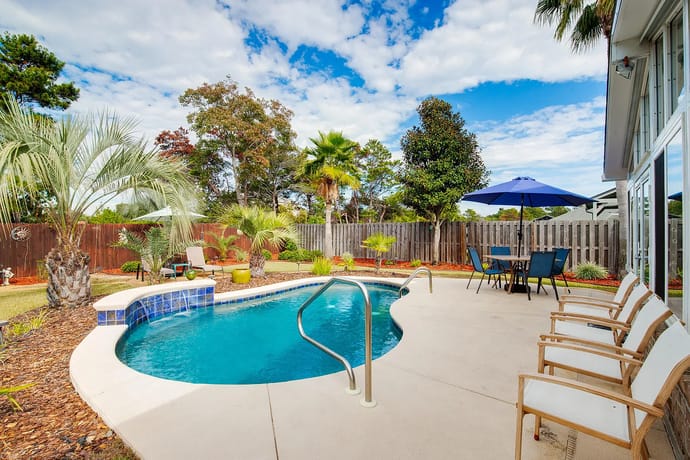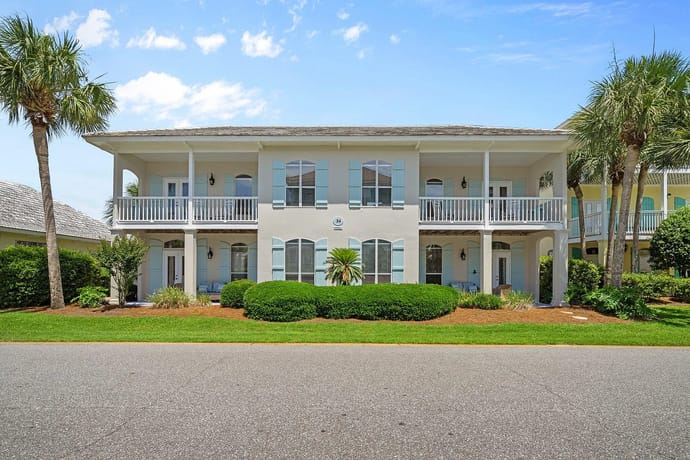
Destin and Tulum are both genuinely beautiful beach destinations, and both deserve their reputations. The actual difference is what each trip looks like in practice: Destin is an emerald Gulf Coast beach town with great seafood, direct driving access from most of the Southeast and Midwest, no passport required, and large vacation rental houses with private pools. Tulum is a Caribbean destination in Mexico with cenotes, Mayan ruins, and a distinctive eco-chic hotel scene — and it requires a passport, an international flight, and a two-hour transfer from Cancún.
This guide doesn't sell either destination — it tells you what actually differentiates them so you can make a realistic choice for your particular trip.
The Beaches: What the Water Is Actually Like
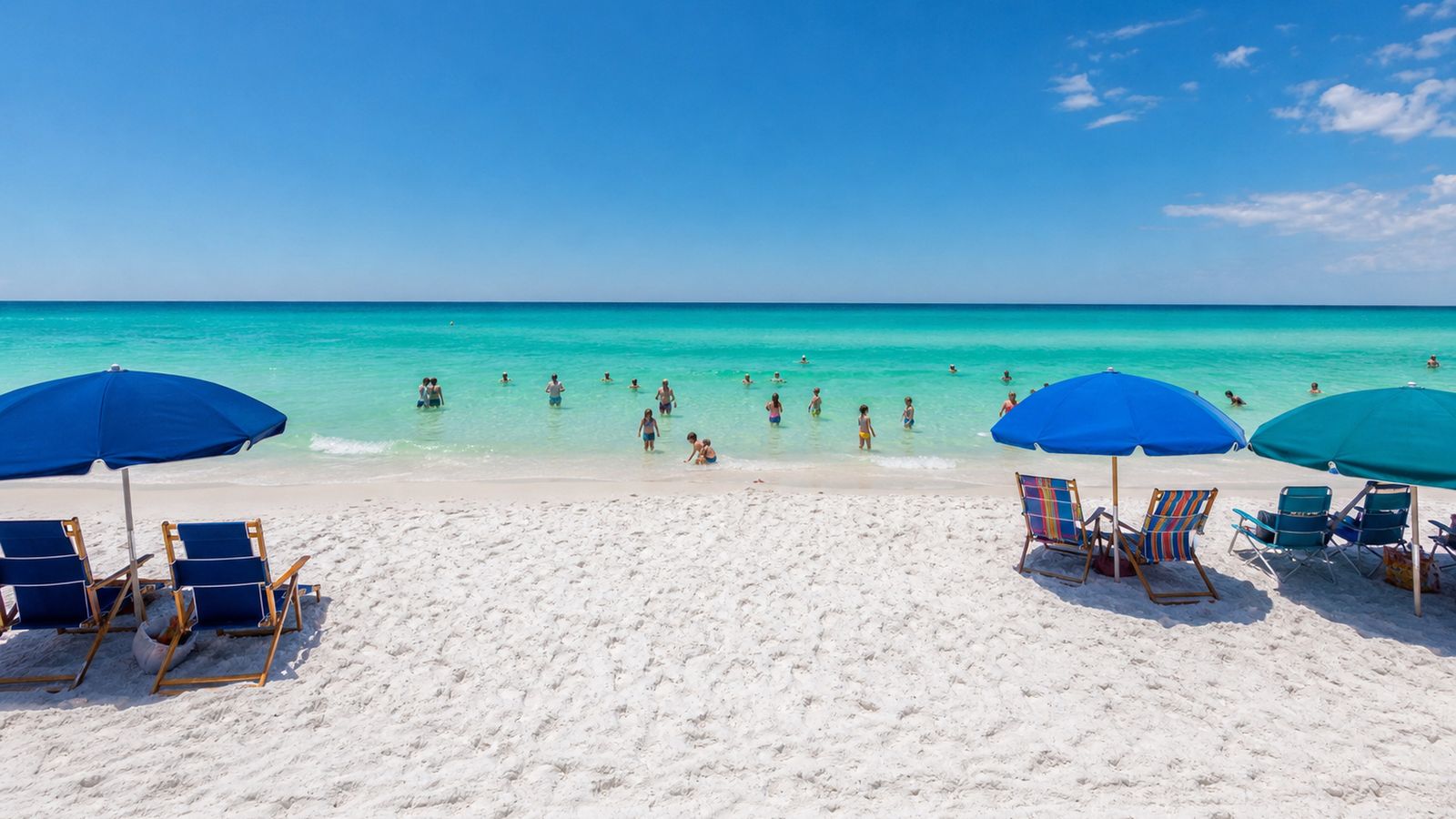
The first thing people notice about Destin is the water color. It is genuinely emerald green — a specific, unusual shade produced by the quartz sand on the Gulf floor, which reflects light differently than the darker sand found on most other US coastlines. The Gulf of Mexico here has no reef systems close to shore, which means the water is exceptionally clear with no particulate matter. You can see the bottom in 6–8 feet of water. Waves are gentle — typically 1–2 feet — and the Gulf stays warm from late May through October, peaking around 84–86°F in July and August. The beach itself is wide and consistent: powder-white sand that stays cool underfoot even in direct sun.
Tulum's water is Caribbean turquoise — a deeper, warmer-looking blue-green compared to Destin's lighter emerald. The Caribbean here is also warm and calm in protected beach areas, and the reef systems nearby create exceptional underwater conditions. However, Tulum's beach quality varies significantly by section. The hotel zone (Zona Hotelera) has well-maintained stretches adjacent to properties. The public town beach is patchier. Some areas have rocky spots underfoot where the reef meets the shore, and the beach width is more variable than Destin's.
Sargassum seaweed is a real factor in Tulum. From roughly April through September — peak accumulation May through August — the Caribbean coast sees significant seaweed deposits that pile on the beach and require daily clearing. Well-managed hotels rake their sections; public beaches are more variable. In a bad seaweed year, the smell and visual impact meaningfully affect the beach experience. The Gulf at Destin does not have a comparable seaweed problem.
Bottom line: If consistent beach quality and reliable swimming conditions are your priority, Destin has the edge. Tulum's beach can be spectacular, but sargassum and rocky stretches add variability that you don't encounter in Destin.

Getting There: Passport, Flights, and the Drive Factor
This is the biggest practical difference between the two destinations. Destin is driveable from the majority of the Southeast and Midwest. From Atlanta it's about 5.5 hours; Nashville, 6 hours; Birmingham, 3.5 hours; Charlotte, 8 hours; Memphis, 7.5 hours. No passport, no TSA checkpoint for the full family, no baggage fees, no customs or immigration on the return. You load the car and go. For families — especially those with young children — this alone is a significant advantage. The car lets you bring a full cooler, beach chairs, a pack-and-play, whatever the trip requires, without thinking about airline weight limits.
For travelers farther away — Chicago, New York, Dallas, Denver — Destin is a short flight. Northwest Florida Beaches International Airport (VPS) has direct service from many US hubs. Pensacola (PNS), about an hour west, offers additional flight options. Either way, the total domestic travel experience — no passport control, no currency exchange, familiar food at the airport — is simpler than an international trip.
Tulum requires a valid US passport. Most travelers fly into Cancún International Airport (CUN) and then transfer to Tulum — either a shared shuttle ($30–$50/person, takes 2+ hours with stops) or a private van transfer ($120–$200 for a group, about 90 minutes). Tulum has its own airport (TQO) with limited direct service from the US. From major East Coast cities, round-trip airfare typically runs $300–$600 per person depending on timing; from the Midwest and Southeast, expect $350–$700. That airfare cost adds substantially to the total trip budget, especially for a group.
Last-minute planning favors Destin decisively. If you decide on a Thursday that you want a beach vacation next weekend, driving to Destin is uncomplicated. Finding affordable last-minute international flights to Cancún is far more expensive and logistically complex.
Tulum travel budget additions: Currency exchange (Mexican peso; most tourist areas nominally accept USD but at unfavorable rates — withdrawing pesos from ATMs is better), travel insurance is strongly recommended especially in hurricane season, and entry fees for archaeological sites and cenotes run $10–$30 per person each.

Activities: Water Sports, Ruins, and What Each Does Best
What Destin does best: The activity lineup in Destin is deeper than most people expect. Crab Island — the famous shallow sandbar in Destin Harbor where boats raft up, people wade in waist-deep warm water, and floating food vendors weave through — is a completely unique experience that doesn't exist in any comparable form in Tulum. Parasailing from HarborWalk Village, deep-sea fishing charters out of the largest charter fishing fleet in the US, dolphin cruises, kayaking and paddleboarding in the protected Choctawhatchee Bay backwater, and jet ski rentals are all strong. Offshore reef snorkeling trips (3–5 miles out) show grouper, snapper, and sea turtles in clear water. The Gulf doesn't have Caribbean-quality nearshore reef snorkeling, but guided offshore tours are solid.
What Tulum does best: Tulum's comparative advantage is what Destin simply cannot replicate — cenotes. These natural sinkholes filled with crystal-clear fresh spring water, unique to the Yucatán Peninsula, are genuinely extraordinary. Gran Cenote, Dos Ojos, and Cenote Cristal (30 minutes to 90 minutes from Tulum) offer swimming and snorkeling in 72°F water with dramatic light filtering through ceiling openings and visible cave formations. If you haven't experienced a cenote, it belongs on a life list. Tulum also has the famous clifftop Mayan ruins overlook — archaeological remains set directly above the Caribbean, combining history and scenery in a way that's hard to replicate. The Mesoamerican Barrier Reef, the second largest in the world, runs offshore from Tulum and makes reef diving and snorkeling dramatically better than anywhere in the Gulf of Mexico.
Activity comparison:
- Reef Snorkeling/Diving: Tulum wins decisively — the Mesoamerican Reef and cenotes have no Gulf equivalent.
- Sportfishing: Destin wins — one of the world's premier fishing destinations with a massive charter fleet and red snapper, grouper, and amberjack in season.
- Crab Island / Shallow Sandbar Experience: Destin only — nothing comparable in Tulum.
- Cultural & Historical Sites: Tulum wins — Mayan ruins and Yucatán culture can't be replicated in Florida.
- Parasailing: Both have it; similar quality and price.
- Boat Rentals: Destin has more operators, more variety, and generally better pricing.
- Wildlife Encounters: Both offer dolphin tours and sea turtles; Tulum adds reef fish and cave creatures.
Food, Drinks, and Nightlife
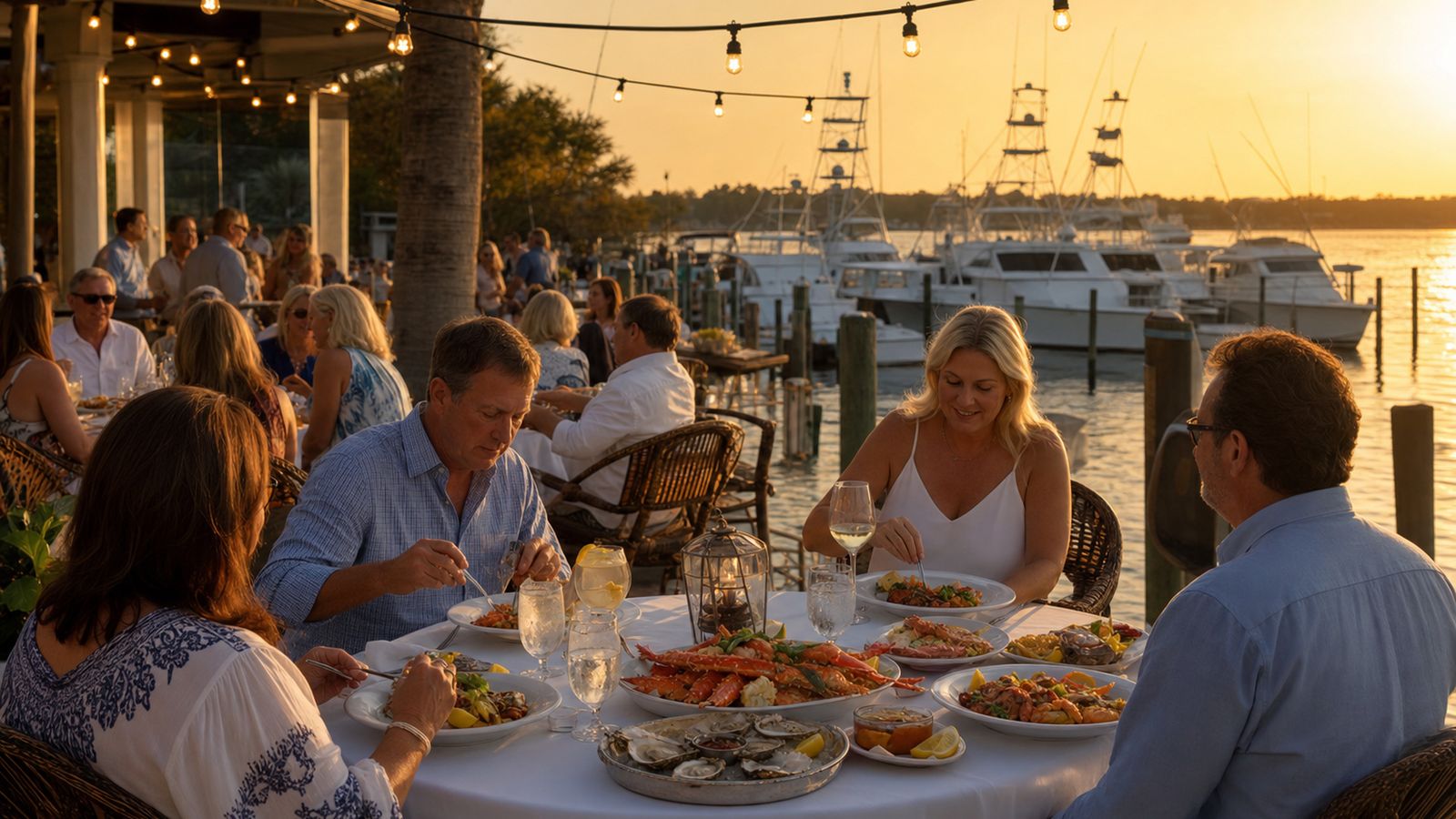
Destin food scene: The defining cuisine is Gulf seafood — grouper, red snapper, mahi-mahi, Gulf shrimp, chargrilled oysters — pulled off the boats that dock at Destin Harbor daily. Harbor Docks buys directly from the fishing fleet and has been doing so since 1979. The grouper sandwich at The Back Porch is a local institution. Happy hours along the boardwalk are reliably solid — AJ's Seafood & Oyster Bar, Boshamp's, Dewey Destin's, and the waterfront restaurants at HarborWalk Village make for easy, enjoyable evenings. Food quality is consistent (US health code standards), prices are predictable, and family-friendly options are everywhere. You know what you're getting.
Destin's nightlife is measured — a working beach town with good live music and bars rather than a party destination. The boardwalk and Baytowne Wharf at Sandestin are the most active evening settings. It's ideal for adults who want a few great drinks after a long beach day without it becoming the whole trip.
Tulum food scene: Tulum's dining reputation legitimately exceeds most beach towns. The Zona Hotelera has a concentration of serious restaurants — open-air jungle settings, wood-fire cooking, fresh ceviche, mezcal cocktails, dishes that reflect both Yucatecan tradition and contemporary Mexican cuisine. The high end is genuinely impressive. However, consistency varies substantially outside of vetted establishments. Mid-range dining in the town center offers better value but more variability in quality. Stomach issues from food or water are a real and common traveler complaint — stick with bottled water throughout, avoid raw vegetables at lower-end restaurants, and choose spots with visible customer turnover.
Tulum's nightlife has an international reputation for a reason — the open-air jungle club scene (Papaya Playa Project, Vagalume, Rosa Negra) is unlike anything in Florida. If evening entertainment is a priority for your trip, Tulum has a genuine edge. If it isn't a priority, Destin's food and drink scene is simpler, more reliable, and more family-accessible.
Where to Stay: Vacation Rentals vs. Eco-Hotels
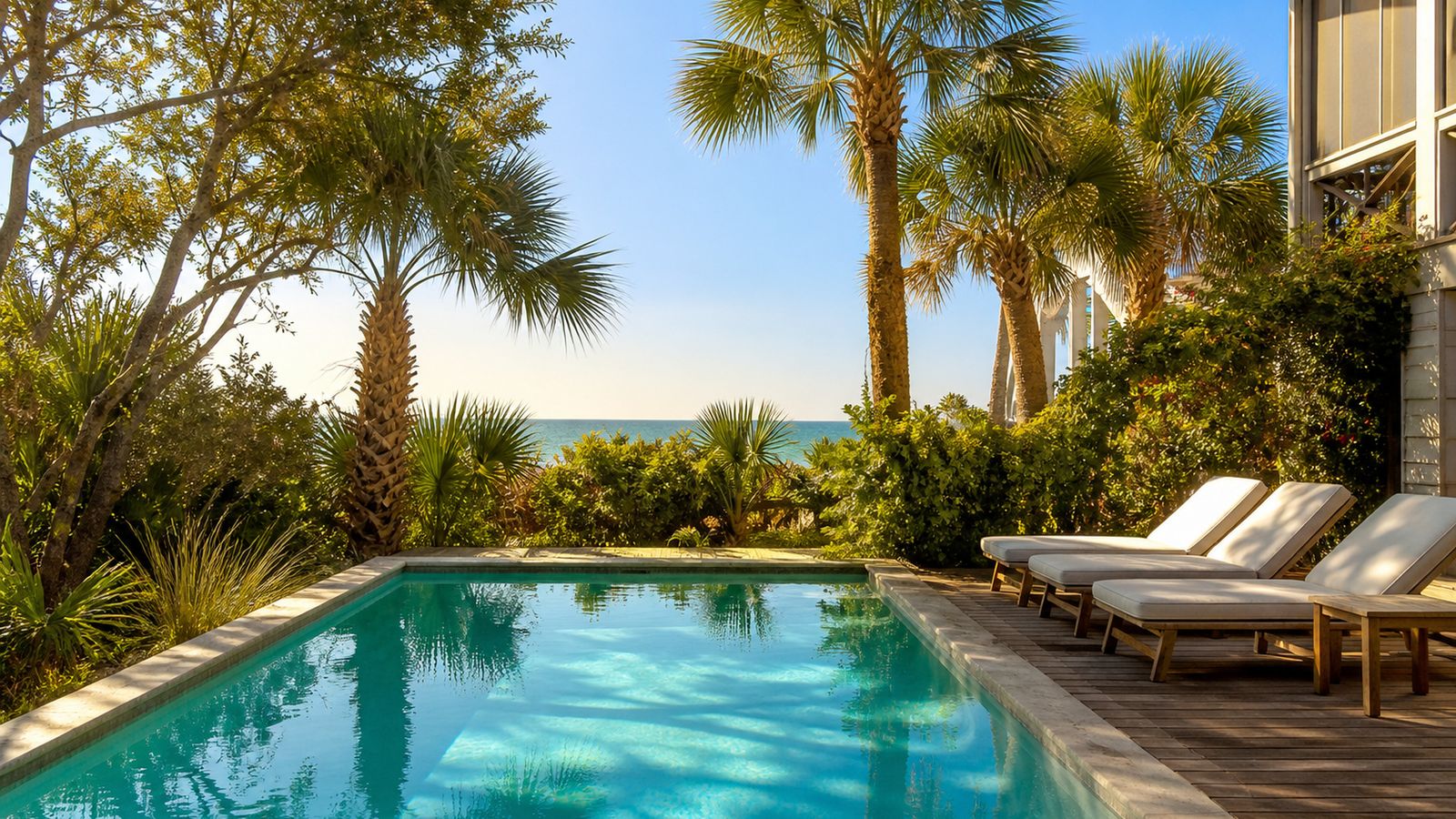
Destin and Miramar Beach are built around vacation rental houses — 3–5 bedroom homes with private pools, full kitchens, multiple bathrooms, and parking close to the beach. For families and groups, this is the practical gold standard: everyone stays together, you can cook, and the private pool anchors the daily routine. Our Miramar Beach rental has 4 bedrooms, a private pool, and sleeps 8, starting from $225/night. Our Destin rental sleeps up to 12 across 3 bedrooms plus a bunk room, is pet-friendly, and starts from $110/night. Split across 8–12 people, the per-person nightly cost is extremely competitive — often $15–$28/person. A kitchen eliminates several restaurant meals per trip, which adds real savings over a week.
Larger resort hotels also exist in Destin — Henderson Beach Resort, Hilton Sandestin — but start at $300–$500+/night for a basic room and don't offer the group flexibility of a rental house.
Tulum's accommodation scene is structured differently. The Zona Hotelera is lined with boutique eco-hotels and jungle lodges — distinctive, architecturally considered properties that lean into the thatched-roof, candlelit, cenote-adjacent aesthetic. Mid-range boutique hotels run $150–$350/night. Well-known design properties easily reach $400–$800+/night. Many use generators and may not have consistent air conditioning (the eco-hotel ethos includes a certain deliberate discomfort in some properties). For a couple or small group seeking a curated, design-forward experience, Tulum's hotel zone has no real equivalent in Florida.
For groups and families: Destin's vacation rental model wins on space, kitchen access, and per-person cost. For couples seeking atmosphere and design: Tulum's boutique hotel zone is genuinely remarkable — though the prices reflect that.

When to Go: Picking the Right Season for Each
Destin timing: Peak season runs Memorial Day through Labor Day (late May–early September), with the Gulf at its warmest and every activity running at full capacity. Crowds in July are significant — beach chairs fill by 9am, US-98 backs up — and rental prices hit their peak. The shoulder seasons — late April through May and September through October — offer nearly identical beach conditions (Gulf water stays warm through October), far fewer crowds, and 20–30% lower rental rates. November through February is off-season: the water is too cold for swimming, but mild daytime temperatures and the lowest prices of the year make it viable for a beach-walking, seafood-focused visit. The local consensus: September is the sweet spot.
Tulum timing: Tulum is warm year-round (low 80s°F in winter, high 80s to low 90s°F in summer). The dry season runs November through April — the best conditions for exploring ruins and cenotes, the lowest sargassum risk, and the most comfortable temperatures. This is also Tulum's high tourist season, and prices reflect that. May through October is hurricane season, which brings higher storm risk, more frequent heavy rainfall, and the worst seaweed accumulation on the beach. Travel insurance is strongly recommended for any Tulum trip, and essential May through October.
Seasonal match-up:
- US Summer (June–August): Destin is warm, active, and crowded. Tulum is hot, rainy, and at peak seaweed risk — less ideal.
- US Fall (Sep–Oct): Destin's best window — uncrowded, warm Gulf, prices down. Tulum is still in hurricane season through October.
- US Winter (Dec–Feb): Too cold to swim in Destin. Tulum's best season — January through February offer peak conditions for the Caribbean.
- US Spring (Mar–May): Both destinations are solid; Destin warms up in April–May. Tulum's dry season ends around April.
If your trip has schedule flexibility: September at Destin and January at Tulum are the respective sweet spots. If you're locked to US school calendars (summer and holidays), Destin is the safer bet — summer in Tulum is legitimately the worst season for beach conditions.
Book Your Destin Rental
If Destin is the right call — no passport required, driveable from home, emerald water and outstanding Gulf seafood — we have two properties built for exactly this kind of trip. Our Miramar Beach rental sleeps 8 in 4 bedrooms with a private pool, starting from $225/night. Our Destin rental sleeps up to 12 in 3 bedrooms plus a bunk room and is pet-friendly, starting from $110/night — ideal for larger groups who'd otherwise be splitting costs across multiple Tulum hotel rooms.