Rip currents are the leading cause of lifeguard rescues on U.S. beaches and the single biggest safety hazard in Destin and Miramar Beach. The same shallow Gulf shelf and sandbars that give the Emerald Coast its famously clear, calm-looking water also create conditions where powerful rip currents can form quickly — sometimes under a blue sky with mild-looking surf. The United States Lifesaving Association estimates rip currents account for 80% of lifeguard rescues nationwide.
Understanding how they form, how to recognize them from shore, and what to do if you get caught is straightforward — and potentially life-saving. This guide covers everything you need to know before getting in the Gulf.

What Are Rip Currents & Why Destin Gets Them
A rip current is a narrow, fast-moving channel of water that flows away from shore, perpendicular or at an angle to the beach. They form when water pushed toward shore by waves accumulates and needs a way out — it funnels through gaps or low points in sandbars, creating a river of outward-flowing water that can reach speeds of 8 feet per second. That's faster than even Olympic swimmers can sustain.
Destin and Miramar Beach are particularly prone to rip currents for a few reasons. The Gulf's shallow continental shelf means wave energy builds up close to shore. The shifting sandbars along Okaloosa and Walton County beaches create natural channels where rips form predictably after storms or swells. And the water's famously clear emerald color — beautiful as it is — can make a deceptively calm-looking surface hide a powerful subsurface current.
Rip currents are not undertow (a largely mythical phenomenon that "sucks you under"). They pull you away from shore, not under — which means they're survivable if you know not to fight them. Most drowning deaths associated with rips are caused by exhaustion from swimming directly against the current toward shore.
On the Destin/Miramar Beach coast, rip current conditions are most common following tropical weather systems, after strong onshore winds from the south or southeast, during periods of elevated swell, or whenever the beach flag is double red. But they can also form on calm days — a yellow-flag afternoon is not rip-current-free.

How to Identify a Rip Current from Shore
Before entering the Gulf, spend a few minutes watching the water from a standing position on shore or from an elevated vantage point. Rip currents have recognizable visual signatures if you know what to look for:
- A channel of choppy, discolored, or foamy water. Where waves are breaking evenly on both sides but there's a gap of churned-up or brownish water in between, that gap is often a rip current channel flushing sediment and surface foam offshore.
- Choppy or rippled water that doesn't match the surrounding surf. The rip zone often looks "different" — rougher, or conversely, flatter than adjacent areas (the current suppresses incoming waves along its path).
- A line of floating debris, foam, or seaweed moving steadily seaward. Watch what's floating on the surface. If debris is drifting consistently away from shore in a narrow band, you're watching a rip's surface trace.
- A break in the regular pattern of incoming waves. Waves typically break in a consistent line along a sandbar. A gap or irregularity in that breaking pattern often marks a channel through the bar — and a likely rip.
If in doubt, ask the lifeguard on duty before getting in. Destin's public beaches have lifeguard towers at Crystal Beach, James Lee Park, and Okaloosa Island Beach Access. Lifeguards know exactly where rips are active that day.

What to Do If You Get Caught in a Rip Current
The correct response to getting caught in a rip current is counterintuitive, which is why it's worth learning before you're in one.
Do not swim directly toward shore. The rip current is typically 50–100 feet wide and moving at up to 8 feet per second. Fighting it head-on leads to exhaustion. Exhaustion leads to drowning. This is how people die.
The correct steps:
- Stay calm. A rip current pulls you offshore, not under. You are not going to drown unless you panic and exhaust yourself. Tread water or float on your back. Conserve energy.
- Don't fight the current — float or swim parallel to shore. The rip is narrow. Swimming parallel to the beach (left or right) will take you out of the current channel within one to two minutes. Most rip currents are 50 feet wide or less.
- Once out of the current, angle toward shore. After swimming parallel and clearing the rip channel, you can angle back toward the beach through the regular wave zone.
- If you can't escape, signal for help. Float on your back, conserve energy, and wave one arm to signal lifeguards or other beachgoers. Do not exhaust yourself trying to swim against a strong current.
Children, weaker swimmers, and anyone without experience should not enter the Gulf when rip current risk is elevated — when double red flags are flying, the water is closed to swimmers by law in Okaloosa County. This is enforced by beach patrol.

When Is Rip Current Risk Highest at Destin
Rip current risk at Destin and Miramar Beach is highest under these conditions:
- After tropical weather systems. Hurricanes, tropical storms, and strong tropical depressions passing east or west of Destin send large swell onto the coast even in otherwise clear weather. The rip current risk 24–72 hours after a storm passes can be extreme regardless of how calm the surface looks.
- Strong south or southeast winds. Sustained onshore winds push water toward shore, raising water levels in the nearshore zone and intensifying the rip current outflow through channels.
- Elevated Gulf swell. Check the NOAA marine forecast for wave height at the Destin buoy. When wave heights exceed 3–4 feet in the nearshore zone, rip current formation becomes significantly more likely.
- Spring tides and new/full moon periods. Higher tidal ranges mean more water movement through nearshore channels, which can amplify existing rip current activity.
- Afternoon hours during summer. Sea breezes off the Gulf can strengthen in the afternoon, increasing wave energy at the shoreline during peak swim hours.
NOAA's National Weather Service issues rip current outlooks for the Destin/Fort Walton Beach area as part of the local surf zone forecast. You can check it at weather.gov by searching for the Tallahassee NWS office's beach forecast. A "High" rip current risk day warrants real caution even on sunshine-filled afternoons.

The Flag System — Reading Beach Colors Before You Swim
Okaloosa County uses the International Beach Flag Warning System, which is standard across Florida's Gulf Coast. Flags fly from lifeguard towers and beach access points throughout the day. Checking the flag before entering the water is the single most reliable safety habit you can develop.
| Flag Color | Meaning | What To Do |
|---|---|---|
| Green | Low hazard, calm conditions | Safe for most swimmers; still exercise care |
| Yellow | Medium hazard, moderate surf/current | Swim with caution; weak swimmers and children should stay close to shore |
| Single Red | High hazard, rough conditions | Strong swimmers only; weak swimmers and children must stay out |
| Double Red | Water closed to swimmers | No swimming — Okaloosa County law. Violation is a misdemeanor. |
| Purple | Marine pests present (jellyfish, stingrays, etc.) | Usually flown alongside another color flag; proceed with caution |
Double red flag days are not rare in Destin and Miramar Beach — during active Gulf weather in the summer and fall, beaches can fly double reds for days at a time. In Okaloosa County, swimming in double-red conditions is a misdemeanor enforced by the Okaloosa County Sheriff's Department beach patrol.
Flag conditions change during the day as winds shift, so check the flags each time you return to the beach after an extended break. What was a yellow flag morning can become single red by 2pm on a day with a developing sea breeze.
Plan a Safe Gulf Coast Stay
Both of our properties put you steps from the Gulf — which means you'll be checking the flags every morning before breakfast. Our guests consistently say that the beach walks, the color of the water, and the ease of getting in and out are what makes this stretch of coast special. Knowing the flag system and rip current basics just means you enjoy all of it safely.
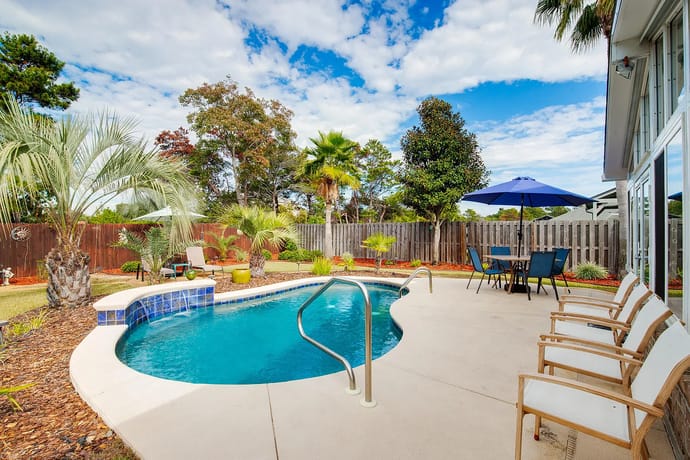
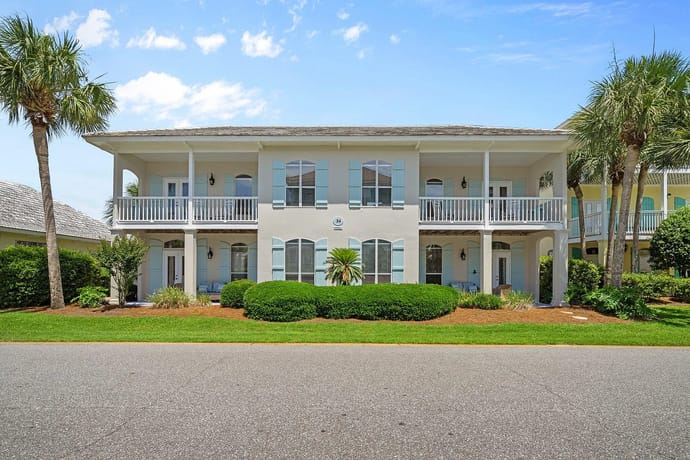
Our Miramar Beach rental has 4 bedrooms, a private pool, and sleeps 8, starting from $225/night. Our Destin rental is a pet-friendly 3-bedroom home sleeping up to 12, starting from $110/night — both within easy walking distance of public beach access and lifeguard-staffed sections.