Florida has two Gulf Coast beach scenes that pull from very different playbooks. Destin sits in the northwest corner of the state — the Panhandle — with the most vividly colored water you'll find anywhere in the continental US and a beach culture built entirely around fishing boats, water sports, and white-sand days. St. Pete Beach sits on a barrier island southwest of Tampa, backed by a genuine city, walkable streets, and some of the most spectacular Gulf sunsets in Florida. Both are excellent. They're just excellent in different ways.
This guide compares them honestly on the metrics that matter: beach and water quality, how to get there, what you'll actually do, what you'll eat, and how much it costs. By the end you'll have a clear answer for your specific trip — whether that's a fishing getaway, a romantic long weekend, a family beach week, or a group vacation that needs real space.

The Beaches: Sand, Water & First Impression
This is where the comparison gets decisive fast.
Destin's sand is made from fine quartz eroded from the Appalachian Mountains and carried here by the Apalachicola River over tens of thousands of years. It's bright white, very fine, and stays noticeably cool even in July when air temperatures hit 90°F — a physical property of quartz that genuinely surprises people. It feels almost powdery underfoot. The Gulf water off Destin runs from pale turquoise in the shallows to a deep, vivid emerald green further out — a color that doesn't read as natural until you're standing in it. Water clarity is exceptional: you can see the sandy bottom in 8–10 feet of water without a mask. That's why this stretch is called the Emerald Coast.
St. Pete Beach's sand is also white and pleasant — it's a mix of fine quartz and ground shell material. It's wider in some spots, and the beach itself is well-maintained and appealing. But it doesn't have the striking whiteness of the Panhandle. The Gulf water at St. Pete Beach is warm and swimmable, and on the right day with calm winds it can be beautifully clear — but it runs more blue-green than the distinctive emerald of Destin, and Tampa Bay influence can occasionally stir up some murk after storms. The big visual payoff at St. Pete Beach comes at sunset: the Gulf faces west here, and the sunsets over the water are spectacular.
Beach density and atmosphere also differ. Destin and Miramar Beach are very busy in summer — the Gulf-front strip is a continuous resort corridor. St. Pete Beach has more variety: long stretches of wide beach, pockets of calm residential shoreline, and the charming historic village of Pass-a-Grille at the southern tip (narrower beach, local feel, fewer umbrellas for rent). Fort De Soto Park, a 20-minute drive from St. Pete Beach proper, has arguably the most beautiful undeveloped beach in the Tampa Bay region.
Beach verdict: Destin wins for pure beach quality — the water color, the sand, and the clarity are genuinely best-in-class for the continental US Gulf Coast. St. Pete Beach is lovely and has better sunset viewing, but it doesn't match the Panhandle's water spectacle.

Getting There: Distance, Airports & Logistics
Where you're coming from matters a lot for this comparison.
Destin is served primarily by Destin-Fort Walton Beach Airport (VPS), about 30 minutes east. VPS receives direct flights from many Southeast and Midwest cities. Pensacola Regional (PNS) is about an hour away and has more routes; Panama City's Northwest Florida Beaches International (ECP) is about 50 minutes east. The honest truth: flying into Destin requires planning, and for many travelers a road trip is the better call. Drive times: Atlanta — 5 hours; Nashville — 6 hours; Birmingham — 4 hours; Charlotte — 8.5 hours; Dallas — 10 hours. Once you arrive, you'll need a car for everything — there's no walkable downtown, no ride-share density. A car is essential.
St. Pete Beach is served by Tampa International Airport (TPA), one of the most accessible airports in Florida — about 25–30 miles from the beach. TPA has direct flights from virtually every major US city, including dozens of low-cost options. St. Pete/Clearwater International Airport (PIE) is even closer at about 10–12 miles and handles Southwest flights plus seasonal service from the Northeast. You'll still want a car for getting around — public transit is limited — but getting to the Tampa Bay area is dramatically easier than the Panhandle for most of the country.
Drive times to St. Pete Beach: Orlando — 1.5 hours; Miami — 4 hours; Jacksonville — 3.5 hours; Atlanta — 6 hours; Nashville — 8 hours. Note that Atlanta is actually slightly closer to Destin (5 hours) than to St. Pete Beach (6 hours) when you factor in Tampa Bay area traffic.
Access verdict: St. Pete Beach wins — by a lot, for most Americans. Better airport, more flight options, and significantly shorter distances from South Florida and Central Florida, which have massive source markets for beach vacations. Destin has the edge for Southeast road trippers from Alabama, Tennessee, and Mississippi.

Things to Do: Activities, Culture & Day Trips
Both destinations have plenty to keep you busy — they just lean different directions.
Destin is built for water-first experiences. Crab Island — a shallow sandbar in the middle of Destin Harbor — is the most unique attraction on the Emerald Coast and you can't find anything like it on the Central Gulf Coast. Pontoon boats raft up, people swim in 2–4 feet of crystal water, food vendors circle in floating boats. Destin has the largest charter fishing fleet in the United States, and the harbor is genuinely exciting even if you don't fish — boats returning in the afternoon with marlin flags flying is a sight. Dolphin cruises, parasailing, jet ski rentals, and snorkeling the nearshore reefs and East Jetty are all genuinely excellent here. Henderson Beach State Park offers a rare undeveloped stretch with nature trails parallel to the Gulf. For cultural activity or evening entertainment, HarborWalk Village has restaurants, live music, and a waterfront atmosphere that's pleasant if not deep.
St. Pete Beach punches above its weight on culture and variety. The beach itself is the main draw, but within easy reach: the Salvador Dalí Museum in downtown St. Petersburg (35 minutes, worth every minute), the St. Pete Pier and downtown's increasingly impressive restaurant scene, the Pinellas Trail for cyclists, and Fort De Soto Park (one of the top 10 beaches in the US, great for shelling and bird watching). Corey Avenue on St. Pete Beach itself is a walkable strip with eclectic shops, Sunday morning markets, and a local energy that Destin's strip doesn't have. Sunset at the Don CeSar hotel — the famous "Pink Palace" resort on the beach — is a St. Pete Beach moment even if you're not staying there. Water sports are available but less centralized than Destin's harbor scene.
Activities verdict: Destin for water sports, fishing, and beach-centric activity. St. Pete Beach for variety, walkability, and access to cultural depth that Destin can't match. If art museums and vibrant urban dining matter to your trip, St. Pete Beach offers something Destin simply doesn't have.

Food & Dining: Fresh Catch vs. Urban Variety
The dining experience at each destination reflects the broader character of the place.
Destin's food scene is seafood-forward and honest. The proximity to the largest charter fishing fleet in the country means genuinely fresh-caught Gulf fish is available daily — grouper, flounder, mahi, snapper, amberjack, and a rotation of seasonal catch. Harbor Docks sources directly from boats that dock nearby; the grouper sandwich at local spots like The Donut Hole or Buddy's Seafood is a Destin ritual. Chargrilled oysters at Boshamp's Seafood & Oyster House in Miramar Beach are first-rate. AJ's Seafood & Oyster Bar at HarborWalk Village does cold Gulf oysters for about $2 each during happy hour. Dewey Destin's on Choctawhatchee Bay is a local institution — casual, cheap, and reliably good. Beyond seafood, the options thin out; Destin is not a destination for cuisine diversity.
St. Pete Beach has better overall dining variety and benefits enormously from proximity to downtown St. Petersburg, which has emerged as one of the best food cities in Florida over the past decade. Beach-side you'll find solid casual spots — the Hurricane restaurant at Pass-a-Grille is an institution, and Spinners Rooftop Revolving Bistro offers 360-degree Gulf views. But 30–40 minutes away in downtown St. Pete, you can access James Beard-recognized chef concepts, a serious craft cocktail scene, and cuisine diversity that Destin can't approach. Stone Sushi, Rowdies Craft Kitchen, and the Saturday Morning Market (October through May) are worth the drive.
Food verdict: St. Pete Beach for overall quality and variety, especially if you'll have a car and are willing to drive to St. Pete proper. Destin for the best fresh-caught Gulf seafood experience — closer to the boats means freshness that's hard to replicate. If your trip is centered on eating, St. Pete Beach wins. If it's centered on fish you caught earlier that day, Destin does it better.

Crowds, Costs & When to Go
Both destinations have high and low seasons, but they peak differently.
Destin's crowds are intensely seasonal. June, July, and the first two weeks of August are the busiest weeks of the year — US-98 backs up on Friday afternoons, popular beaches fill before 9am, and restaurant waits stretch. The flip side: from late September through early May, Destin is genuinely quiet. October is one of the best months — warm Gulf water (still 76–78°F), nearly empty beaches, and Destin Fishing Rodeo energy at the harbor. December through February are quiet and cheap, with daytime highs around 60°F. The shoulder seasons (April–May and September–October) are the sweet spot: warm, manageable crowds, and noticeably lower rates.
St. Pete Beach is more year-round. Winter is peak snowbird season — January and February see significant arrivals from the Northeast and Midwest, and accommodation prices are higher than you might expect for "off-season." Summer is busy but not Panhandle-level chaos. Spring break (March) is the most intense crowd period. The best value windows are typically October–November and late April–May.
Accommodation costs are roughly comparable for equivalent property types, though the mix differs. Destin is dominated by vacation rental houses and large condo units — if you have a group of 6–12, splitting a vacation home in Destin often comes out cheaper per person than hotel rooms in St. Pete Beach. St. Pete Beach has more hotel inventory, including some classic beachfront properties that are mid-range in price but high in convenience. For large groups, Destin often offers better value; for couples or small groups, hotel options at St. Pete Beach add flexibility you don't have in the Panhandle.
Cost and timing verdict: Comparable overall, with different peak patterns. Destin is cheaper in the off-season (Oct–May) and better for groups using vacation rentals. St. Pete Beach is more expensive in winter but more comfortable year-round. Budget travelers should note: Destin in September–October or April–May offers some of the best dollar-per-beach-quality ratios in Florida.

The Verdict: Choose Destin If…, Choose St. Pete Beach If…
Choose Destin or Miramar Beach if:
- The beach itself is the primary reason you're going — Destin has the best water color and sand quality of any Gulf beach in the continental US.
- You're a fishing family or fishing enthusiast — the charter fleet is unmatched and the culture around it is genuine.
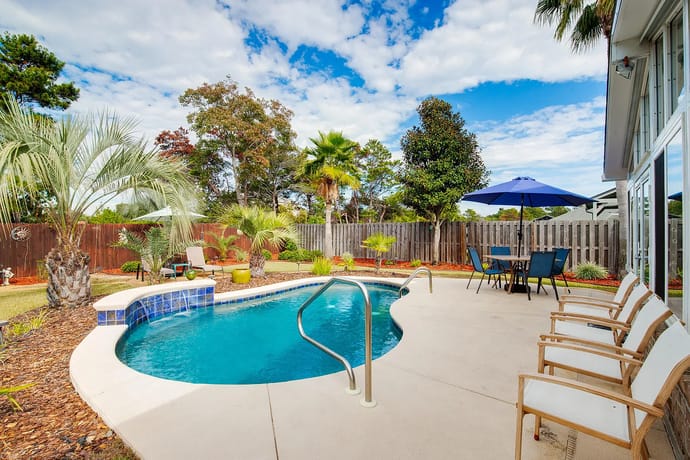
- You're booking for a large group (6+ people) and need space — vacation rental homes with private pools are plentiful and cost-effective per person.
- You're driving from Alabama, Tennessee, Georgia, or Mississippi — Destin is simply closer and the drive is easy.
- You want to do water sports every day — parasailing, dolphin cruises, snorkeling, and Crab Island all concentrate at the Destin Harbor.
- Your trip is in October or shoulder season — Destin's fall shoulder season offers a combination of warm water, thin crowds, and low prices that's hard to beat.
- You're traveling with a pet — our pet-friendly Destin guide covers the options, and our Destin rental is dog-friendly.
Choose St. Pete Beach if:
- You're flying in and want the easiest airport access — Tampa International (TPA) is one of the best airports in the Southeast, with direct flights from everywhere.
- Cultural variety matters — St. Pete's Dalí Museum, downtown restaurant scene, and arts district are within 30 minutes and genuinely excellent.
- You want a walkable beach-town feel — Corey Avenue and Pass-a-Grille have street-level character that Destin's resort corridor doesn't.
- You're going in winter or early spring — St. Pete Beach stays warmer and livelier in the off-season than the Panhandle, where everything closes early and temperatures drop to the 50s.
- You're visiting from South or Central Florida — the drive from Miami, Orlando, or Sarasota is dramatically shorter than to Destin.
- You prefer hotels over vacation rentals — St. Pete Beach has a broader selection of beachfront hotel properties in various price ranges.
- You want spectacular sunsets as a feature of the trip — both Gulf coasts face west, but St. Pete Beach sunsets are particularly vivid and the historic Don CeSar hotel's backdrop makes for memorable evenings.
The honest bottom line: if you've never seen Destin's water, go to Destin first. There's nothing like it. If you've done the Panhandle before and want more variety or easier access, St. Pete Beach adds a dimension Destin can't match.
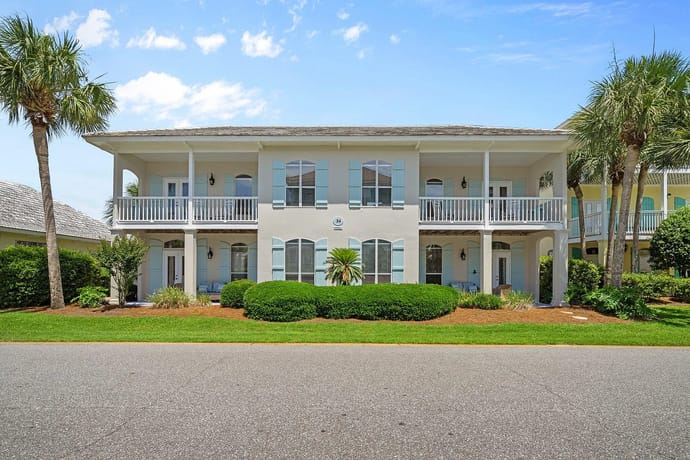
Stay in Destin or Miramar Beach
If Destin's water wins you over, we have two properties that make a Panhandle trip genuinely easy. Our Miramar Beach rental has a private pool, sleeps 8 across 4 bedrooms, and starts from $225/night — great for a family or two couples looking for a quieter stretch east of the Sandestin resort. Our Destin rental is pet-friendly, sleeps up to 12 across 3 bedrooms plus a bunk room, and starts from $110/night — ideal for a large group that wants to split the cost and still be within a short drive of HarborWalk Village and Crab Island.