Destin has one of the largest resident populations of bottlenose dolphins on the entire Gulf Coast. The harbor, the East Pass, and the shallow backwaters of Choctawhatchee Bay all serve as natural feeding and socializing grounds — and because these dolphins are year-round residents rather than seasonal visitors, your chances of seeing them aren't dependent on luck or timing. They're here, and they know exactly what a tour boat sounds like.
That said, not all dolphin cruises are equal. Some run genuinely excellent 90-minute tours with experienced guides and near-certain sightings. Others are essentially sightseeing boats that happen to have "dolphin" in the name. This guide tells you how to tell the difference, which operators consistently deliver, what the experience actually looks like, and how to set the right expectations when you're bringing young kids.
What to Expect on a Destin Dolphin Cruise
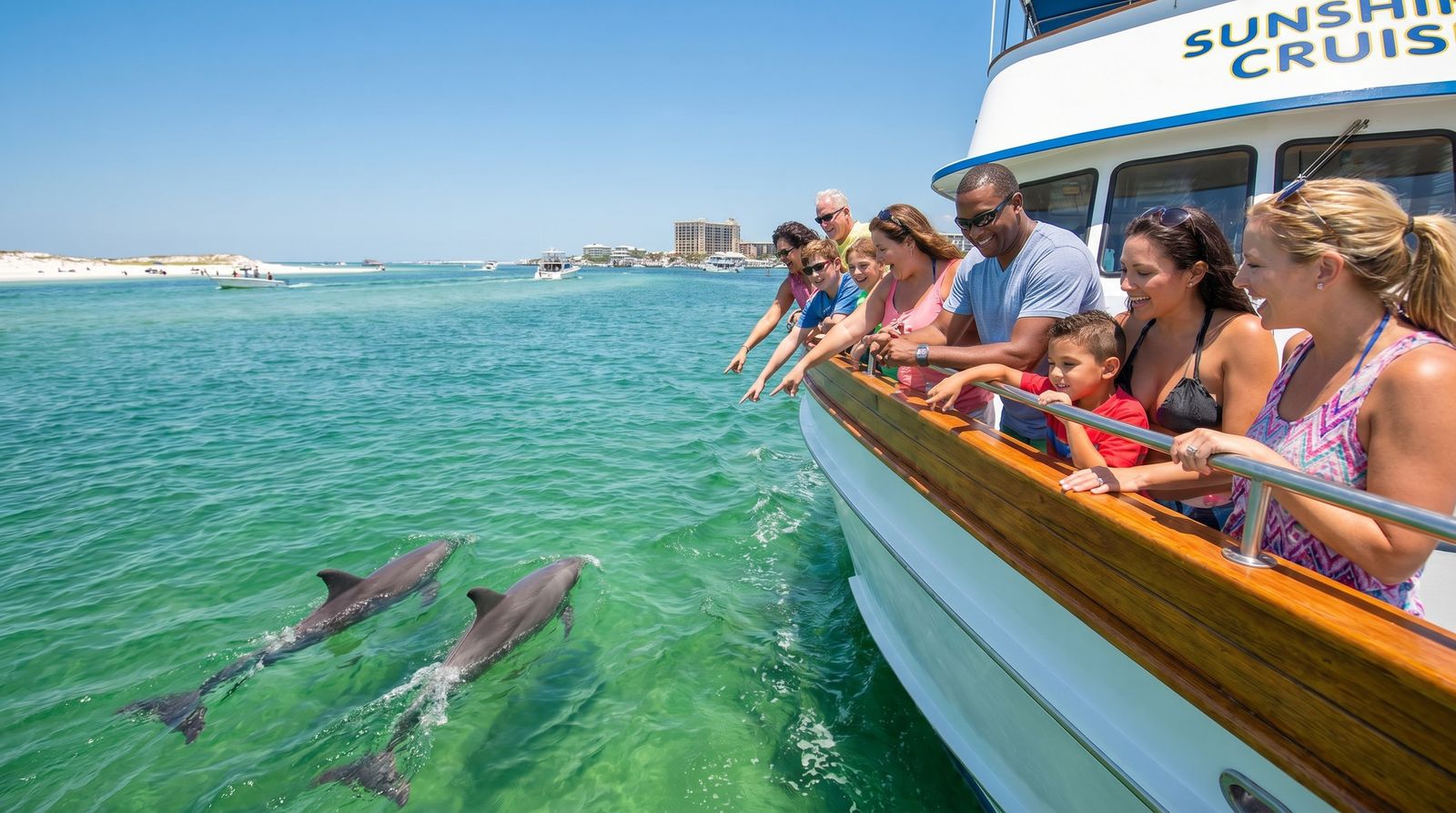
Most Destin dolphin cruises follow a similar format: a 75–90 minute trip departing from HarborWalk Village on Destin Harbor, heading east through the East Pass toward the Gulf, looping through the bay, and returning. The route traces the areas where dolphins concentrate — feeding in the main channel, riding the wake of passing shrimp trawlers, and socializing in the calm backbay shallows.
The dolphins here are wild, but deeply accustomed to boat traffic. They'll often approach entirely on their own — bow-riding 10 feet from the hull, surfacing beside you, occasionally leaping. Sighting rates on reputable Destin tours are genuinely high: most operators report 95%+ dolphin encounter trips from April through October, and even off-season tours regularly find them. What the experience looks like in practice:
- Boats typically hold 20–70 passengers depending on the operator — smaller boats feel more intimate and get closer
- An on-board guide narrates the trip, explains dolphin behavior, and often identifies individuals by their unique dorsal fin markings
- Expect 2–5 separate dolphin sightings per trip; in summer, mothers with calves are common
- Most trips also encounter brown pelicans, ospreys, and occasionally sea turtles surfacing near the pass
- The ride through East Pass is genuinely scenic — the water shifts from emerald-teal to deeper blue as you approach the Gulf opening
- There is usually some chop through the East Pass; anyone prone to motion sickness should take precautions before boarding
One honest note: the dolphins approach on their own terms. You'll see them close, but you won't touch them, swim with them, or feed them — and any operator that implies otherwise is either misleading you or violating the Marine Mammal Protection Act. The real experience is watching wild animals in their actual habitat, which is more memorable than any staged encounter anyway.
Best Dolphin Cruise Operators in Destin
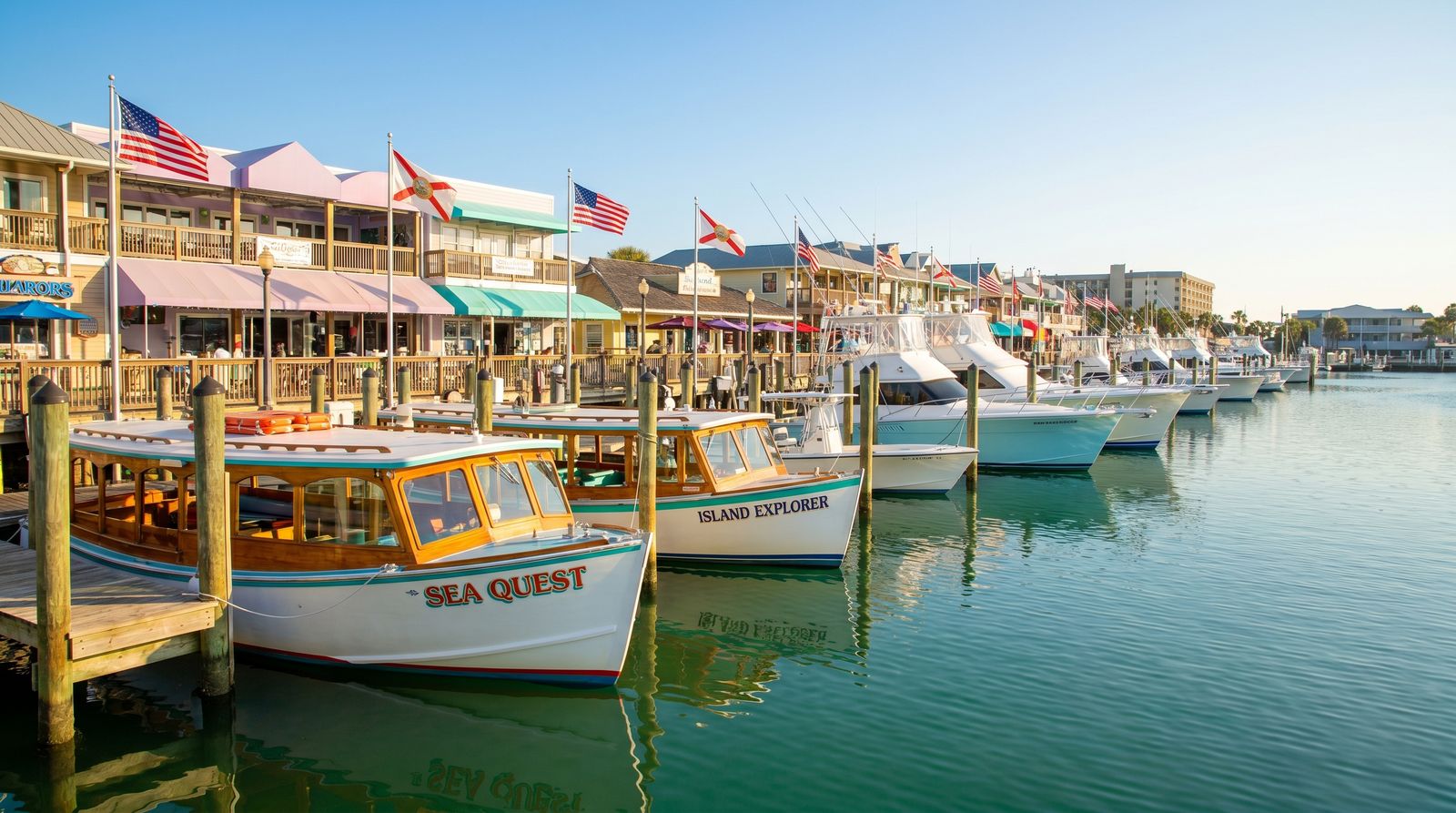
Most established dolphin cruise operations launch from HarborWalk Village at Destin Harbor. A few that consistently get strong reviews:
- Dolphin Express (HarborWalk Village) — One of the most-reviewed dolphin tour outfits in Destin. Dedicated 75-minute tours on a covered pontoon-style boat with smaller group sizes (typically 20–30 max). More naturalist time per person, calmer ride, and a less chaotic atmosphere for young kids. Adults run about $22–28; children $12–18. A reliable first choice for families with kids under 10.
- AJ's Dolphin Adventure — Operated by the same team behind AJ's Seafood & Oyster Bar, these tours depart from the AJ's dock and include a drink on board. Popular with couples and groups who want a slightly more social atmosphere. Experienced guides, excellent sighting rates, and the harbor location is hard to beat. Prices are similar to Dolphin Express.
- Sea Screamer & Sister Ship Tours — Large, open-air speedboats that run dolphin tours as part of a broader program. Louder and faster — some kids love it, others find it overwhelming. Passenger counts up to 70 mean it's less intimate, but good for large groups or older teens who want some speed on the water.
- Destiny Dolphin Cruise — A smaller, more personal option from Destin Harbor. Pontoon-style boat with a relaxed pace and detailed narration. Well-reviewed for toddlers and infants, since the gentle motion is far easier on young stomachs than a speedboat option.
- Private Charter — Several local captains offer private dolphin watching and wildlife tours. You get the full boat, your own guide, and complete flexibility on timing and route. Expect $300–600 for a 2-hour private charter for 4–8 people. Worth it if you have the numbers to split it — a private captain can take you to spots a public tour won't.
How to book: Walk-up tickets are usually fine on weekdays in spring and fall. From Memorial Day through Labor Day, book at least a day or two ahead — morning departures fill first. Most operators have online booking; the activity kiosk at HarborWalk Village can also book several in person. Morning departures (8:30–10:30am) are best for calm water and active dolphins; evening "sunset dolphin cruise" options are popular with couples looking for a more atmospheric experience.
Best Time of Day & Year to See Dolphins
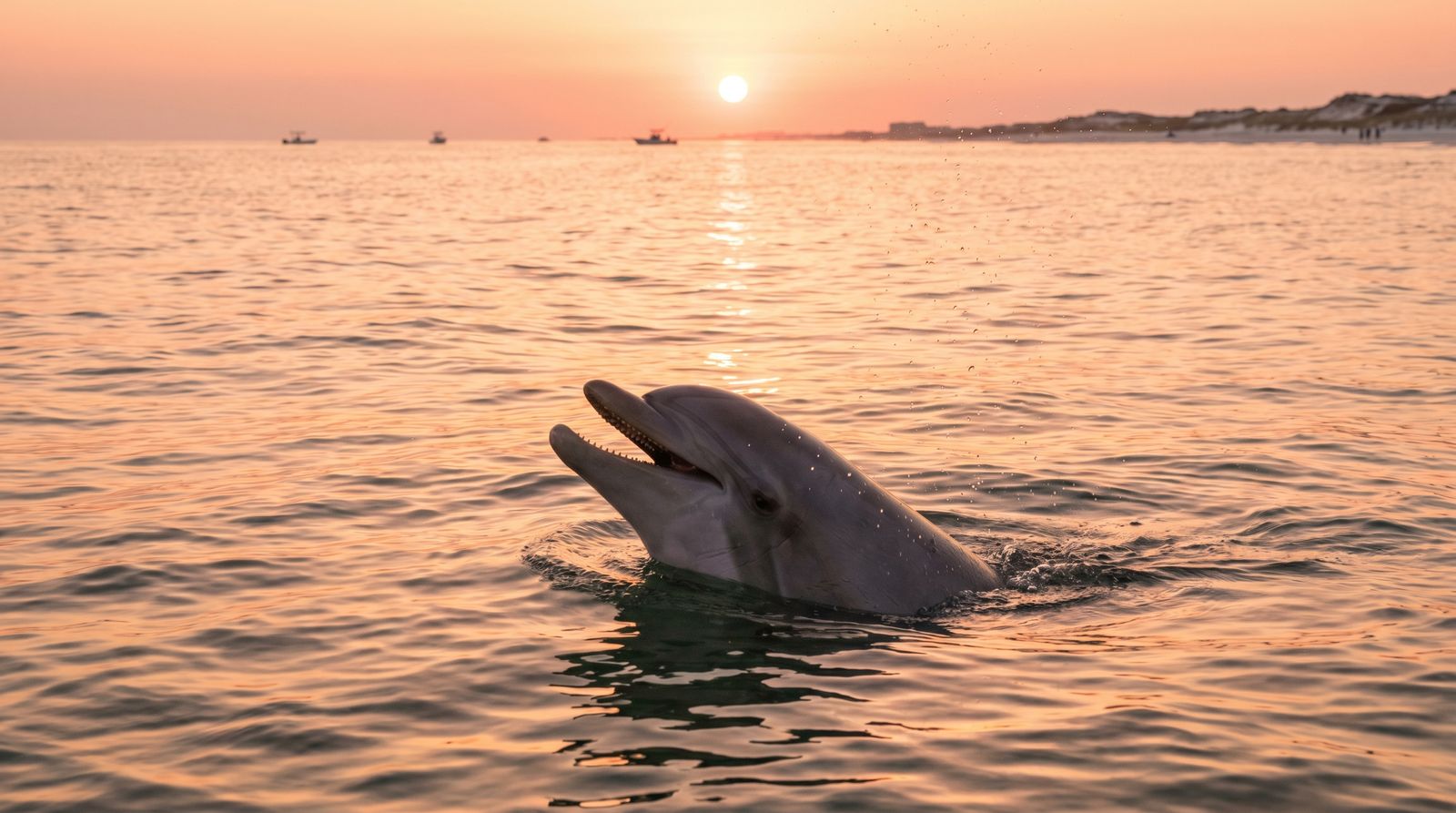
By time of day: Morning tours (8:30–10:30am) consistently outperform afternoon tours for dolphin activity. Dolphins are more active feeders in the cooler morning hours, sea conditions are calmer before afternoon Gulf breezes build, and the light is better for photos. That said, evening "sunset" tours have their own appeal — golden hour on the harbor is genuinely beautiful, and dolphins along the channel edges tend to feed actively at dusk.
By season:
- Spring (March–May): Excellent. Water warms into the mid-60s then low 70s, dolphins are highly active post-winter, and calving begins around April. You'll commonly see mothers with young calves from spring onward. Smaller crowds and easier booking than summer.
- Summer (June–August): Peak season. Most operators run multiple departures daily, dolphin pods with calves are everywhere, and the harbor is buzzing. The water hits 80–84°F. Book ahead for morning slots.
- Fall (September–October): Underrated. Crowds drop dramatically after Labor Day, prices fall, and dolphin sightings remain excellent through October — the water is still warm (74–78°F) and the pods are active. Easiest time to walk up and grab a morning slot without advance planning.
- Winter (November–February): Fewer operators run daily schedules, but the dolphins don't migrate. Water temps drop to the low 60s and calves are less common, but some of the closest, most active encounters happen in winter — the dolphins aren't competing with dozens of boats for attention, and they'll approach right to the hull.
Best overall window: Late September through early October hits a sweet spot — warm water (still above 75°F), active dolphins, dramatically reduced tourist crowds, and lower rental prices across the board. If you're not locked into summer, this is when a Destin dolphin cruise is at its best value.
Bringing Kids on a Dolphin Cruise
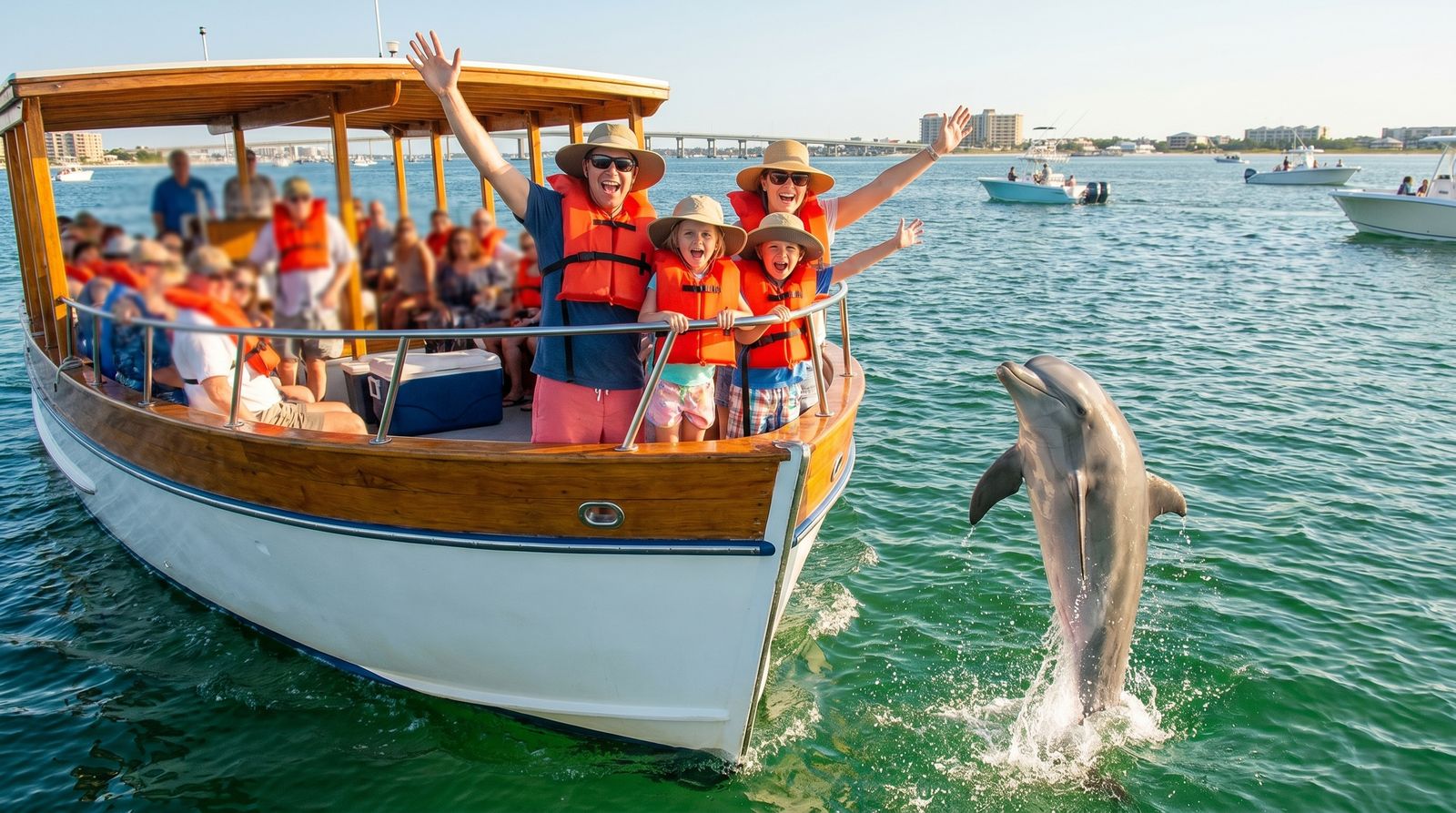
A dolphin cruise is one of the best family activities in Destin — accessible, educational, and wild enough to stick in memory. A few practical notes if you're bringing young kids:
- Best age: Most kids 3 and up handle the 75–90 minute tour easily. Toddlers 18 months to 3 years are fine on calmer pontoon-style boats. Infants under 12 months — check the operator's policy and think about heat exposure on the open deck.
- Seasickness: The East Pass chops up when there's wind from the Gulf. Kids prone to motion sickness should take children's Dramamine (or ginger chews, which work surprisingly well) at least an hour before departure. Pontoon boats rock far less than speedboats — choose accordingly.
- Sun protection: Non-negotiable. The boat deck is fully exposed. Bring a wide-brim hat, reef-safe sunscreen, and a UPF rash guard for kids — the Florida May–September sun at sea level is intense, and you're out there for 90 minutes with water reflection doubling the exposure.
- What to bring: A phone or camera with a fast shutter; snacks to bridge the gaps between dolphin moments for younger kids; a light layer for early morning trips in May or October when the harbor breeze can be cool at speed.
- Managing expectations: These are wild animals. Brief kids beforehand — you might see five dolphins leap right next to you, or you might see fins at a distance. The anticipation and the first real moment a dolphin surfaces 8 feet away is usually more meaningful than any controlled animal encounter anyway.
- Life jackets: All operators carry USCG-approved jackets in child sizes. Young kids may be required to wear them for the duration. Ask when you book if this is a concern.
Combine it with Crab Island: A morning dolphin cruise followed by an afternoon at Crab Island — the famous shallow sandbar in Destin Harbor — makes an ideal full-day family outing. You get wildlife and waterpark vibes in one day without driving anywhere. Water taxis to Crab Island depart from the Dewey Destin dock for about $10–15/person round trip.
Responsible Dolphin Watching — What Good Operators Do
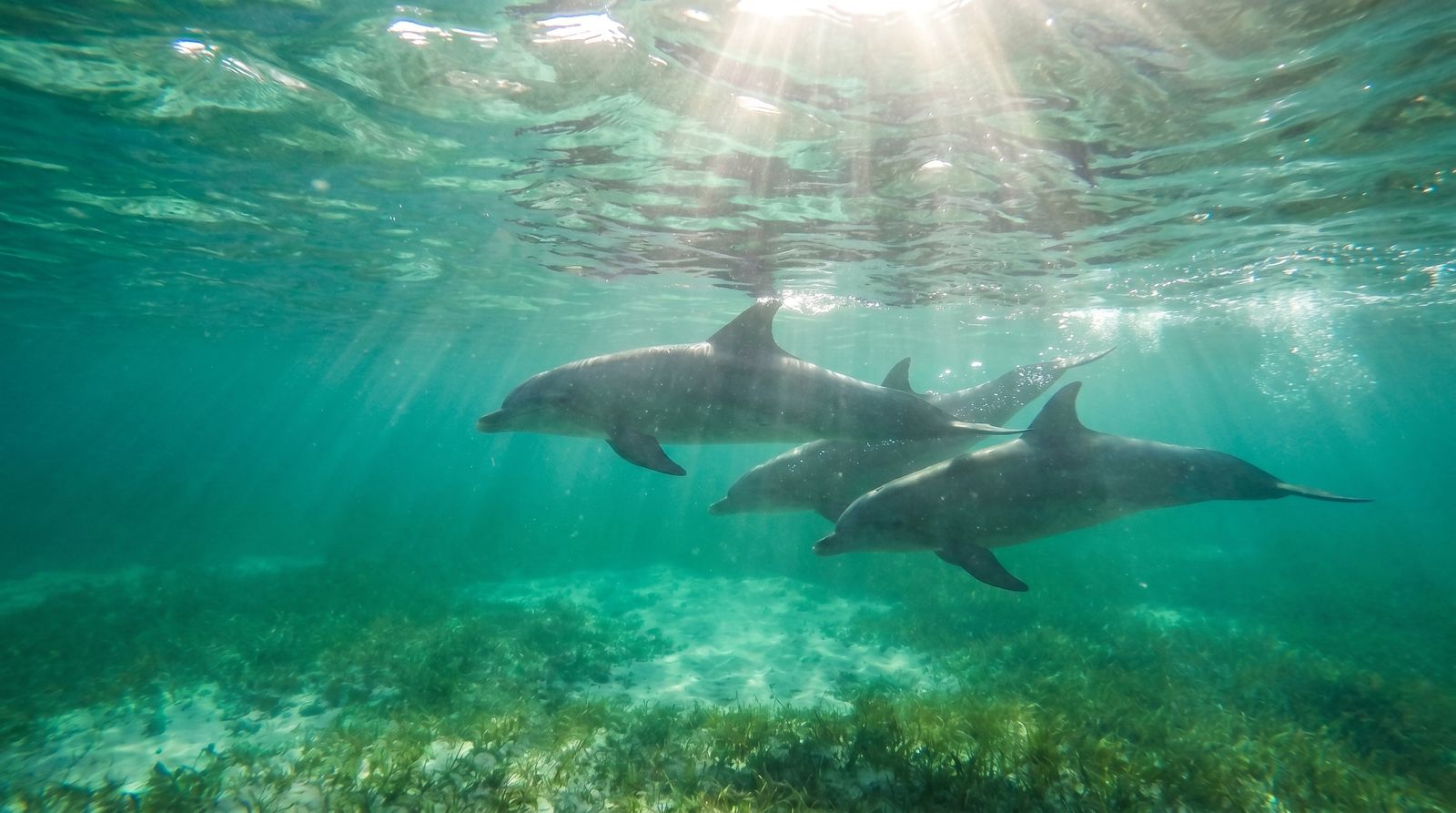
Destin's dolphin population is protected under the Marine Mammal Protection Act (MMPA), which prohibits feeding, touching, harassing, or approaching within 50 yards of resting dolphins. This is federal law with active enforcement. A few things that separate responsible operators from the rest:
- Good operators let dolphins approach the boat. They don't chase pods, cut off their path, or repeatedly circle the same animals. The best encounters happen when the captain holds a steady course and the dolphins choose to engage on their own terms.
- No feeding. Offering food to wild dolphins is illegal and erodes their ability to hunt on their own. Any operator that allows this — or winks at it — should be avoided entirely.
- No "swim with dolphins" in open water. Jumping into the water near wild dolphins is an MMPA violation. Any operator that offers this is either misleading you or breaking the law.
- Educational narration is a good sign. Guides who can identify individual dolphins by dorsal fin markings, explain family group dynamics, and discuss local pod behavior are almost always running more ethical and more experienced operations.
- Speed matters. High-speed boats that rev near pods disrupt the echolocation that dolphins rely on to hunt. Quieter, lower-speed approaches result in better encounters and less stress on the animals.
The established HarborWalk Village operators have strong financial incentive to keep the local dolphins healthy and habituated to respectful boat traffic — it's their entire business model. The more common issue is private boaters who don't know the rules. If you rent a boat, a kayak, or a paddleboard and encounter dolphins, maintain distance, cut your engine speed, and resist the urge to chase them. The ones who come to you are the real experience.
Stay Close to the Harbor
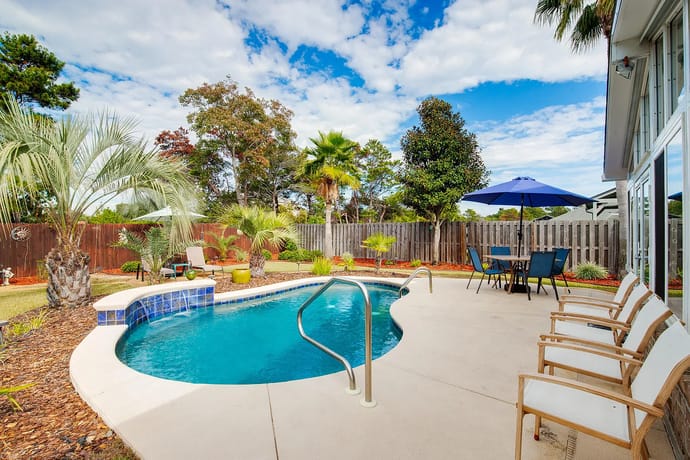
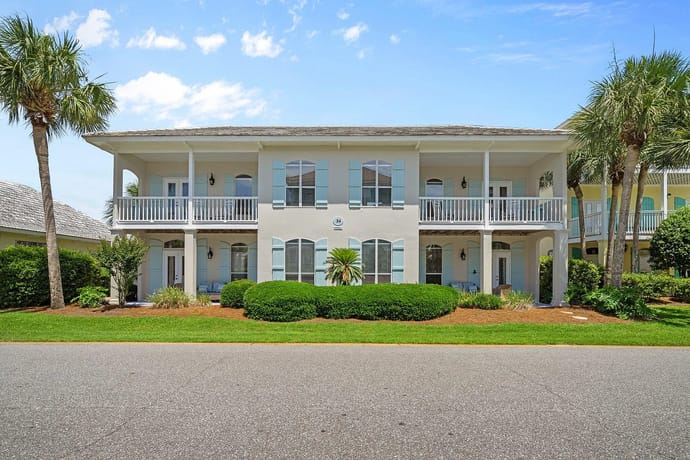
Both of our rentals are within easy reach of Destin Harbor and HarborWalk Village — a dolphin cruise is a 10-minute drive, not an all-day logistics exercise. Our Destin rental sleeps up to 12 across 3 bedrooms plus a bunk room, is pet-friendly, and starts from $110/night — well-suited for a large family or a group splitting a full activity week on the Emerald Coast. Our Miramar Beach rental has a private pool, sleeps 8 across 4 bedrooms, and starts from $225/night — ideal for families who want beach proximity and a private pool to retreat to after the morning tour.