Destin is famous for its emerald-green water, and that same clarity that makes it look photoshopped from shore makes it genuinely spectacular underwater. The Gulf of Mexico off the Emerald Coast holds one of the densest concentrations of artificial reefs and historic shipwrecks in the southeastern United States — more than 50 permitted artificial reef sites within day-trip range of Destin Harbor, many loaded with amberjack, red snapper, goliath grouper, barracuda, and hard coral growth that has had decades to establish.
Whether you are a certified diver looking for your next wreck dive or a complete beginner curious about trying it for the first time, the Destin dive scene has something worth your time. This guide covers the real stuff: the best sites, which operators are worth booking, when to go for the best visibility, and what a first dive actually looks like here.

The Best Dive Sites Near Destin
The defining feature of diving near Destin is the artificial reef program. Okaloosa County has placed hundreds of structures on the Gulf floor since the 1980s — decommissioned ships, bridge rubble, concrete culverts, and purpose-built reef modules. The result is a dive scene far richer than the natural flat-sand Gulf bottom would otherwise support.
- The El Patron Wreck — A 200-foot steel-hulled vessel sunk in 2001 about 11 miles south of Destin in 95 feet of water. It is the most popular wreck dive in the area, well-intact with penetration opportunities for advanced divers, and consistently loaded with goliath grouper, amberjack, and spadefish. Visibility on a good day runs 60–80 feet. You want Advanced Open Water certification and a dive computer for this one.
- Destin Bridge Rubble Reef — Remnants of the old Destin Bridge, placed in 40–60 feet of water about 8 miles out. Multiple concrete sections scattered across the bottom, each functioning as its own micro-habitat. Sheepshead, spadefish, and occasional flounder are consistent here — more manageable depths for newer divers with proper certification.
- Okaloosa County Artificial Reefs — Over 50 permitted reef sites ranging from 40 to 120 feet deep, spread across the Gulf south of Destin. Each is a productive dive with varying coral coverage and fish populations depending on age and structure type. Dive operators rotate through the sites based on conditions and season.
- East Jetty & Pass (Shore Dive) — The rock formations at East Jetty at the mouth of East Pass offer the most accessible shore diving near Destin. Depths run 10–20 feet, visibility is variable (best on an incoming tide), and the rocks harbor flounder, sheepshead, triggerfish, and small reef species. Free, accessible, and interesting for an hour of exploration.
- USS Oriskany near Pensacola — About 70 miles west near Pensacola, this aircraft carrier was sunk in 2006 in 212 feet of water — one of the largest artificial reefs in the world. Technical divers travel specifically for it. Several Destin operators run periodic day-trips here for advanced divers.
Visibility reality check: Gulf visibility varies significantly depending on currents, wind, and biological activity. Destin averages 30–60 feet at offshore sites on a normal summer day, with peak clarity in late spring (April–June) and September–October. After a storm, visibility can drop to 10 feet or less. Always check conditions with your operator before a trip.

Dive Shops & Charter Operators in Destin
Destin has a small but solid cluster of established dive operations running charters to offshore reefs and wrecks. Most offer full-day and half-day trips, equipment rental, and instruction for beginners.
- Emerald Coast Scuba — One of the longest-running dive shops in the area. They run regular reef and wreck charters, offer PADI certification courses through all levels, and have solid equipment rental inventory. Good with newer divers and pair beginners with appropriate sites.
- Scuba Tech Diving — More technical-dive focused, with advanced and tec-diving instruction and charter options for divers pushing depth limits. If you are chasing deep wrecks or the Oriskany, this is the operator to call.
- Destin Snorkel & Dive — Runs both snorkel tours and dive charters, a good option for groups where some members dive and others snorkel. They hit shallower reef sites that work for a range of experience levels.
What to expect on a charter: Most offshore dive charters from Destin Harbor run 4–6 hours and typically hit two dive sites. Tanks, weights, and a divemaster are usually included. Full equipment rental (BC, regulator, wetsuit, fins, mask) runs an additional $25–$50. Expect to pay $80–$130 per person for a two-tank charter. Book in advance for summer weekends — charters fill fast from June through August.
C-card requirement: Every legitimate dive charter requires proof of Open Water certification before letting you dive offshore. Bring your certification card or have the digital version in your PADI or SSI app. No exceptions.

Best Time of Year to Dive in Destin
The Gulf off Destin is diveable year-round, but the experience varies dramatically by season:
- April – June (Best overall): Water temperature climbs from the upper 60s into the mid-70s Fahrenheit, clarity is typically at its annual peak before the summer algae season, and surface conditions are calmer. This is when local divers do their serious wreck diving. Crowds are lighter than July so charters are easier to book.
- July – August (Peak season, still good): Water temps hit 85°F. Comfortable in the water but can bring jellyfish blooms and occasional algae that reduce visibility to 20–30 feet. Red snapper season is open through July 31, which means reef sites are loaded with fish. Book charters 2–3 weeks ahead.
- September – October (Underrated): Crowds clear, water stays warm in the low 80s, visibility often improves over summer lows, and operators have more availability. A strong case for the best all-around diving window of the year. Check weather windows — hurricane season runs through November.
- November – March (Quiet): Water temps drop to 55–65°F. Cold without a thick wetsuit. Many operators run fewer charters. Visibility can be excellent on calm days and you will have sites to yourself. Worth it if you dive dry; harder to recommend in a 3mm wetsuit.

What You Will See: Gulf of Mexico Marine Life
The reef and wreck sites off Destin support a robust fish population. Here is what is reliably encountered:
- Goliath Grouper — The wrecks attract enormous goliath grouper, some in the 400–500 lb range. They are federally protected. On the El Patron and similar wreck sites, it is common to find yourself within 10 feet of a grouper the size of a compact car. They are curious and completely unafraid of divers.
- Greater Amberjack — Amberjack swarm the artificial reefs in tight, circling schools. They approach divers closely and are one of the most viscerally exciting encounters on a reef dive — fast, abundant, and impressive in volume.
- Red Snapper — Plentiful at deeper reef sites, especially during open season months. They hover in mid-water above the structure, identifiable by their pink-red coloration and large eyes.
- Spadefish — Common at jetty rocks and shallower reef structures. They travel in compact schools — black and white banded, similar in profile to freshwater angelfish.
- Loggerhead Sea Turtles — Occasional encounters at offshore reef sites. Gulf waters off Destin are part of the loggerhead foraging range. Not a reliable sight but sightings happen multiple times each season.
- Spotted Eagle Rays — Spotted at deeper sites and occasionally at the jetty, especially in fall. Wingspan up to 8 feet, graceful, unmistakable. One of those sightings people talk about for years.

Getting Certified or Trying Your First Dive
You do not need to be certified to experience scuba diving in Destin, but certification opens a lot more options. Here is how the entry paths break down:
Discover Scuba / Intro Dives: Emerald Coast Scuba and other operators offer Discover Scuba Diving experiences for uncertified adults — a brief pool or shallow-water orientation followed by a guided dive in 15–25 feet of water with an instructor beside you. This is not the offshore wreck experience, but it is a real dive in the Gulf with real fish. Cost runs $150–$200 per person. No prior experience required; you need to be a reasonable swimmer and pass a basic health screening.
PADI Open Water Certification: To do offshore reef and wreck dives independently on charters, you need Open Water certification. Full PADI OW courses run 3–4 days and cost $350–$500 at local dive shops, including classroom/online study, pool training, and four open water dives. You can complete the online and pool portions before your trip and do the open water dives in Destin — most shops call this a referral. Smart approach if you want to spend your Destin vacation diving, not studying.
Already certified but rusty? Most operators offer a Scuba Review — a pool refresher for $50–$100 that helps you shake off the rust before you are in 80 feet of water. Worth the hour if you have not dived in two or more years.
Minimum age: PADI Open Water certification requires divers to be at least 10 years old (Junior OW). Discover Scuba programs typically require 10+ as well. Teens who grow up snorkeling and diving on family trips to Destin often emerge with serious certification levels before they leave for college.
Stay Close to the Action
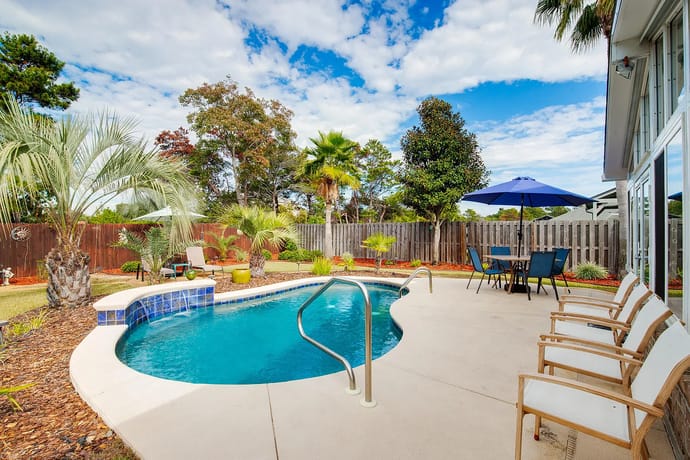
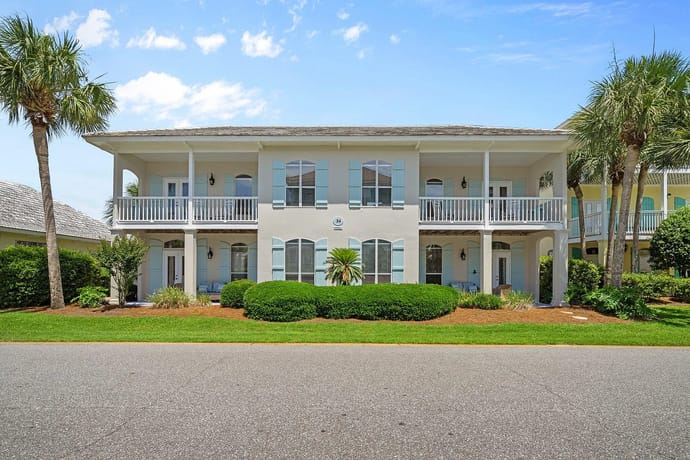
A Destin dive trip is most convenient when you are staying close to the Harbor. Our Destin rental is 3 bedrooms plus a bunk room, sleeps up to 12, and is pet-friendly — easy access to the dive charter docks with room for the whole group and all the gear. If Miramar Beach is more your speed, our 4-bedroom property with a private pool sleeps 8, and the drive to the Harbor is under 15 minutes.