Let's be upfront: Destin and Miramar Beach are not Sanibel Island. The resort-heavy stretches of beach get raked before most people wake up, and the high-energy Gulf conditions that make the water so beautiful also tend to grind shells before they reach shore. But dismiss Destin shelling entirely and you'll miss some genuinely rewarding finds — especially if you're willing to get up early, walk to the less-trafficked spots, or time a visit to one of the nearby state parks.
This guide covers the honest realities, the best beaches, what shells you're likely to find, and the tactics that actually improve your haul on the Emerald Coast.

Best Places to Shell Near Destin
Location matters more than anything else for shelling on the Emerald Coast. The busier the beach access, the earlier it gets raked or picked over. Here's where to focus:
- Henderson Beach State Park — This is your best bet within Destin proper. The park's beach isn't raked the way resort frontage is, and its less-trafficked Gulf shoreline gives shells a better chance of reaching the strandline intact. Get here right at opening (8am) to be among the first on the sand. Parking is $6/vehicle.
- Topsail Hill Preserve State Park — About 20 miles east of Destin, Topsail is one of the most pristine stretches of Florida Panhandle coast. Three coastal dune lakes and a long, relatively uncrowded beach make it a serious shelling spot. The hike to the beach keeps casual visitors away — more strandline for you. Lightning whelks and conchs wash up here with real regularity.
- Grayton Beach State Park — Another 10 miles east of Topsail, Grayton is consistently ranked among the best beaches in America and is even less crowded than Topsail on most days. The protected shoreline is genuinely undisturbed. Make a day trip of it: shell in the morning, swim in the afternoon. Dogs are allowed on leash here too, unlike Destin's main beaches.
- Miramar Beach Public Access Points (early AM only) — The public beach access points along Scenic 98 in Miramar Beach can be productive if you're there at first light before beach crews arrive. Access points like Pompano, Capt. Anderson, and Windrow tend to be less intensively managed than private condo frontage. Not as reliable as the state parks, but worth a 6am walk if you're already up.
- East Pass & the Jetties — The East Pass channel between Destin and Okaloosa Island creates interesting hydrodynamics where shells concentrate. Walking the rocky jetty area and the sand around the pass base can turn up larger, more unusual finds — tulip shells, whelks, and moon snails get funneled through the pass. Watch your footing on wet rocks.
- Choctawhatchee Bay (bay-side) — Calm-water shelling that's good for kids — no waves, easy walking, and a different mix of smaller bay mollusks and coquinas. More about the experience than the trophy finds.
Worth the drive: Shell Island near Panama City Beach (about 90 minutes from Destin) is the Emerald Coast's premier shelling destination — a protected barrier island accessible only by boat or ferry. No hotels, no raking, no beach crews. If shelling is the whole point of the trip, it's in a different league than any resort beach.

What Shells You'll Actually Find
The Emerald Coast has a solid mix of Gulf species. Here's what's realistic to find, starting with the most common:
- Coquina Clams — The most abundant shell on these beaches, and arguably the most beautiful in aggregate. Tiny (thumbnail-sized), smooth, and wildly colorful — white, pink, purple, yellow, banded. You'll find millions of coquina fragments in the surf zone. Kids love collecting the colorful pieces.
- Lettered Olive — Smooth, cylindrical, typically brown with darker zigzag markings. About 2–3 inches long. Common in the Destin area and one of the better intact finds even on raked beaches because their heavy gloss helps them survive surf tumbling. Highly collectible.
- Shark Eye (Atlantic Moon Snail) — A round, smooth shell that looks exactly like an eyeball — gray-tan with a dark center. Found in the sand at low tide, sometimes buried just below the surface. Common along the Panhandle and one of the nicer finds for shelf display.
- Fighting Conch — Small conch, typically 3–4 inches, tan to orange-brown with a spiny outer lip. More abundant on 30A and in state parks than on raked resort beaches. The Florida fighting conch is the one you'll see most — the large queen conch is protected and can't be taken.
- Lightning Whelk — Florida's state shell and the prize find on Panhandle beaches. Large (4–16 inches), spiral, opening on the left side (unlike most whelks), with brown lightning bolt markings on a cream background. Not common, but not rare at state parks after storms. Finding an intact one is the Destin shelling equivalent of a hole-in-one.
- Tulip Shells — Florida horse conch and banded tulip, both common and beautiful. The banded tulip is smaller and found at all Panhandle beaches. Good color, distinctive banding.
- Calico Scallop — Small, colorful, fan-shaped, washes up after rough weather in good numbers. The colorful halves make for great small collections.
- Angel Wings — Delicate, white, wing-shaped bivalve. Often fragmented, but a fully intact pair is a stunning find. More common in bay-side areas than Gulf surf.
- Sunrise Tellin — Thin, elongated, rosy-pink bivalve, usually 1–2 inches. Cheerful color, fragile, common in the surf line.
What you won't find: Junonia (Florida's most sought shell) is possible but genuinely rare — people search for years. Sand dollars exist here — feel with your feet in the shallow Gulf just past the breaking waves at dawn — but intact finds are uncommon. Giant queen conchs are federally protected and can't be taken even as empty shells from Florida waters.

Best Time to Go Shelling in Destin
Timing your shelling session correctly doubles your chances of a good haul. The variables that matter most, in order:
- Low tide — most important. The Gulf of Mexico has a very small tidal range (typically 1–2 feet), but low tide still exposes more beach and concentrates the fresh strandline. Check tide charts before you go: the NOAA tide prediction tool at tidesandcurrents.noaa.gov, or the free Tides Near Me app. Aim to be on the beach 30–60 minutes before the predicted low.
- Early morning. Before 8am, you're ahead of the beach crews, the other shell hunters, and the footprint-makers who mix up the strandline. At state parks, you're among the first on sand that's been quiet all night. Dawn light also makes it easier to spot shells — the low angle catches color and texture that flat midday sun bleaches out.
- After a storm or strong winds. This is when the real finds happen. A day or two after a weather system passes — especially a nor'easter or onshore wind event — the surf pushes a fresh crop of shells high onto the beach. Walk the high-water mark carefully after any storm. The strandline will be loaded.
- Fall & winter. October through March is better for shelling than peak summer on any Florida Gulf beach. Fewer people, less competition, and seasonal storm activity churns up new material. That said, summer visits can still be productive with the right spot and early timing.
- Weekdays over weekends. Fewer people, less competition on the strandline. Tuesday at 7am beats Saturday at 9am for picks.
Practical note on summer shelling: The June–August period brings Destin's most stable, calm Gulf conditions. The tradeoff is 80,000+ other people on vacation at the same time. Solve this by getting to a state park at opening time on a weekday morning around low tide. You'll spend the rest of the day on a beautiful beach either way.

Tips for Better Shelling (and Doing It Right)
Rules first — Florida law is clear: You cannot take live shells from Florida beaches. A "live shell" means one that still has the animal inside — the original resident or a hermit crab. Hermit crabs frequently occupy empty-looking shells. Before collecting anything, check: flip it over, look in the opening, gently tap it on the sand. If something moves, put it back. Violations can result in fines.
You also cannot take live sand dollars or sea urchins — only bleached white ones are legal to collect. When in doubt, put it back in the water.
- Scan the strandline, not the surf zone. The strandline is the debris line left at the last high-water mark — usually a dark line of dried seaweed, wood chips, and shells running parallel to the water. Walk slowly along it, scanning 2–3 feet wide. This is where the best intact shells concentrate.
- Walk into the sun. Position yourself so the sun is in front of you. The glare off wet shells is what catches your eye. Walking with the sun behind you means you're casting your own shadow onto what you're looking for.
- Bring a mesh bag or colander. Plastic grocery bags keep everything wet and won't drain sand. A mesh produce bag or a small kitchen colander lets you carry shells and shake off sand without losing small pieces.
- Look for parts, not just whole shells. Big, perfect specimens are rare. A beautiful piece of a lightning whelk spire or a calico scallop fan is still a find. Coquina fragments in particular are tiny masterpieces of color.
- Wade the shallow water. Some of the best finds are in the first 6 inches of water right at the surf edge, half-buried in sand. Walk slowly through the wash and shuffle your feet to turn up buried shells that never make it to the strandline dry.
- Use an ID app. iNaturalist and dedicated shell ID apps let you photograph and identify shells in the field. Useful for knowing what you've got, and kids especially like having an ID mission.
- Rinse with fresh water after the beach. Salt residue and sand degrade shells over time. Rinse your finds, let them dry fully in the shade (direct sun bleaches color fast), and store them out of direct light. A tiny drop of mineral oil brings shells back beautifully.

What to Do With Your Shells After the Trip
Shells travel home better than you'd think — hard-shelled finds like olives and whelks survive carry-on easily. A few ideas for what to do with your collection:
- Display them as-is. A glass bowl, a wooden tray, or a shadow box turns a beach collection into a real display piece. The coquina fragments look stunning in a clear glass vase filled a few inches deep — they look like confetti from a very good trip.
- Fill a memory jar. A tall glass apothecary jar filled with sand from the beach and your shell finds is one of the better travel souvenirs you can make. Free, takes 10 minutes, and specific to your trip in a way nothing bought from a souvenir shop is.
- Craft projects. Shell candles (pour wax into large conchs or scallops), picture frames trimmed with shells, wind chimes from whelks and cowries — there's a solid DIY craft world here.
- Shell ID at the Destin History & Fishing Museum. If you find something unusual, the museum staff are knowledgeable about local marine life. It's also a genuinely interesting small museum worth an hour on a rainy afternoon.
Base Camp for Your Emerald Coast Shell Hunt
Both our rentals put you within easy reach of the best shelling spots on the Panhandle. Henderson Beach State Park is 5 minutes from our Destin rental. Topsail Hill and the 30A state parks are closest to our Miramar Beach property.
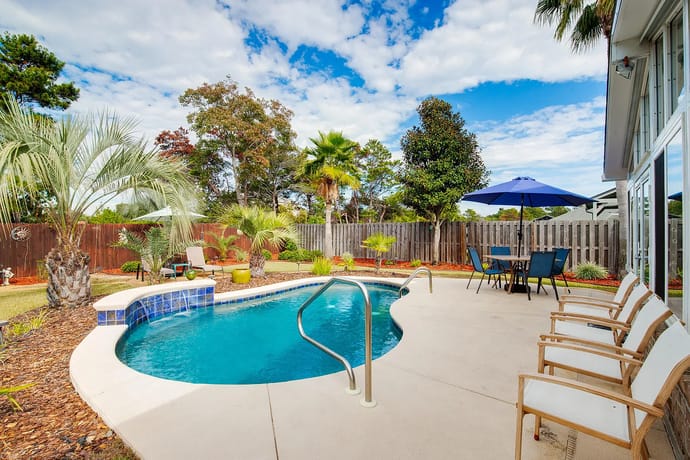
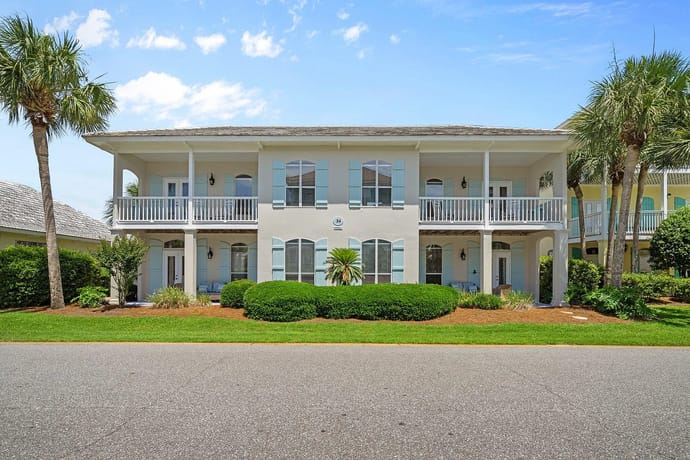
Our Miramar Beach rental has 4 bedrooms, a private pool, and sleeps 8, from $225/night. Our Destin rental is 3 bedrooms plus a bunk room, pet-friendly, sleeps 12, from $110/night.