Destin has been called the "World's Luckiest Fishing Village" since the 1950s, and for once, a marketing slogan holds up under scrutiny. The town sits at one of the most productive offshore fishing corridors on the Gulf Coast — a combination of geography, water clarity, and a charter fleet infrastructure that makes offshore fishing more accessible here than almost anywhere else in Florida.
This guide covers the practical details: what species are catchable and when, how to choose between a shared party boat and a private charter, what deep sea fishing actually costs, what to bring, and how to get the most out of a half-day or full-day trip offshore.
Why Destin Is One of the Best Deep Sea Fishing Destinations in the US
The geography is what makes Destin exceptional. The 100-fathom curve — where the Gulf floor drops from the continental shelf into 600 feet of water — sits roughly 10 miles offshore. That's significantly closer to shore than most ports along the Gulf Coast and much of the Atlantic. The proximity means the species that live in or transit deep water come within range of a half-day charter without spending three hours steaming to reach productive grounds.
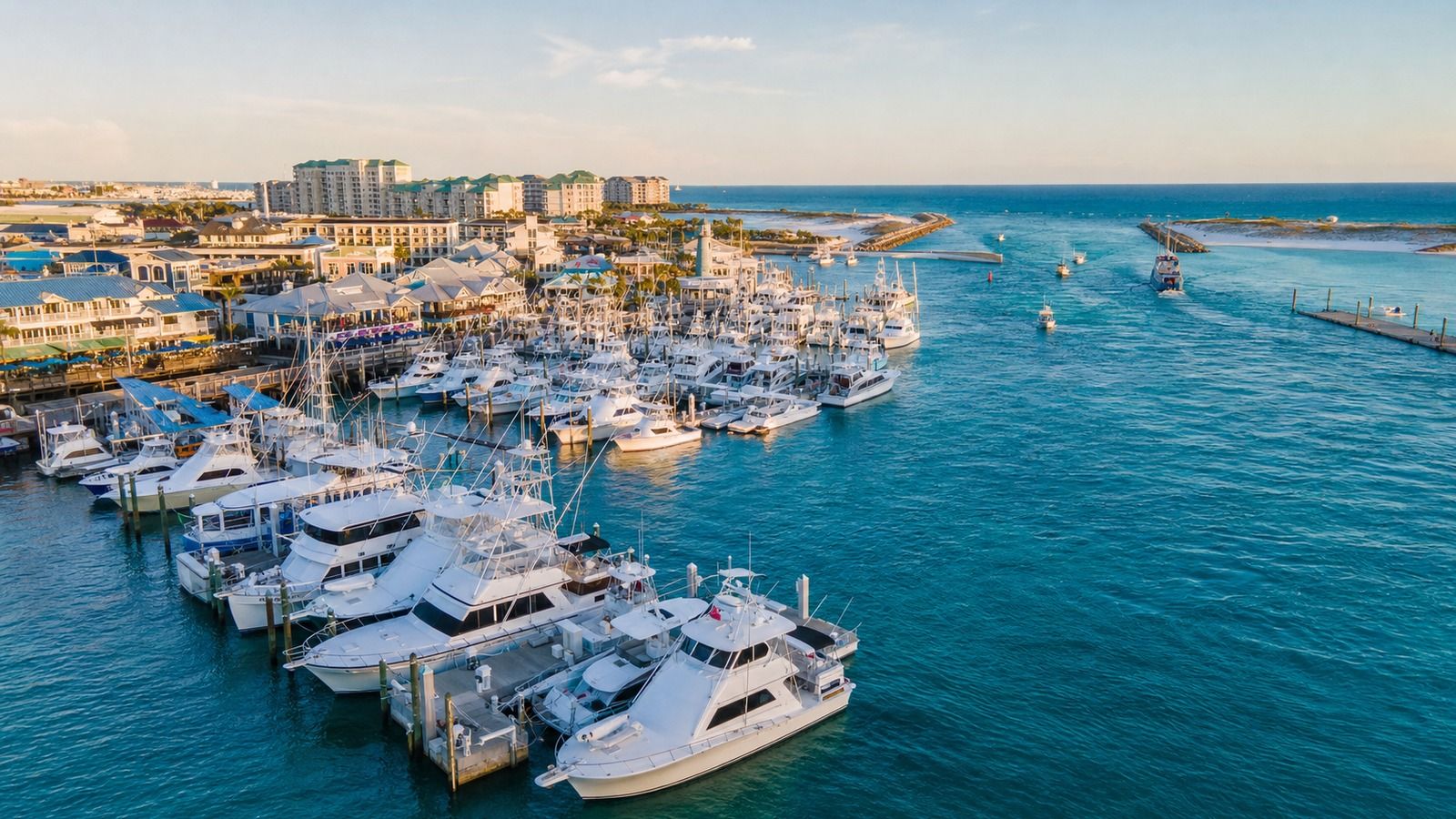
Combine that geography with Destin Harbor — one of the largest charter fishing fleets in Florida, with over 100 licensed charter vessels operating out of HarborWalk Village and the surrounding docks — and you have a remarkably organized fishing infrastructure. Operators range from budget-friendly shared party boats to high-end private sportfishing vessels. Competition keeps pricing relatively transparent and quality reasonably consistent.
The water clarity helps too. Destin's white quartz sand bottom reflects light differently than the muddy Gulf floor farther west, producing the emerald-green color the Emerald Coast is named for. Cleaner water means better visibility for sight-casting (relevant for cobia and some nearshore species) and historically correlates with healthier reef systems in the nearshore zone.
The honest caveat: Destin is not a secret. In peak summer, the number of boats on popular offshore reefs can feel like a marine parking lot. The 100-fathom area and the artificial reefs closest to shore get the most pressure. Experienced captains know which ledges and live bottom structures see less traffic — a good reason to book a reputable private charter over price-shopping the cheapest shared boat.
What You'll Catch: Target Species by Season
Destin's offshore fishing offers a rotation of species through the year. Here's what's available by season, with realistic expectations:
Red Snapper (June–late July, season-dependent)
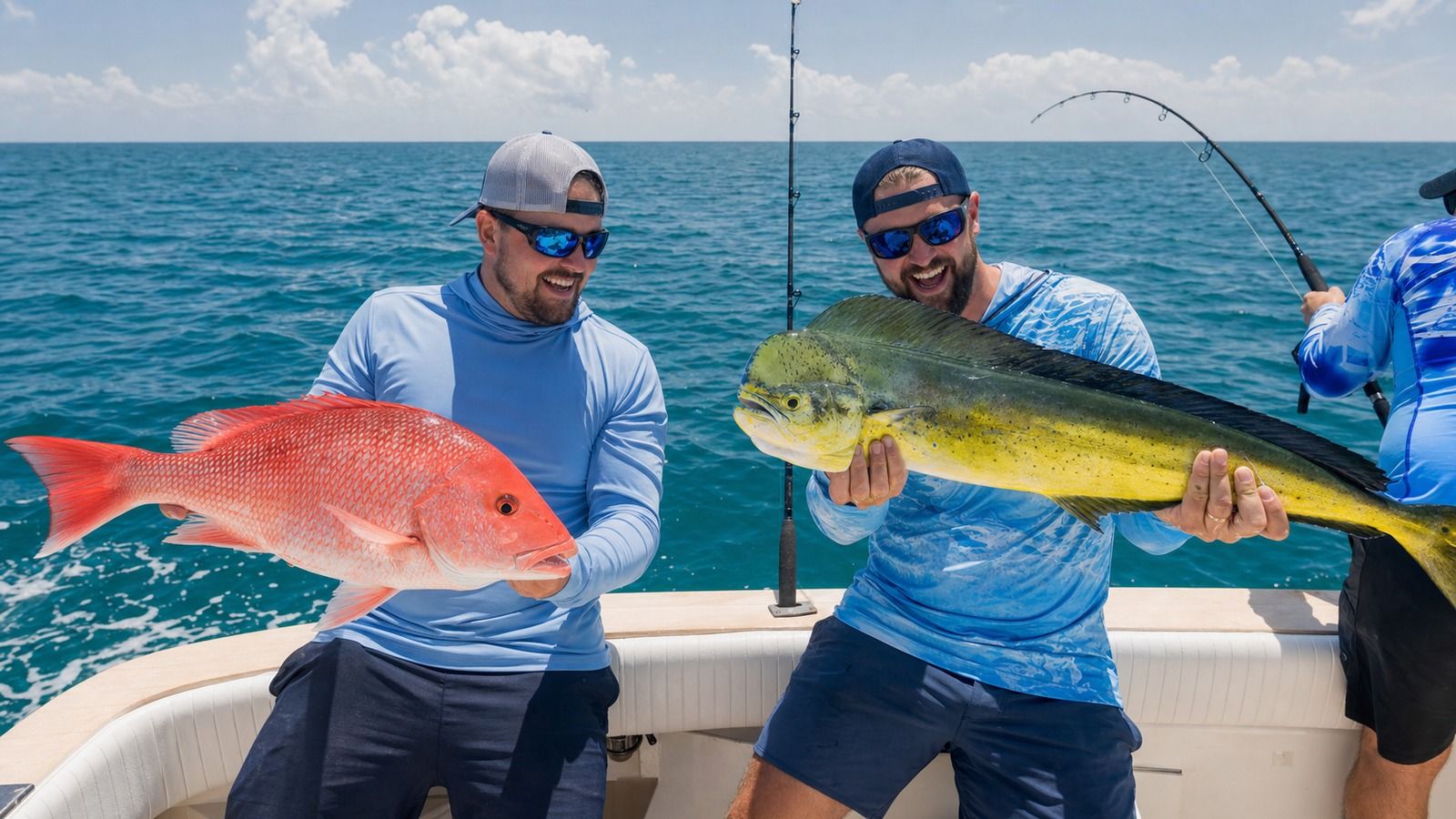
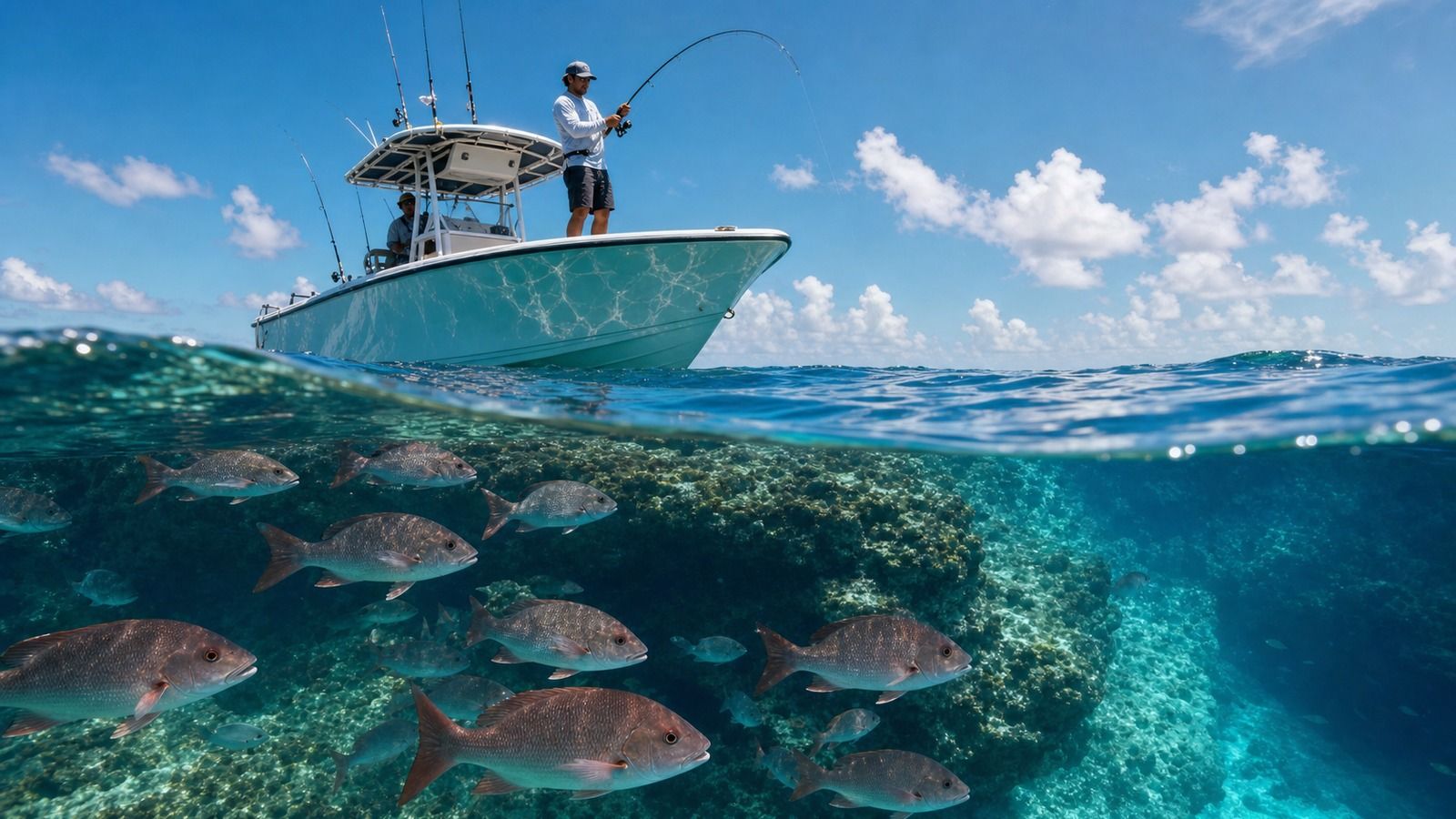
Red snapper is the most sought-after target species in Destin, and the federal season is what drives a significant portion of summer charter bookings. The federal snapper season typically opens June 1 and runs for 40–55 days (the exact window changes annually based on NOAA stock assessments — check the current year's dates at fisheries.noaa.gov before you book). During the open window, limits are 2 snapper per person per day at 16-inch minimum. The fish are large, pull hard, and taste exceptional. A private charter specifically targeting snapper in season is a trip worth building your schedule around.
Grouper (Year-round, with seasonal restrictions)
Gag grouper, red grouper, and scamp grouper are all present in the Gulf offshore of Destin. Grouper regulations are complex and change annually — there are separate bag limits and season dates for each species by management zone. Your charter captain handles the compliance; you need to understand that not all grouper seasons are open simultaneously. Peak grouper fishing is generally May through November on structure at 60–200 feet.
Mahi-Mahi / Dolphinfish (April–September)
One of the most exciting fish in the Gulf — vivid green and yellow, aerial jumps, hard fights, and arguably the best eating in the ocean. Mahi-mahi congregate around floating debris, weed lines, and current edges in the open Gulf. June and July are peak months as warm blue water pushes close to shore. A good captain reads satellite sea surface temperature charts to find productive weed lines, where mahi-mahi stack up in numbers. No season restrictions — open year-round.
Amberjack (Year-round, with seasonal restrictions)
Greater amberjack are abundant on the artificial reefs and natural ledges off Destin at 100–300 feet. They run 20–50+ pounds and fight extremely hard — the nickname "reef donkeys" is accurate. Amberjack season opens and closes with regulatory windows; when it's open they're a great target for first-timers who want to experience what a serious offshore fight feels like. Check current Gulf reef fish regulations before booking.
King Mackerel / Wahoo / Cobia
King mackerel (kingfish) are available April through October and run at high speed along the nearshore reefs. Wahoo peak in fall (September–December) and are among the fastest fish in the Gulf — prized by tournament anglers. Cobia appear in late spring (April–June) and can be spotted cruising nearshore structures and rays from a distance, making them a sight-fishing target. All three require no special season permits and are highly sought when in their peak windows.
Blackfin Tuna are available offshore year-round but peak in spring and fall. They're smaller than yellowfin (typically 5–25 pounds) but hard-fighting and excellent eating, especially for sashimi. Often caught incidentally while targeting mahi-mahi or wahoo on offshore trips beyond 80 miles.
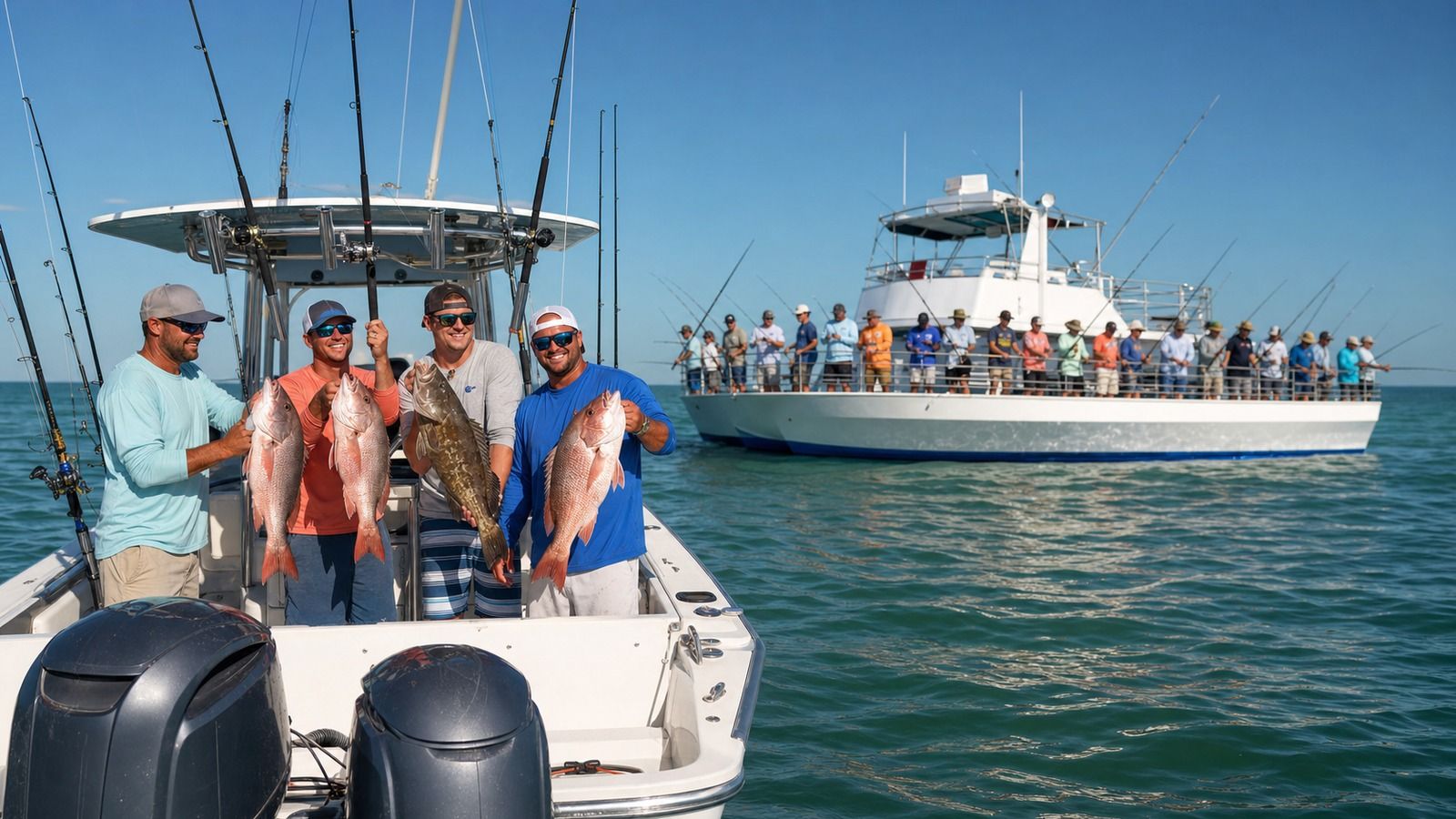
Shared vs. Private Charters: Which Is Right for Your Group
The two main options — shared "party boat" trips and private charters — serve different purposes. Here's how to think about the choice:
Shared Party Boats
- What it is: A large vessel (often 50–85 feet) carrying 15–30 anglers to an offshore reef. Everyone fishes the same spot; crew baits hooks and helps fish. Typically 4–5 hours for half-day, 8–10 hours for full-day.
- Cost: $75–$110 per person for a half-day; $130–$180 for a full day. Rods and bait usually included. Tip the mate $15–20/person.
- Best for: Solo travelers, couples, small groups who don't know each other, first-timers who just want to try it, or anyone on a tight budget.
- Tradeoffs: You fish where the captain takes everyone. Crowded rail means tangles. You can't request specific species or change the plan. Quality varies significantly between operators — read recent reviews specifically mentioning crew helpfulness and how crowded the boat runs.
Private Charter Boats
- What it is: You book the entire boat for your group (up to 4–6 passengers on most private charters). The captain goes where you want, targets what you want, and adjusts the plan based on conditions and what you're catching.
- Cost: $800–$1,400 for a half-day (4–6 hours); $1,500–$2,500 for a full day (8–10 hours). Split by 4–6 people, per-person cost often rivals or beats a party boat — with dramatically better experience.
- Best for: Groups of 4–6 who are serious about fishing, groups celebrating (bachelor party, guys' trip, family milestone), anyone who wants to maximize the chance of catching specific species, and groups with variable experience levels (good captains will work with beginners).
- Tradeoffs: Higher total price. Quality variance between captains is real — vet carefully with specific reviews. Book well in advance for June–August (popular captains sell out 4–8 weeks ahead in peak season).
When private beats party boat on a per-person basis: A private half-day charter for 6 people at $1,000 total = $167/person. That's only $57–$92 more per person than a shared party boat — for your own boat, your own agenda, and a fundamentally better experience. Groups of 4–6 should almost always do the math on private before defaulting to a party boat.
How to Book a Charter and What It Costs
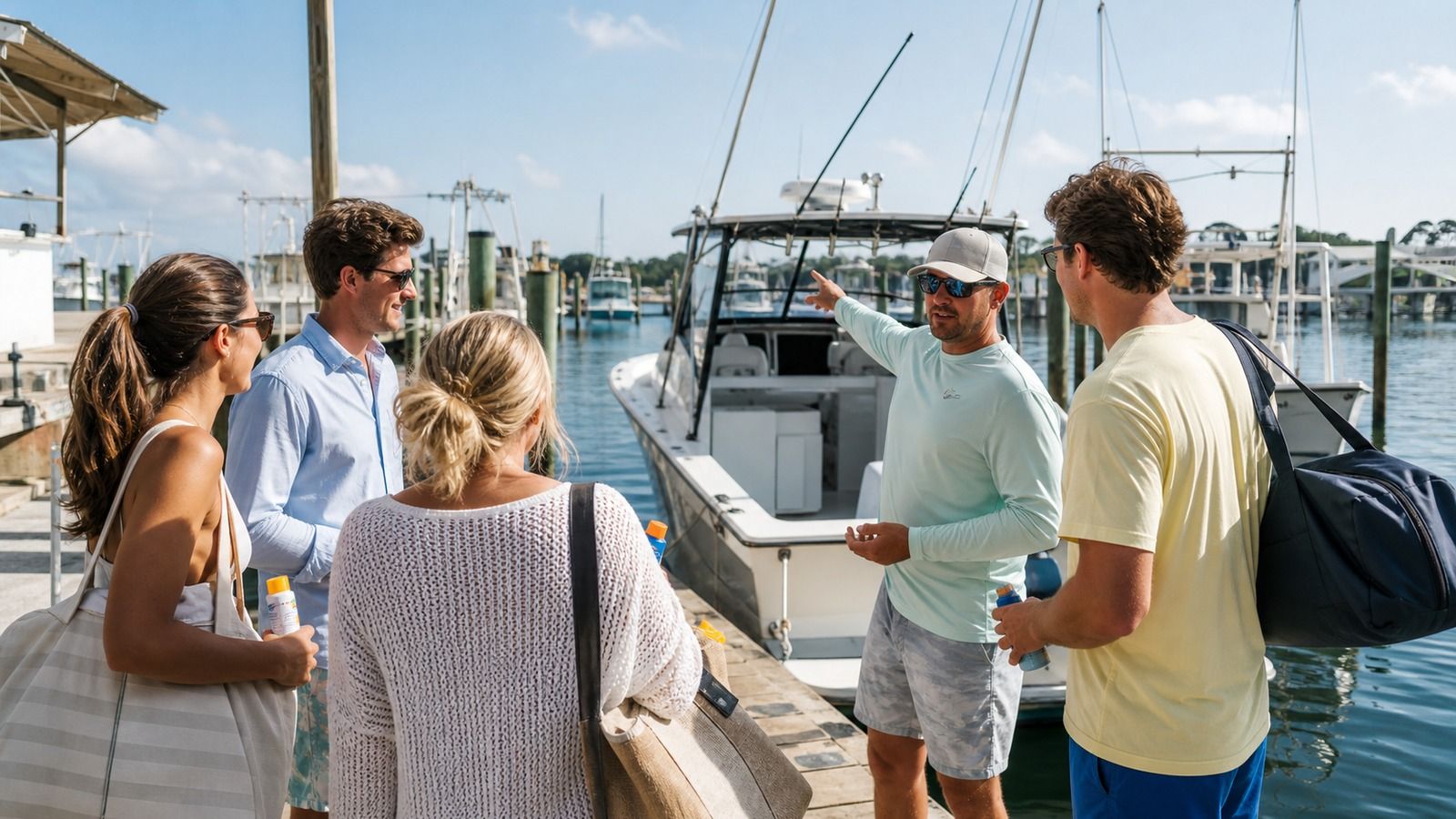
Where to book: HarborWalk Village is the central hub. Walk the docks, ask captains directly about their boats, recent catches, and what they're targeting in current conditions. The booking offices along the boardwalk represent multiple vessels and can help match you to the right boat for your group size and target species. For private charters, FishingBooker.com and the Destin Charter Boat Association are useful directories with verified reviews.
What to look for in a captain:
- USCG Master Captain license (required for hire) — don't ask to see it, but it should be visible in the wheelhouse
- Recent catch photos on their website or social media (not just stock photos)
- Honest recent reviews mentioning actual catch counts, not just "great trip"
- Willingness to tell you what's catching right now and adjust trip type accordingly
- Clear communication about what's included (bait, ice, tackle, fish cleaning) and what isn't
What's typically included: Most charters include rods, reels, bait, ice, and fish cleaning. Fishing licenses are covered by the captain's vessel permit — you don't need a personal saltwater fishing license for guided saltwater charter trips in Florida. Confirm whether fuel surcharges apply (some offshore trips add a fuel fee on top of the base rate).
Tipping: Tip the mate (the deckhand who does most of the hands-on fishing work) $20–30 per person for a good trip. Tip the captain $20–30/person on a private charter where they're doing double duty. Cash, paid directly to the crew at the end of the trip.
When to book: For shared party boats in summer, 3–5 days ahead is usually fine. For private charters in June–August, especially during red snapper season, book 4–6 weeks ahead. Popular captains with strong reputations often fill their summer calendar by April or May. If you're planning a June trip in February, book the charter first and plan the rest of the trip around it.
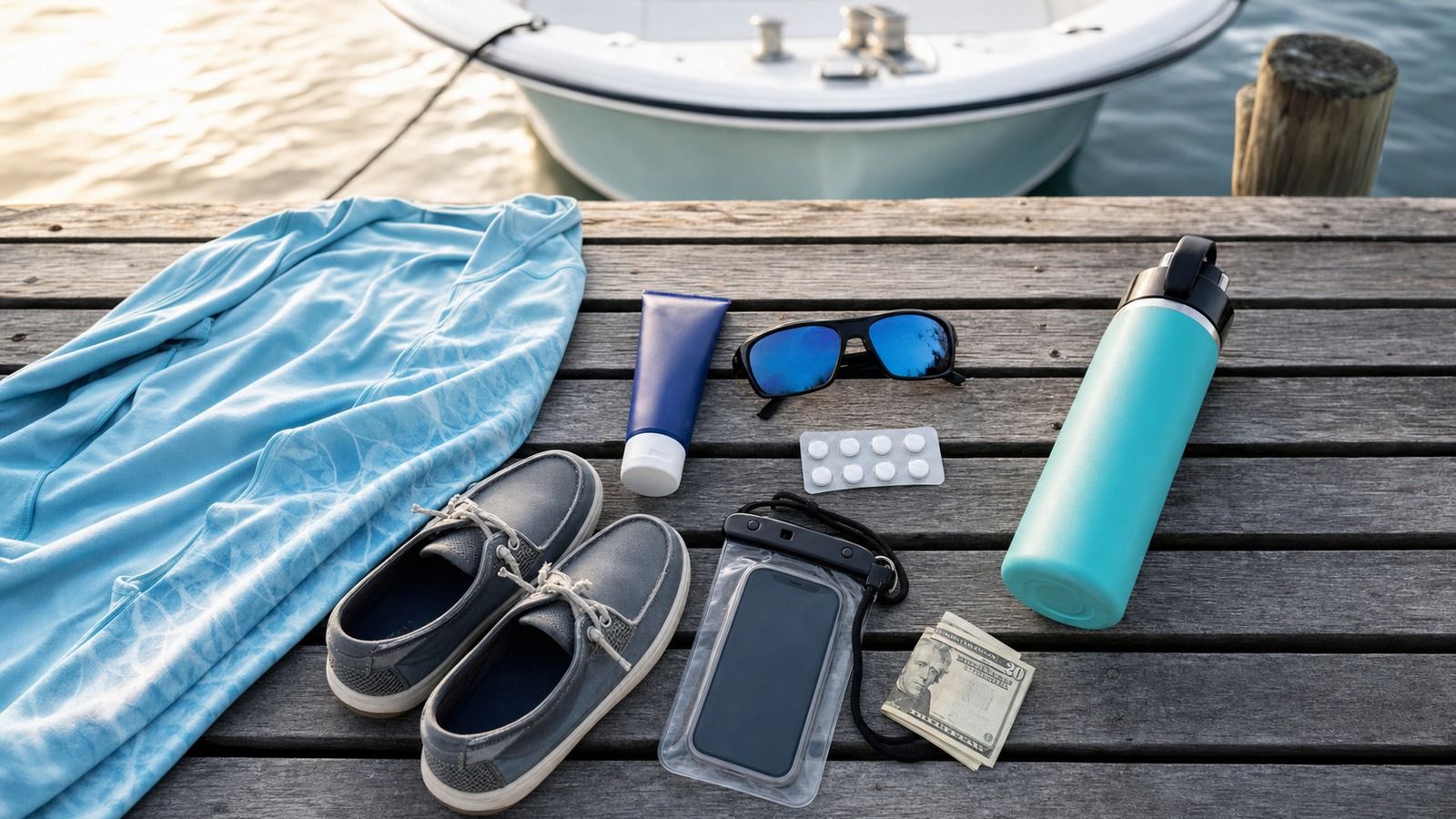
What to Bring (and What to Leave Behind)
Bring:
- Sun protection — non-negotiable: SPF 50+ reef-safe sunscreen (reapply every 90 minutes), a lightweight long-sleeve UPF sun shirt, and a wide-brimmed hat. The sun on open water is significantly more intense than on the beach. Polarized sunglasses reduce glare and help you spot fish.
- Motion sickness medication: Take Bonine (meclizine) or non-drowsy Dramamine the night before or at least 1–2 hours before departure, not when you're already feeling sick. If you're prone to seasickness, ask your doctor about a prescription scopolamine patch. Once you're sick offshore, recovery is miserable and ruins the trip.
- Non-skid boat shoes or closed-toe sandals: Deck gets wet and slippery. Flip-flops are a liability offshore — proper deck shoes or water shoes with grip are worth wearing.
- Water and snacks: Most charters provide ice but not food. Bring water (dehydration worsens seasickness) and light snacks — crackers, granola bars, nothing heavy or greasy. Avoid spicy food and alcohol before and during the trip.
- Cash for tip: $20–30 per person for the mate, in small bills. ATMs at HarborWalk are available but sometimes busy at 5am.
- Waterproof phone case or camera: You will want photos. You will get splashed.
Leave behind:
- Large bags or rolling luggage: Deck space is limited. A small backpack or dry bag is appropriate. Checked-luggage-sized bags create hazards and annoy the crew.
- Alcohol on party boats: Many shared charters are dry boats (no outside alcohol). Some allow it; confirm when booking. Drinking offshore before catching fish is a seasickness accelerant anyway.
- Flip-flops: Mentioned above — don't do it.
- Your own rods: Unless you're an experienced angler with specific tackle preferences and have confirmed with the captain, rods and tackle are provided. Bringing your own adds hassle and requires deck space.
Best Times to Go and Fishing Regulations
Best months by priority:
- June–July: Peak season for red snapper (when the federal season is open), mahi-mahi, and amberjack. Charter rates are at their highest, boats fill fast, and weather windows matter more (afternoon thunderstorms are common). Book early, go out morning trips, and understand you might need a rain-delay backup day.
- April–May: Cobia run, early mahi-mahi, less crowded water, moderate charter rates. Excellent window for groups who want good fishing without peak-summer pricing and traffic. Water is slightly cooler (68–74°F) but fish are active.
- September–October: Wahoo season begins, mahi-mahi still running, grouper regulations often open. Dramatically fewer people. Charter rates drop 20–30% from summer highs. Weather stabilizes after the late-summer storm pattern. This may be the best combination of fishing quality, price, and experience for serious anglers.
- November–March: Deep reef grouper and scamp fishing is the primary target. Water is 55–65°F, trips are less dramatic but can produce excellent fish. Fewer charter options operate; many captains take the winter off. Good for anglers specifically chasing grouper and willing to work for them.
Key regulations to understand before you go:
- No personal fishing license needed: Federal and state saltwater licenses are covered by your charter captain's vessel permit. You do not need to purchase a personal license for guided charter trips in Florida.
- Red snapper season dates change annually: The Gulf reef fish management council sets the annual snapper season based on stock assessments. It has historically opened June 1 and runs 40–55 days. Verify the current year's dates at fisheries.noaa.gov before booking a trip specifically for snapper.
- Bag limits: Most species have daily bag limits enforced per person. Your captain tracks these and will cut off fishing when limits are reached. Common limits: red snapper (2/person), gag grouper (3/person when open), mahi-mahi (10/person).
- Fish handling: Your captain keeps the fish in the boat's fish box and processes them at the dock. Most Destin charters include filleting as part of the trip. You take your fish home vacuum-sealed or on ice. If you're flying home, pack the fish in a sealable cooler in checked luggage — this is legal and common.
Weather and cancellations: Offshore fishing is weather-dependent. Reputable captains will cancel or reschedule if winds exceed 15–20 knots or if a lightning system is moving through. A trip in 4–5 foot seas is uncomfortable but manageable; 6+ feet is miserable and potentially dangerous. Trust your captain's judgment. Most operators have a rescheduling policy — ask about it when you book.
Stay Close to the Action
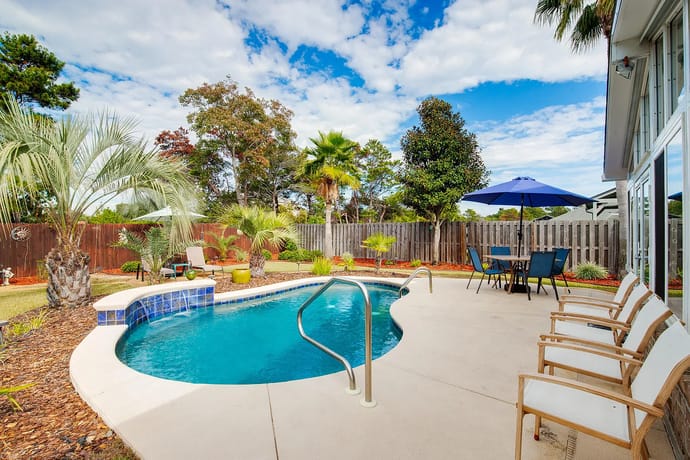
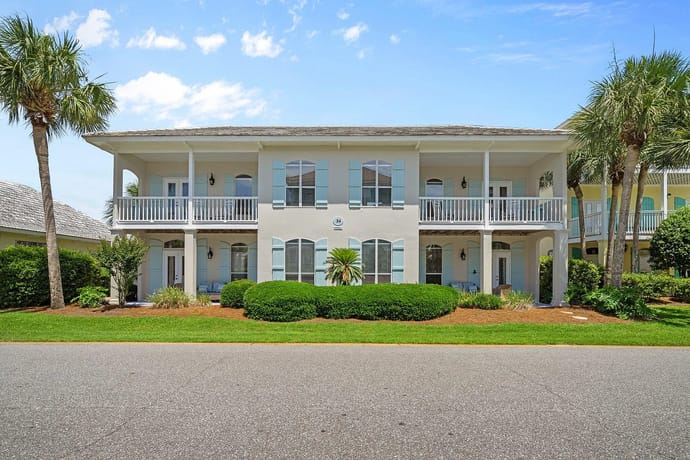
Both our rental properties put you within easy reach of Destin Harbor. Our Destin property is 3 bedrooms plus a bunk room, pet-friendly, sleeps up to 12, from $110/night — perfect for a group fishing trip where an early-morning departure is easier when you're already in town. Our Miramar Beach property has 4 bedrooms, a private pool, and sleeps 8 from $225/night — ideal for a longer stay that combines fishing with beach days and activities.