Destin has one of the most active charter fishing fleets in the country, and for good reason. But a growing number of anglers are discovering what the locals already know: the inshore water behind Destin — the seagrass flats of Choctawhatchee Bay, the marsh channels along Miramar Beach, and the current-driven edges of East Pass — fishes exceptionally well from a kayak. You can reach water that center consoles skip over, approach wary fish without engine noise, and get your line in the water for under $50 in rental fees.
This guide covers the best launch spots, target species, what gear to bring or rent, the license requirements, and the best times of year for kayak fishing in the Destin and Miramar Beach area.

Why Kayak Fishing in Destin Is Better Than You'd Expect
The obvious advantage is access. A sit-on-top fishing kayak drafts only a few inches of water, which means you can pole or paddle over seagrass flats that a skiff has to avoid, drift into marsh pockets that no other boat can reach, and position yourself silently within casting range of schooled redfish without spooking them. In Choctawhatchee Bay's shallow backbay sections — some areas averaging only 18 to 30 inches — kayak fishing is genuinely superior to anything with a motor.
The cost comparison is dramatic. A shared half-day inshore charter runs $75–150 per person and operates on the captain's schedule to the captain's spots. A kayak rental from an outfitter near Miramar Beach runs $30–50 for a full morning. If you're visiting for a week and want to fish several mornings, the math shifts completely in favor of a kayak.
There are real tradeoffs. A kayak can't cover offshore ground, chase pelagics, or put you on fish 10 miles out. If grouper or king mackerel are on your list, you still need a charter. But for inshore — redfish, speckled trout, flounder, sheepshead, jack crevalle — a kayak keeps pace with a guide boat and often beats it, because the fish are in the skinny water the guide boat avoids.
- Silence is a real advantage. Redfish on a flat will spook at an outboard at idle speed from 200 yards. A kayak paddled slowly into position gets inside 30 feet before fish react. That changes how you can fish topwater lures, sight-cast to tailing reds, and work soft plastics along grass edges.
- You control the timing. The best inshore fishing in Destin happens in the first two hours after sunrise, when light is low and predators are most active on the flats. No charter runs those hours as standard — most depart mid-morning. In your own kayak, you set the launch time.
- The experience is genuinely different. Kayak fishing in a Florida backbay at dawn — herons lifting off the shoreline, mullet nervous in the shallows, the smell of saltwater and marsh — is one of the finest fishing experiences in the South. It is not a consolation prize for people who can't afford a charter. It is its own thing.

Best Spots to Kayak Fish in the Destin Area
Most productive kayak fishing in the area is on the bay side, not the Gulf side. The Choctawhatchee Bay and its associated backwaters are the real prize.
- Choctawhatchee Bay backbay (Miramar Beach side). The bay immediately north of the Miramar Beach strip has miles of productive seagrass flats in 1–4 feet of water. Fish the grass edges and the sandy potholes within the grass for redfish and speckled trout. Morning high tides push reds up into the shallowest water, where they're tailing and visible. Several public launch access points exist along the bay-side streets north of Scenic Gulf Drive — ask locally or check Google Maps satellite view to find the nearest put-in from where you're staying.
- East Pass jetties (experienced paddlers only). The East Pass is where the bay drains into the Gulf, and its jetties concentrate fish year-round. Sheepshead pack onto the rocks in fall and winter. Flounder hold in the current break at the jetty base. Spanish mackerel and jack crevalle run the pass on moving tides. The critical caveat: the current through East Pass runs hard on tidal exchanges, and boat traffic in the channel is constant. Paddle here only on slack water, in the protected bay-side eddy behind the jetty rocks, and always wear a life jacket. The reward — snook in summer and large flounder in October — is real, but this spot demands experience and a conditions check before launch.
- Joe's Bayou and the Fort Walton Beach back bays. Heading west on US-98, the bayous between Destin and Fort Walton Beach offer protected, calm-water kayak fishing that is excellent for speckled trout in early morning. Joe's Bayou off Okaloosa Island is a local favorite — narrow, mangrove-lined, with minimal boat traffic. Fishing pressure here is lower than the Destin-side flats, which matters more each year as the area sees more visitors.
- Boggy Bayou and Rocky Bayou (Niceville, ~30 min east). Worth the short drive for a different experience. Rocky Bayou State Park has a boat ramp and access to the Choctawhatchee Bay's eastern end, where the grass flats are enormous and the redfish population is strong. Less paddler traffic than the Destin-side backbay. On a calm weekday morning in October, you can paddle for hours without seeing another kayak.
- Henderson Beach State Park shoreline. The park's undeveloped beach frontage can be accessed via an adjacent boat ramp. Gulf-side paddling near Henderson Beach in calm conditions is productive for Spanish mackerel, ladyfish, and fall pompano close to the shore wash. Stay within 100–150 yards of the beach when conditions are mild — the open Gulf changes quickly.
- Crab Island approach from the harbor. Renting a kayak and paddling from a harbor-area launch to Crab Island covers roughly half a mile. While the sandbar is more of a social spot, the approach — along the harbor edges near HarborWalk at low-traffic early morning hours — produces jack crevalle, ladyfish, and occasional flounder along the pilings. Convenient if you're already on the water from the harbor side.
Practical note on launch access: Destin and Miramar Beach don't have designated public kayak launches at every convenient spot — you often put in from a neighborhood street end or a state park ramp. Several rental operators near the Miramar Beach backbay launch from their own docks, which simplifies the logistics considerably if you're renting.

What You Can Catch from a Kayak in Destin
The realistic target list for kayak fishing in the Destin backbay system covers most of the classic Gulf Coast inshore species:
- Redfish (Red Drum). The signature kayak fishing target in the area. Redfish love shallow water, and the seagrass flats of Choctawhatchee Bay are a redfish nursery. In summer, juvenile reds school heavily in the backbay shallows. In fall (October–November), adult redfish school up in large pods and feed aggressively as the water cools. A morning high tide pushing onto a grass flat in October is as good as backbay redfishing gets on the Gulf Coast. The slot limit for keeping redfish in Florida Gulf waters is 18–27 inches, one per person per day — verify current FWC regulations before keeping any fish.
- Speckled Trout (Spotted Seatrout). The most consistent early-morning kayak catch in the backbay. Trout suspend just above grass beds and ambush bait — a slow-sinking soft plastic or a topwater worked over the edge of a grass flat at dawn is highly productive. Most reliable in spring (April–May) and fall (October–November), though good trout fishing exists year-round in the deeper bay channels.
- Flounder. One of the better-eating fish in the bay. Flounder lie flat on sandy bottom near structure edges — channel lips, jetty rock piles, grass-to-sand transitions. A kayak lets you position and drag a soft plastic slowly along these ambush zones at a pace that catches flounder consistently. October's fall flounder run, when fish migrate from the bay toward offshore spawning grounds through passes and channels, is the high point of the season.
- Sheepshead. Sheepshead pile onto structure — pilings, jetty rocks, dock corners, bridge footings. A kayak lets you anchor within casting range of structure that's inaccessible from a boat dock or too shallow for a skiff. Live shrimp or fiddler crabs fished tight to structure on the bottom. Best in fall and winter (October–February). Notoriously subtle strikers, but very good on the table.
- Jack Crevalle. Hard-fighting schooling fish that push bait throughout the bay and harbor. When you see nervous bait spraying across the surface with boils behind them, that's usually jacks. A fast-moving topwater plug or jig catches them aggressively. No significant table value, but excellent sport — a 10-pound jack on kayak tackle is a genuine workout.
- Pompano. Pompano run the beaches in fall — particularly October — and are catchable from the Gulf side of Henderson Beach and the jetties on a favorable tide. One of the best-eating fish in the Gulf. Small jigs or sand flea imitations on a light spinning rod. The surf is challenging to fish from a kayak in anything other than very calm conditions; this one is better approached from shore unless conditions are flat.
- Snook. Snook are at the northern edge of their range in Panhandle waters and less common here than in South Florida, but they do exist around Destin's passes and jetties in warm months. A bonus catch rather than a primary target. Catch-and-release only in this region.
Kayak fishing for these inshore species doesn't require specialized tackle — a medium-light spinning rod in the 6.5–7 foot range with a 2500–3000 size reel spooled with 10–15 lb braid covers most situations. Local bait shops like Bait & Fly Outfitters in Destin can advise on what's biting and rig you up if you need tackle. See also the inshore fishing guide for a deeper look at bait and technique by season.

Kayak Types, Gear, and Rentals Near Destin
Choosing the Right Kayak
Not all kayaks work equally well for fishing. The key distinctions:
- Sit-on-top vs. sit-inside. Sit-on-top kayaks are far better for fishing in Destin's warm, shallow conditions. You can stand up to sight-fish, the hull is more stable for casting, and falling in — which happens — just means getting back on. Sit-inside kayaks are better for cooler water and rougher open-water conditions, which is not what you're dealing with in the Destin backbay.
- Dedicated fishing kayaks vs. recreational. Fishing-specific kayaks have built-in rod holders (typically 2–4 slots), gear tracks for mounting accessories, tackle storage compartments, and often a flat stern deck you can stand on for sight-fishing. Recreational kayaks work for casual paddling but are limiting for serious fishing. If fishing is your primary purpose, look for a dedicated fishing model at the rental shop — Get Up And Go Kayaking near Miramar Beach carries them.
- Width and stability. Wider kayaks (30+ inches at the beam) are more stable for standing and casting. For backbay fishing where you're working a small area thoroughly rather than covering distance, a wider stable hull is almost always the better choice.
- Pedal drive vs. paddle. Pedal-drive kayaks leave your hands free to fish while your feet provide propulsion — an excellent feature for stealthy positioning. A few rental operators in the area carry them; call ahead if this matters to you. Standard paddle kayaks work fine for most visits.
Where to Rent
- Get Up And Go Kayaking — The top-rated outfitter in the area, with backbay launch access near Miramar Beach and a fleet that includes fishing-ready kayaks. Guided fishing tours available alongside straight rentals. Best first call if you're unsure what you need.
- SUP Express — Primarily stand-up paddleboard focused but also rents recreational kayaks, closer to the Destin Harbor area.
- Marina outfitters at Destin Harbor and Okaloosa Island — Several boat rental operations also rent small fishing kayaks. Walk-up weekend rates run higher than advance online bookings.
Typical 2026 rental pricing:
- Recreational sit-on-top: $30–45/hour, $75–95 half-day (4 hrs)
- Fishing-specific kayak with rod holders: $40–55/hour, $90–120 half-day
- Guided kayak fishing tour (2–3 hrs): $65–95/person
If you're staying a week and plan to fish multiple mornings, buying an inexpensive sit-on-top at a local sporting goods store (Dick's Sporting Goods or Walmart in Fort Walton Beach typically stocks them in season for $350–500) and reselling it before you leave can be cost-effective. Roof rack straps and a couple of ratchet straps make transport manageable.
For fishing tackle and live bait, see our Destin fishing guide for a rundown of the local bait shops. Live shrimp — usually $10–15 per dozen from any shop — is the universal inshore bait and works well across all the species listed above.

Florida Fishing License, Regulations, and What to Pack
License Requirements
A Florida saltwater fishing license is required for anyone 16 or older fishing in Florida's coastal waters or bay systems from a kayak. It is not included with a kayak rental unless you are on a guided trip that explicitly says so.
- Where to buy: Online at MyFWC.com (instant digital issue), through the GoOutdoorsFlorida mobile app, or at any local bait shop. Most shops issue a license at the counter in a few minutes.
- Non-resident saltwater license costs (2026): 3-day ~$17. 7-day ~$30. Annual ~$47. Florida residents pay significantly less.
- Carry it digitally. Florida accepts the digital license displayed on your phone via the GoOutdoorsFlorida app. A FWC officer on the water can verify it from your screen.
- Bag limits and slot sizes change. Always verify current regulations at MyFWC.com before your trip, particularly for redfish (18–27 inch slot, one per person per day in Gulf waters), speckled trout, and flounder. Florida's FWC updates these regulations seasonally.
What to Pack for a Kayak Fishing Morning
- Paddle leash. Tie your paddle to the kayak. Losing it in moving current or while fighting a fish is a genuine problem in open water.
- Life jacket (PFD). Florida law requires one aboard for each person; adults should wear them, not just carry them. The East Pass current is reason enough. Most rentals include one.
- Polarized sunglasses. Non-negotiable for sight-fishing over flats. They cut surface glare and let you see fish. Without them you're guessing; with them, you can spot tailing redfish 50 feet away.
- Dry bag or waterproof case. Phone, wallet, and keys go in a dry bag. Kayaks are stable but not immune to capsizing, especially near the jetties or in harbor traffic.
- Water and snacks. Florida sun in a kayak is intense. Bring more water than you think you need — 32+ oz per 2-hour session in summer. A small cooler bungeed to the stern deck holds drinks and your catch.
- Landing net. A rubber-mesh net makes release easier and kinder to the fish. Many kayak anglers use a collapsible model that stows in the cockpit.
- Grip tool and needle-nose pliers. Redfish and sheepshead have rough mouths that make bare-hand hook removal difficult, and catfish — which you'll occasionally catch in the bay — have sharp spines.
- Sunscreen and sun protection. SPF 50+ mineral sunscreen applied before launch and reapplied every 90 minutes. Water reflection amplifies UV significantly. Sun sleeves and a wide-brim hat are worth the inconvenience.
- Anchor or stake-out pole. A small kayak anchor or a push-pole you can stake into the bay bottom lets you hold position on a flat without drifting — critical for working a specific grass edge thoroughly rather than constantly repositioning.

Best Times of Year to Kayak Fish in Destin
The Destin backbay fishes year-round, but some windows are markedly better than others:
- October–November (the best months). Fall is the consensus best season for kayak fishing in Destin. Water is still warm (low 80s in October, mid-70s in November), crowds thin dramatically after Labor Day, and fish feed aggressively for the seasonal shift. Adult redfish school in large fall pods, the flounder run is on, speckled trout are aggressive on topwaters in the morning, and sheepshead stack onto jetty structure. Winds are lighter between fronts and the bay is often mirror-flat from dawn to mid-morning. If you can only plan one fishing-focused kayak trip, plan it for October.
- April–May (spring shoulder season). The bay transitions out of winter in late March and April. Speckled trout are spawning and very accessible on grass flats. Redfish that wintered in deeper bay channels move back onto the flats as temperatures rise. Crowds haven't fully arrived yet, and weekend mornings in April on the Miramar Beach backbay can feel almost private. April weather is variable — fronts can bring rain and wind — but the fishing windows between systems are excellent.
- June–August (summer). Summer kayak fishing is productive but requires early starts. Bay water hits 88–92°F in August, and fish push to slightly deeper, cooler water by mid-morning. Target the first two hours after sunrise — grass flat redfish are in the shallows then and retreat by 9am. Expect heat and afternoon thunderstorms that develop quickly over the bay. Hydrate heavily and don't plan to be on open water after noon.
- December–February (winter). Winter fishing is for dedicated anglers. Water temperature drops to 55–65°F, and most fish move to deeper, warmer bay channels. Sheepshead and black drum are the reliable winter targets — both concentrate heavily on dock pilings and jetty structure in cold water. Speckled trout move to deeper channel edges. You'll have the water to yourself, and winter reds can still be caught — they slow down but don't stop feeding. Dress in layers; a 40°F morning on the water in a kayak is genuinely cold.
Best time of day, any season: Launch in the last 30 minutes of darkness or at first light. The most productive window is sunrise plus 90 minutes. Fish are actively feeding, light is low (which makes wary species bolder in shallow water), and the bay surface is at its calmest before sea breezes develop. This timing requires staging gear the night before and having coffee ready to go, but it is consistently the best fishing of the day.
For a complete picture of what each month looks like in Destin, see the weather and conditions guide by month and the fall fishing guide for the October–November charter and DIY breakdown.
Your Base for Kayak Fishing in Destin and Miramar Beach
Both of our vacation rentals are within a few minutes of the best kayak fishing launch points in the area. Full kitchens mean you can cook your catch; private outdoor space means somewhere to rinse gear before bringing it inside.
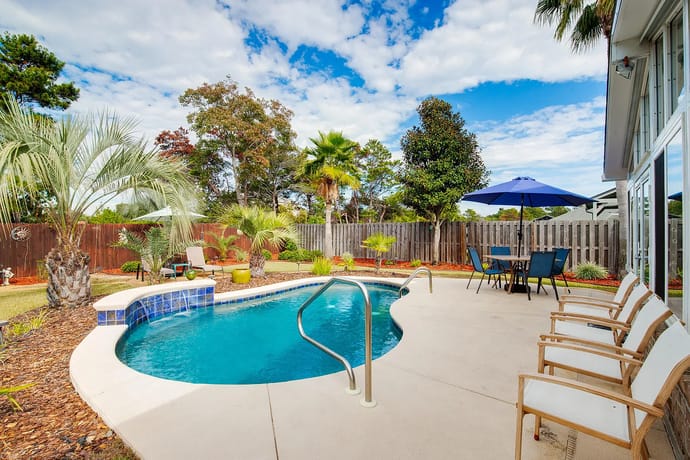
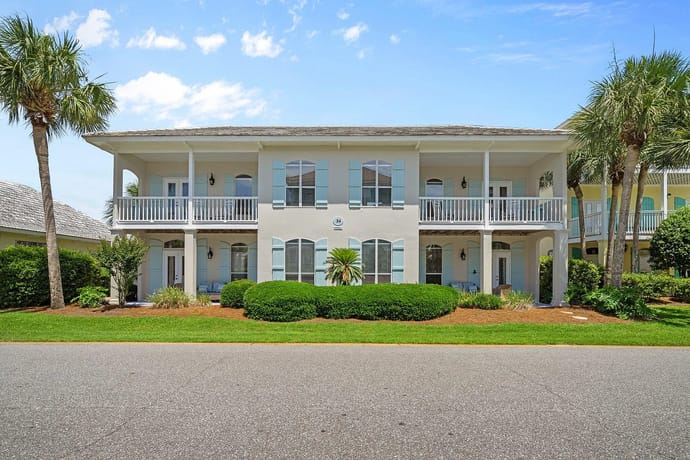
Our Miramar Beach rental is closest to the backbay launch points most guided tours and outfitters use — 4 bedrooms, a private pool, sleeps 8, from $225/night. Our Destin rental puts you near the harbor and East Pass jetties, is pet-friendly, sleeps up to 12, and starts from $110/night.