Yes, there are jellyfish in the Gulf of Mexico near Destin. That's not a reason to panic or cancel your trip — millions of people swim the Emerald Coast every summer without incident. But it's worth knowing when the risk is higher, which species you might encounter, and what to actually do if someone in your group gets stung.
This guide covers jellyfish season timing, the species you're most likely to see, evidence-based sting treatment (including what not to do), ways to reduce your risk, and what to do with your day when the Gulf is having a jellyfish moment.

When Is Jellyfish Season in Destin?
Jellyfish can appear in the Gulf year-round, but the window worth paying attention to runs from late May through October, with June, July, and August being peak months. Warmer water temperatures — the Gulf hits the upper 70s to mid-80s°F through summer — support the small prey jellyfish follow inshore, which is why they're a summer phenomenon.
Wind direction matters as much as the calendar. Onshore winds blowing from the south or southwest push jellyfish toward shore. A night of strong southerly wind followed by a calm morning is the classic setup for a jellyfish-heavy beach. Offshore winds (from the north) push them away — those are often the best swimming days of the summer even if the weather looks less inviting.
After storms, jellyfish frequently wash up on the sand. These beached animals look harmless but their nematocysts (stinging cells) stay active for hours, sometimes days. Don't let kids handle anything washed up on the beach — this is how most non-swimming stings happen.
The practical morning check: Look at the beach flag poles along Scenic Gulf Drive before entering the water. A purple flag means marine pests — jellyfish, man-of-war, or stingrays — have been spotted. Ask the lifeguard at any staffed access point what they're seeing. That 30-second conversation is the best real-time intel available.

Which Jellyfish Species Are in Destin Waters?
Three species account for almost everything you'll encounter. They range from barely-a-sting to genuinely painful:
Moon Jellyfish (Aurelia aurita)
The most common species in the Gulf near Destin. Pale, translucent, dome-shaped — usually 6–12 inches across with four pink rings visible in the center. Moon jellies have very short, fine tentacles and their sting ranges from faint tingling to barely detectable. Most adults feel nothing at all; kids with sensitive skin might show a mild rash. If you see large numbers of translucent blobs floating near the surface on a calm summer morning, these are almost certainly moon jellies. They drift passively with the current and pose minimal risk.
Cannonball Jellyfish (Stomolophus meleagris)
Named for their squat, round shape with a yellowish-brown fringe around the bottom — 6–10 inches across. Mild sting, though contact with mucus from their oral arms can irritate sensitive skin. They appear in significant numbers during some years. Commercial fisheries actually harvest them in the Gulf for Asian seafood markets, which gives you some sense of how low-threat they are. If you're surrounded by cannonballs, swimming is still fine; just avoid grabbing the fringe.
Atlantic Sea Nettle (Chrysaora quinquecirrha)
Less common near Destin but present. Distinguished by brownish-reddish radial stripes on a white or cream bell with long, trailing tentacles. These have a noticeably more painful sting — the kind that leaves a linear red welt and gets your attention. Reactions are typically localized and resolve in a few hours, but people with shellfish sensitivities may have a stronger response. Give any jellyfish with long, reddish trailing tentacles clear space.
Portuguese Man-of-War (Physalia physalis)
Not technically a jellyfish — it's a siphonophore — but it causes more alarm on Destin beaches than anything else. Hard to miss: a vivid blue or purple gas-filled float (3–6 inches) sits at the surface with tentacles that can trail 30 feet or more below. Man-of-war stings are genuinely painful — immediate burning, electric sensation, welts, and occasionally systemic symptoms in sensitive individuals. The tentacles remain active long after the animal washes up, so don't touch the deflated float you see in the sand. When man-of-war are present, the purple flag typically flies and lifeguards advise staying out of the Gulf. They appear episodically, usually following strong southerly winds, and may arrive in numbers. In most years, man-of-war events in Destin are occasional rather than daily — but when they're present, word spreads fast.

What to Do If You Get Stung
First: don't panic. The vast majority of jellyfish stings on Destin beaches are from moon jellies or cannonballs — painful nuisances, not medical emergencies. Here's what actually works:
- Get out of the water without rubbing the area. Rubbing breaks open tentacle fragments and fires additional nematocysts. This is the most common mistake.
- Scrape off visible tentacle fragments with a credit card, shell, or towel edge — not bare fingers.
- Rinse with salt water, not fresh water. Fresh water triggers unfired nematocysts to discharge, making things worse. Use ocean water or bottled saline.
- Vinegar can deactivate nematocysts, particularly for man-of-war. Some beach shops and first-aid stations keep it on hand. Less reliable for other species but harmless.
- Hot water immersion (as hot as comfortably tolerable, 20 minutes) is the most evidence-backed treatment for pain. It denatures the venom proteins. More effective than ice, which is counterproductive.
- Antihistamines and hydrocortisone cream help with itching and redness once the acute pain subsides.
The urine myth: No. Urine has inconsistent pH, can introduce bacteria, and may trigger more nematocyst discharge. It persists as folk advice because it's memorable, not because it works.
When to get medical help: Go to the lifeguard station immediately — or call 911 — if the stung person has difficulty breathing, chest tightening, throat swelling, nausea and vomiting beyond the sting site, or a sting covering a large portion of the body. Man-of-war stings on the face, lips, or inside the mouth also warrant medical evaluation. For the typical localized sting, you won't need an ER.

How to Minimize Your Risk of Getting Stung
You can't eliminate jellyfish from the Gulf, but you can meaningfully reduce your chance of contact:
- Check the flags before entering the water. The Destin beach flag system uses a purple flag specifically for marine pests. On purple flag days you can still swim, but you're being warned. Pair the flag check with a quick question to the lifeguard on duty.
- Wear a rash guard or wetsuit. A thin rash guard dramatically reduces the skin surface exposed to any tentacle contact. Kids in rash guards are significantly better protected — and rash guards double as UV protection in July, which is reason enough on its own.
- Swim in the morning. Jellyfish tend to drift closer to shore as the day warms and winds pick up from the south. Early mornings — before 9am — often see fewer jellyfish near swimming areas than afternoon sessions.
- Ask the lifeguard. Lifeguards at staffed beach accesses can tell you what they've seen in the water that morning. This is the best real-time intel available and takes about 30 seconds to get.
- Don't touch anything on the beach that isn't a shell. Beached jellyfish and man-of-war remain dangerous for hours. Kids are particularly curious about the blue floats — tell them clearly before they reach for one.
- Shuffle your feet in the shallows. Less about jellyfish specifically and more about stingrays, which share the same shallow warm water. The shuffling motion vibrates the sand and alerts them to move away. Worth the habit regardless.

What to Do on a High-Jellyfish Day
If the purple flag is up, the lifeguard is advising caution, and the surf zone is visibly full of jellyfish — here's how to pivot your day without feeling like the trip is wasted:
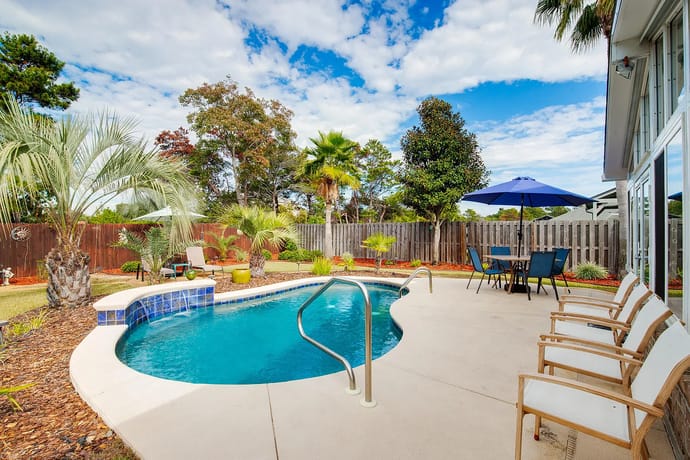
- Use the private pool. If your rental has one, a jellyfish day is exactly when it earns its keep. You've still got sun, water, and Gulf air — just without the wildlife. Our Miramar Beach rental has a private pool and sleeps 8, which makes jellyfish days a complete non-issue for that group.
- Henderson Beach State Park trails — The 1-mile coastal trail winds through stunning dune habitat close enough to the Gulf to hear the surf. No jellyfish required. Dogs on leash welcome.
- Destin Harbor activities. Dolphin cruises, fishing charters, and boat rentals all operate in the protected harbor and Choctawhatchee Bay — not the open Gulf. No jellyfish concern.
- Crab Island — The famous shallow sandbar in Destin Harbor is in calm, protected bay water. Warm, clear, shallow — and completely separate from the open Gulf ecosystem where jellyfish live. A genuinely great alternative on a bad Gulf day.
- Kayaking or paddleboarding the backbay. The Choctawhatchee Bay side is calm, protected, and jellyfish-free. Several outfitters rent equipment for bay-side paddling — a different kind of on-the-water experience and often more memorable than floating in the surf.
Most jellyfish events near Destin are weather-driven and last one to two days. A heavy man-of-war morning is typically followed by a clear beach once winds shift. Building a little flexibility into your beach schedule is the most effective tool of all.
Stay Somewhere with a Backup Plan Built In
A vacation rental with a private pool turns a jellyfish day from a problem into a non-event. Our Miramar Beach rental has a private pool, 4 bedrooms, sleeps 8, and starts from $225/night — so when the Gulf isn't cooperating, you still have cold water and sun without leaving the property. Our Destin rental is pet-friendly, sleeps up to 12, and sits close to the harbor for easy access to all the bay-water activities that have nothing to do with open Gulf swimming.