If you're planning a Destin trip between June and November, you've probably wondered how serious the hurricane risk really is. The honest answer: it's lower than most people think, but it's not zero. The Florida Panhandle has a real hurricane history, and late August through September in particular is a window where storms can track close enough to affect your trip. But it's also one of the most beautiful, affordable times of year to visit — and with a little preparation, you can plan with real confidence.
This guide gives you the real story: actual storm statistics for the Panhandle, a month-by-month risk breakdown, what operationally happens when a storm threatens your vacation, and how to build a trip plan that protects your investment without surrendering to anxiety.

When Is Hurricane Season — Month by Month Risk
Official Atlantic hurricane season runs June 1 through November 30. But that six-month window doesn't carry equal risk. Here's what the data actually shows for the Florida Panhandle:
- June & July: Low risk. Early-season storms are relatively uncommon and tend to track through the Caribbean and South Florida rather than the Gulf. You'll see afternoon thunderstorms — that's just normal Gulf Coast summer weather — but the chance of a tropical system threatening Destin specifically is low. June and early July are genuinely some of the best weeks to visit.
- August: Risk begins to rise as the Atlantic heats up. Late August is when the season typically becomes active. If your trip falls in the last two weeks of August, it's worth buying travel insurance and keeping an eye on models starting 7–10 days before arrival.
- September: The highest-risk month for the Florida Panhandle. The Atlantic is at peak activity and the Gulf is at its warmest (84°F+), which fuels rapid storm intensification. Hurricane Sally hit Gulf Shores — 80 miles west of Destin — as a Category 2 in September 2020. Hurricane Ivan made a near-direct hit on the Panhandle in September 2004. September doesn't guarantee a storm, but it's when you want insurance and a contingency plan, full stop.
- October: Risk drops noticeably compared to September. Late-season storms do occur — Michael hit the Panhandle in October 2018 — but the overall probability is lower and storms more often recurve eastward rather than tracking into the Gulf. October is arguably the best-value month on the Emerald Coast once risk is factored in.
- November: The season is winding down. Late-season Gulf storms are rare. Most years, November in Destin is fine weather-wise — the concern shifts from hurricanes to cold fronts, not tropical systems.
The practical takeaway: If you're visiting June through early August, or mid-October through November, hurricane worry belongs in the background at most. If you're visiting late August or September, get travel insurance, watch the forecast starting 7–10 days out, and have a cancellation plan. See our full month-by-month Destin guide for a broader picture of what each season looks like.

Destin's Actual Hurricane Track Record
The Panhandle is a genuine target zone — no sugarcoating that. But Destin specifically has avoided the most direct hits that neighboring communities have absorbed. Here's the modern record:
- Hurricane Ivan (2004): Made landfall near Gulf Shores, AL as a Category 3. Destin was in the eastern eyewall and took significant damage — the Mid-Bay Bridge and Destin Bridge were temporarily closed and beach erosion was severe. This is the closest thing to a direct hit Destin has seen in the 21st century. Recovery took weeks for some properties.
- Hurricane Dennis (2005): Category 3 landfall near Navarre Beach, FL — about 30 miles west of Destin. Significant storm surge and wind damage in the immediate area, but most Destin structures were functional within days.
- Hurricane Sally (2020): Made landfall near Gulf Shores as a Category 2. Destin was far enough east to experience tropical storm-force winds and heavy rain rather than catastrophic impacts. Resorts and rentals reopened within about a week for most properties.
- Hurricane Michael (2018): Category 5 at landfall near Mexico Beach, FL — roughly 80 miles east of Destin. Destin saw tropical storm-force gusts but was largely spared from Michael's catastrophic core. Most Destin rental properties were unaffected.
What this shows: Destin sits in an area where major storms track, but the town has avoided a catastrophic direct hit since Ivan in 2004. Neighboring areas — Gulf Shores, Navarre Beach, Panama City Beach — have been harder hit in various events. Ivan-level impacts remain a real possibility and shouldn't be dismissed when booking late summer travel.
One more thing worth knowing: Destin's building stock has been largely rebuilt or significantly upgraded since Ivan. Florida construction codes tightened considerably after the 2004–2005 hurricane seasons. The physical resilience of the vacation rental and condo inventory is genuinely better than it was 20 years ago.

What Actually Happens If a Storm Threatens Your Trip
The sequence of events when a tropical storm or hurricane threatens the Panhandle is predictable once you know it. Understanding it in advance removes a lot of the stress:
- 5–7 days out: Models diverge wildly at this range. Don't cancel a trip based on a 7-day forecast — storms regularly track hundreds of miles from where the week-out models show them. Monitor, but don't act on early spaghetti plots.
- 3–4 days out: The forecast cone tightens and you'll have a clearer sense of whether Destin is in the likely impact zone. Local vacation rental managers typically begin sending communications if a mandatory evacuation is starting to look probable.
- 48–72 hours out: This is when mandatory evacuation orders may be issued for Okaloosa County (which includes Destin and Miramar Beach). If an evacuation is ordered, you are legally required to leave. Most reputable vacation rental companies issue refunds or credits when mandatory evacuations occur — check your rental agreement's force majeure clause before booking. Vacasa, which manages a large portion of the Destin/Miramar Beach vacation rental inventory, has established policies covering these scenarios.
- Post-storm: For storms that hit the Panhandle directly, recovery times for rentals range from a few days (tropical storm-level impact) to weeks or months (major direct hit). Property managers assess units before allowing guests back in and will contact you directly about your reservation.
The key practical note: voluntary cancellations are treated differently from mandatory evacuation cancellations. If you cancel because you're nervous about the forecast and no evacuation has been ordered, most rental agreements treat that as a standard guest cancellation — your normal cancellation policy applies. If you want the flexibility to cancel voluntarily, you need travel insurance with Cancel for Any Reason coverage.
If you're booking with a smaller private owner or boutique management company, get the weather cancellation policy in writing before you pay. Quality of terms varies — larger, more reputable operators tend to have clearer, fairer policies.

Travel Insurance for Hurricane Season: What to Actually Buy
For late August and September Destin trips, travel insurance is worth buying. Here's an honest breakdown of what it covers — and what it doesn't:
- Cancel for Any Reason (CFAR): The most flexible and most expensive tier. Lets you cancel up to 48 hours before departure for any reason — including "I'm nervous about the forecast" — and typically reimburses 50–75% of prepaid costs. Costs roughly 10–12% of total trip cost. Worth it for large September bookings, especially when your rental rate exceeds $2,000 for the week. CFAR upgrades typically must be purchased within 10–21 days of your initial deposit.
- Standard Trip Cancellation (hurricane coverage): Covers cancellation due to a named storm threatening your destination within 24–48 hours of your arrival date. Read the fine print — "threatening" is defined differently by each insurer. Some require an actual hurricane warning to be in effect; others cover named tropical storms. Standard plans run roughly 4–8% of trip cost and handle the mandatory evacuation scenario well.
- What travel insurance typically does NOT cover: Voluntary cancellation because you're worried about weather (no named storm threatening your destination), flight delays unrelated to a storm, and trip costs already covered by your rental's own cancellation policy. Don't double-insure — if your rental includes a solid force majeure refund policy, you may need less supplemental insurance than you think.
- Where to compare: InsureMyTrip and Squaremouth are aggregators where you can see policy terms side-by-side. For Destin hurricane-season trips, search specifically for "hurricane" or "weather" as a named covered reason, and note the timing requirements. Buy within 10–15 days of your initial deposit if you want CFAR eligibility.
Bottom line: Standard trip cancellation insurance (4–6% of trip cost) makes sense for any Destin trip booked June–November, especially if you're spending $1,500+ on the rental. CFAR is worth the premium specifically for September bookings. Skipping insurance entirely for late August or September is taking an unnecessary financial risk for a modest savings.

The Safest (and Best Value) Hurricane-Season Windows
Here's the counterintuitive truth: some of the absolute best times to visit Destin fall squarely within hurricane season — you just need to pick the right weeks.
- June 1 – July 4: Technically hurricane season, practically minimal risk. The Gulf is warming to 78–82°F, crowds are building for summer but haven't peaked, and prices are meaningfully lower than the July 4th week onward. June in Destin is genuinely underrated.
- Early October (Oct 1–20): One of the genuinely best windows on the Emerald Coast, full stop. Statistical hurricane risk drops sharply after September. The Gulf is still 80°F+ and perfect for swimming. Beach crowds drop to their annual low. Prices are 30–45% below peak summer. This is when locals and regulars book their own trips — October in Destin is a well-kept secret.
- Late October – early November: Risk approaches near-zero. Highs in the mid-70s, low humidity, bright sun. The Gulf is cooling (76–78°F by late October) but still very swimmable. Vacation rental prices are at their annual low. The beach is wide open on weekdays. The only tradeoffs are slightly shorter days and the occasional cold front pushing overnight lows into the 50s — bring a light layer for evenings.
What to treat carefully without solid insurance: The window from roughly August 15 through September 30 carries the bulk of meaningful hurricane risk for the Panhandle. You can absolutely book this period — the beach is gorgeous, the Gulf is at its warmest all year, and September in Destin has some of the best local energy of the season (quiet, warm, authentic). Just don't do it without travel insurance and a clearly understood cancellation policy.
For a broader breakdown of what each month looks like beyond just storm risk, see our complete Destin weather by month guide, which covers temperatures, water conditions, crowds, and events year-round.
Book Smart, Stay Flexible
Whether you're booking for peak summer or the quieter shoulder season, both our Destin and Miramar Beach properties are managed through Vacasa, which has clear, established policies around weather events, mandatory evacuations, and refunds — no ambiguity, no fighting with a private owner when a storm shows up on the forecast.
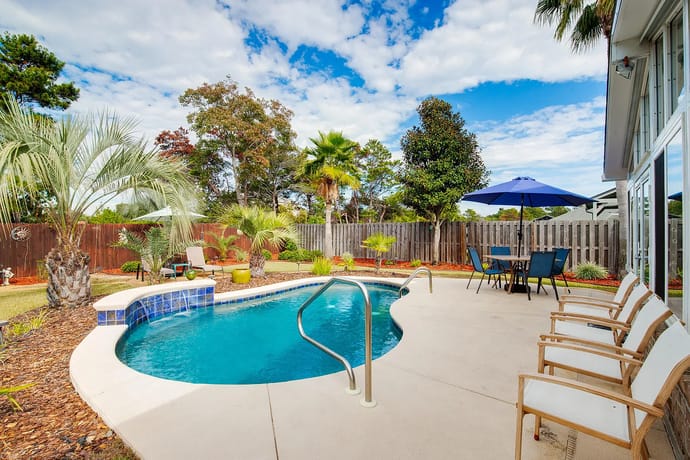
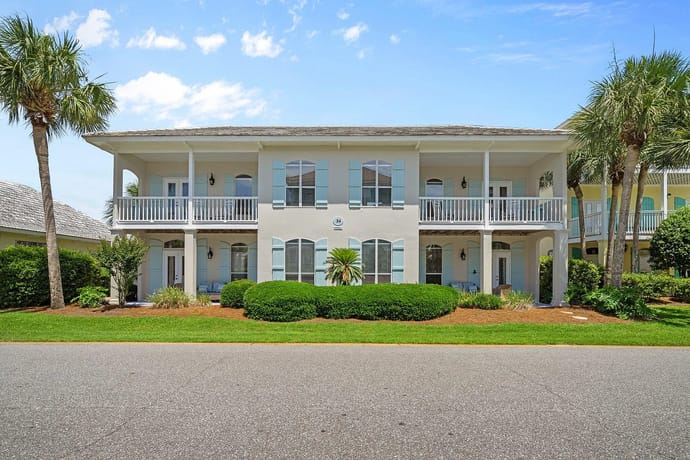
Our Miramar Beach rental is 4BR, private pool, sleeps 8, from $225/night — perfect for a fall family trip when you'll have the beach nearly to yourself. Our Destin rental is pet-friendly, sleeps 12, and starts from $110/night — great value when splitting costs with a large group targeting that sweet October window.