The comparison keeps coming up because the Gulf of Mexico near Destin looks genuinely tropical — emerald water, sugar-white sand, dolphin sightings, snorkeling reefs. People see photos and do a double-take, assuming they must have been shot somewhere in the Pacific. They weren’t. The color and clarity of the water in Destin is that good, and it’s closer to Atlanta or Nashville than it is to Maui.
This isn’t a takedown of Hawaii. It’s a real comparison — where Destin wins (cost, drive time, beach quality per dollar, warm water through October), where Hawaii wins (cultural experience, reef snorkeling, winter travel), and how to decide which makes sense for your trip.

Beach Quality: How They Actually Compare
The core question people are really asking: Is the water really that color? Is the beach really that nice? For the Destin stretch of the Emerald Coast, the answer is yes — and the science behind it is worth knowing.
Destin’s sand is nearly pure quartz, washed down over millennia from the Appalachian Mountains and ground to a fine, cool powder. It reflects light differently from typical brown Gulf sand or volcanic Hawaiian black or red sand — it stays brilliantly white even mid-afternoon and never gets uncomfortably hot underfoot. The water gets its emerald-green color from the combination of that white sand bottom, shallow nearshore depth, and the angle of sunlight on the Gulf. It’s not a filter. It’s not a postcard trick.
Hawaii’s beaches vary dramatically by island and location. Maui’s Kaanapali and Lanikai on Oahu are world-class — clear water, soft sand, dramatic mountain backdrops. Hawaii wins on scenic variety and a wider range of beach types (volcanic black sand, green olivine sand, long reef-fringed coves). But for the specific combination of white sand + emerald-to-blue water + warm calm surf, Destin holds its own against any beach in the world.
- Sand quality: Destin’s quartz powder is unique on the Gulf Coast and competes with Hawaii’s best white-sand beaches. Unlike most Florida sand (tan, coarse), it’s genuinely comparable to parts of the Caribbean.
- Water clarity: Both are excellent. Destin’s Gulf water has 10–30 feet of visibility in calm conditions — paddleboarders and snorkelers can see the bottom clearly. Hawaii’s offshore reef visibility is often greater, especially on North Shore dives.
- Wave size: Destin is typically calm surf, especially April–October. Great for swimming with kids and paddleboarding; not a surf destination. Hawaii has real waves, particularly north-facing shores in winter — better for surfing, more challenging for young children in the water.
- Crowds: In July, both destinations are genuinely crowded. Destin’s shoulder seasons (late April–May, September–October) offer a significantly emptier beach. Hawaii is busy year-round, with peak crowds in December–January and June–August.
Verdict on beaches: Destin wins on the specific metric of "classic white-sand tropical beach." Hawaii wins on scenic variety and scale. If you’re picturing yourself on a long stretch of white sand with emerald water and minimal crowds — Destin delivers that without a 10-hour flight.

The Cost Reality: Destin vs. Hawaii on a Budget
This is where the comparison becomes stark. A week in Hawaii for a family of four is a fundamentally different price point than a week in Destin — not slightly more, but often 2–3x more expensive when you add it all up.
- Getting there: Atlanta to Maui roundtrip runs $600–1,200 per person in summer. A family of four is $2,400–4,800 in airfare before you’ve paid for a single meal. Destin is a 4.5-hour drive from Atlanta, 3 hours from Birmingham, 6 hours from Nashville. Your transportation cost is gas and a tank of coffee.
- Accommodations: A vacation rental with a private pool in Maui in peak summer runs $400–800/night. In Destin and Miramar Beach, a 4-bedroom home with a private pool runs $225–450/night — a similar or better product at significantly lower nightly rates, with no resort fees on top.
- Food: Hawaii’s island food economy means restaurant prices are genuinely high — $20–30 for a lunch entree, $40–60+ per person for dinner is standard. In Destin, you can eat fresh-caught local grouper for $15 at a fish house, and high-end waterfront dining lands closer to $40–60 per person with drinks. Hawaii wins on cuisine variety; Destin wins on price by a wide margin.
- Activities: Water sports are similarly priced at both destinations — parasailing, snorkeling tours, dolphin cruises run $40–100 per person. Where costs diverge are the Hawaii add-ons: luaus ($130–180/person), interisland travel, car rentals ($80–120/day per island). Destin is more contained and cheaper to move around.
- Total trip cost comparison: A 7-night family trip (2 adults, 2 kids) to Maui in summer: realistically $6,000–12,000 all-in for a mid-range experience. Same family, same week in Destin: $2,500–5,000 including a vacation rental with a private pool, dining out several nights, and a full activity calendar.
Verdict on cost: Destin wins decisively. You can take two Destin vacations for the price of one Hawaii trip, and both will have spectacular beaches. For families, the savings on airfare alone are several thousand dollars.

Water Activities: What Each Destination Offers
Both destinations have strong water sports lineups. Here’s how the activity menus compare for a typical beach vacation:
- Snorkeling: Hawaii has spectacular reef snorkeling — Molokini Crater off Maui and Hanauma Bay on Oahu are genuine bucket-list experiences with marine diversity Destin can’t match. Destin’s East Jetty and nearshore reefs offer good water clarity and decent fish life, but the species count is smaller. If snorkeling is the centerpiece of your trip, Hawaii has the edge.
- Fishing: Destin has a legitimate claim as the "World’s Luckiest Fishing Village." Deep-sea charter fishing out of Destin Harbor for amberjack, grouper, red snapper, and mahi-mahi is world-class. Hawaii has excellent sportfishing too (blue marlin off Kona is legendary), but Destin’s charter fleet is larger, more accessible, and meaningfully less expensive.
- Dolphin encounters: Wild bottlenose dolphins are a regular feature of Destin Harbor and nearshore Gulf — you’ll almost certainly see them on a morning cruise. Hawaii’s spinner dolphins are equally common in certain bays. It’s not a tie-breaker.
- Surfing: Hawaii is a surf destination; Destin is not. North Shore Oahu and South Maui offer some of the best surfing on the planet. The Gulf’s surf is too small and inconsistent for surfing. If this matters, Hawaii wins outright.
- Kayaking & Paddleboarding: Destin excels here — the protected Choctawhatchee Bay backwaters offer flat, glassy water for paddling, and guided kayak tours through mangrove tunnels are a standout experience. Hawaii has paddling too, but Destin’s backbay scene is among the best on the Gulf Coast.
- Crab Island: Hawaii has no equivalent to Crab Island — the shallow sandbar in Destin Harbor where you anchor a pontoon, float in 3 feet of warm Gulf water, and order food from floating vendors. It’s completely unique. Destin invented it and owns it.
- Whale watching: Hawaii wins here. Humpback whales winter in Maui’s waters November through May, and whale watching tours are extraordinary. Destin doesn’t have an equivalent.
Verdict on activities: Hawaii wins for snorkeling, surfing, and whale watching. Destin wins for fishing, Crab Island, and casual backbay paddling. For a general beach activity vacation — parasailing, dolphin cruise, paddleboarding, a day on a pontoon — both deliver well, and Destin is significantly cheaper for the same experiences.

Best Time to Visit Each Destination
The seasonal calculus is different for each destination, and it matters more than most people factor in when planning.
- Destin peak season (Memorial Day–Labor Day): Beach weather is warm, Gulf water is brilliant, and every activity and restaurant runs at full capacity. It’s also the most expensive and crowded window. July is the peak of peak.
- Destin shoulder season — the sweet spot: Late April–May and September–October. Water temperature is still warm (low 70s°F in May, above 80°F through October), the full activity lineup is running, and crowds and rental prices drop 25–40% from summer. October in Destin is the best-kept secret on the Gulf Coast: mild weather, warm water, stunning photography light, and a quiet beach that feels like the locals reclaimed it.
- Hawaii is a genuine year-round destination. December through April offers whale season plus the driest weather on Maui’s west coast. June through August is peak summer — reliable weather but elevated prices and crowds. There’s no bad time to visit Hawaii; you’re not dealing with the cold winters that make Destin’s November–February a harder sell for beach swimming.
- Hurricane risk: Destin’s Gulf hurricane season runs June through November, with peak activity in August–September. The risk is real but relatively low for any given week — most summers pass without major disruption. Hawaii has Pacific storm risk too, but historically lower than the Gulf. Check forecasts either way if you’re traveling in storm season.
- For winter travel: Hawaii wins clearly. Destin in January is mild (highs 55–65°F), functional for snowbirds, and uncrowded — but not a swim-in-the-Gulf month. Hawaii in January is 80°F with peak whale watching.
Verdict on timing: Hawaii wins for winter travel and true year-round options. Destin wins for summer and fall value — especially that September–October window that delivers near-tropical conditions at off-peak prices.

The Verdict: When to Choose Each Destination
These are genuinely different vacation types despite the surface similarity of "beach with turquoise water." Here’s when each one makes sense:
Choose Destin when:
- You’re driving from the Southeast or Midwest — Atlanta, Birmingham, Nashville, New Orleans are all within a day’s drive
- Budget matters — for families especially, the flight cost savings alone are $2,400–4,800
- You want the specific experience of a sugar-white tropical beach without the Pacific flight time
- You’re traveling May–October when Gulf conditions are genuinely tropical
- Fishing is a priority — Destin’s charter fleet and species access is hard to beat anywhere in the country
- You want a private vacation rental with a pool for a group or family, at a price point that actually makes sense
- You want the Crab Island experience — there’s nothing else like it in the world
Choose Hawaii when:
- It’s a once-in-a-lifetime trip — honeymoon, 25th anniversary, milestone birthday — and the bucket-list factor matters more than cost efficiency
- Reef snorkeling is the centerpiece of the trip (Molokini Crater, Hanauma Bay are genuinely unmatched)
- You need warm beach weather in January or February
- Surfing is on the agenda — Hawaii is a surfing destination in a way Destin simply isn’t
- You want cultural depth beyond the beach — Polynesian history, volcanic landscape, interisland road trips
- You’re flying from the West Coast, where the travel time to Hawaii is actually manageable
The honest take: Destin is not a consolation prize. It’s a legitimately world-class beach destination that most people outside the Southeast underestimate until they’ve actually stood in that water. For families, groups, and anyone who values beach quality per dollar spent, the Emerald Coast is the right answer. Hawaii is the bucket-list answer, the winter escape answer, and the "I want to say I’ve been to Hawaii" answer — all of which are valid reasons. They’re solving different problems.
Ready to Book the Emerald Coast?
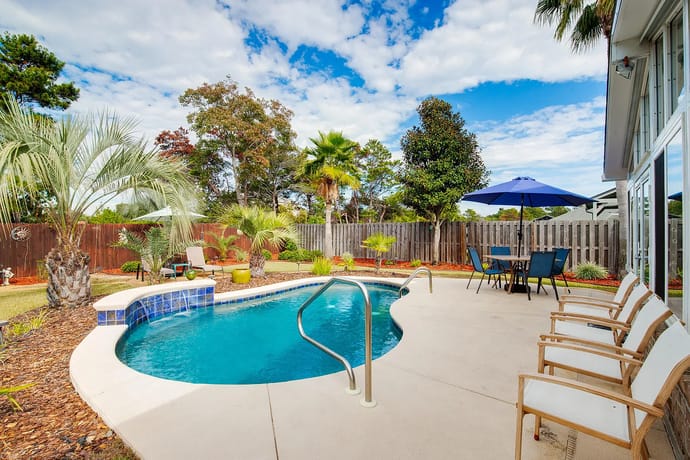
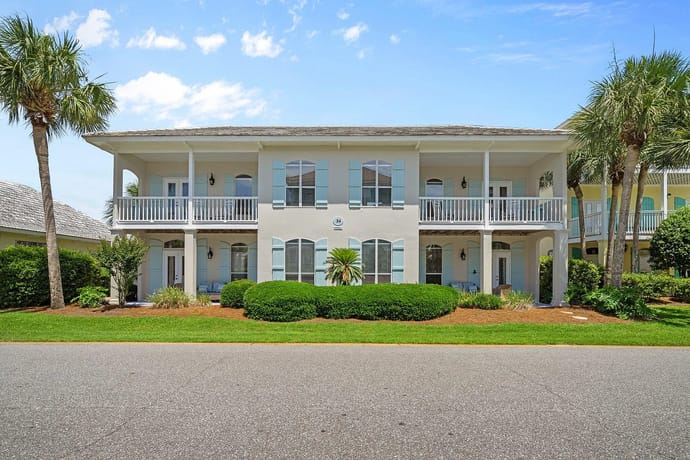
If Destin is making sense for your next trip, we have two properties that make the comparison even easier. Our Miramar Beach rental has 4 bedrooms, a private pool, and sleeps 8 from $225/night — Gulf water a short walk away, private outdoor space, no resort fees. Our Destin property is pet-friendly, sleeps 12 across 3 bedrooms plus a bunk room, and starts from $110/night — great for large groups or families who want space without hotel pricing.