Destin runs one of the largest parasailing operations on the Gulf Coast. On a clear summer day you can count six or eight boats making runs simultaneously from HarborWalk Village, winching passengers up 400 to 800 feet of line above water that reads turquoise from sea level and glows nearly neon from altitude. The view from up there — the white quartz barrier island, the Gulf stretching to the horizon, the darker green of Choctawhatchee Bay behind — stops most people completely.
This guide covers what the experience is actually like, what you’ll pay, how to choose an operator, the best times to go, and what conditions to avoid. No fluff.

What the Parasailing Experience Actually Looks Like
Destin parasailing is boat-based: you board a dedicated parasailing vessel at the harbor, motor out past the jetties into the Gulf or into the calmer bay, and are winched up from a platform on the stern. The whole outing — boat ride out, flight time, boat ride back — typically runs 45 minutes to 2 hours depending on the package and how busy operations are that morning.
The Departure
You’ll sign a waiver at the dock, stow your belongings on the boat, and get fitted into a harness before the crew unties. Most operators give a brief safety orientation before leaving the marina. The boat motors 1–3 miles into the Gulf or bay, where there’s open water and room to maneuver the line without running over swimmers or anchored boats.
The Launch
You take off dry from the boat deck. The parasail inflates behind the vessel, you step back onto the stern platform, and as the boat accelerates you lift off backward from the rail. Within 10–15 seconds you’re airborne and rising. The ascent is steady as the winch pays out line — no dramatic jerk, just a smooth climb. Most people are surprised by how calm it is.
In the Air
At 400–800 feet of line, you’re hanging somewhere between 200 and 400 feet above the water depending on the wind angle. The sensation is quieter than most people expect — you’re above the boat noise, the view is 360° unobstructed, and the harness is comfortable for the 8–12 minutes you’re aloft. Many first-timers describe it as more peaceful than terrifying once they’re up. The boat looks remarkably small below you.
The Dip and the Landing
Many operators offer a water dip midway through — they reel you back down until your feet skim the Gulf, then winch you back up. It’s optional on most boats; tell the crew ahead of time if you want to stay dry. Landing is low-drama: you’re winched back down, the crew catches the bar, and you step back onto the platform standing up. No rolling around in the water, no dramatic splash. You’re unclipped, toweled off if you took the dip, and done.

How Much Does Parasailing in Destin Cost?
Parasailing in Destin runs $60–90 per person for a standard flight. Pricing varies by operator, line length (how high you go), and time of year. Here’s the realistic breakdown.
Standard Pricing by Rider Configuration
Single rider: $70–85. Most operators cap solo riders at around 200–250 lbs for load balance. If you’re near that limit, book tandem instead.
Tandem (two people on one parasail): $55–75 per person. This is the most popular option. The shared experience is part of the appeal, and the combined weight of two riders stabilizes the flight nicely. Good for couples, parent and child, or friends.
Triple rider: $50–65 per person on operators who offer it. Usually the fastest-selling package; book ahead in peak season.
Package Upgrades Worth Considering
Longer line packages (more altitude) run $10–20 more per person and are genuinely worth it if your goal is the view. Sunset parasailing packages typically run $80–110 per person and sell out early — book the morning of or the night before. Some operators bundle parasailing with a jet ski rental or dolphin cruise for a discounted combo rate if you’re planning multiple activities.
Walk-Up vs. Online Booking
Online booking platforms add a 3–5% service fee. Booking directly with the operator — by calling or walking up to the booth — avoids that and gives you more flexibility to reschedule if weather changes. In shoulder season (September through October, April through May), walk-up availability is common even on short notice, especially on weekdays. Mid-June through mid-August, popular morning slots fill by the night before. Book online during peak season to guarantee your preferred time.

Choosing an Operator at Destin Harbor
Destin Harbor has multiple parasailing operators, most clustered around HarborWalk Village and the docks near AJ’s Seafood. The competition keeps standards reasonably high, but there are real differences worth evaluating before you hand over your credit card.
USCG Licensing Is Non-Negotiable
Any reputable operator will hold a U.S. Coast Guard commercial operator license for passenger-carrying vessels. Ask directly at the booth, or look for it posted on the vessel. This means the boat is federally inspected, the captain is licensed, and the equipment meets federal safety standards. Anyone who can’t or won’t show you this is a hard pass. Destin has legitimate licensed operations — there’s no reason to take a chance on an unlicensed outfit when you’re going to spend 10 minutes 300 feet in the air.
Inspect the Equipment Before You Board
The parasail itself should look well-maintained — no visible tears, no fraying at the attachment points. The winch should be solidly mounted to the stern, not jerry-rigged. The deck should be clean and organized. These aren’t unreasonable things to check; any professional crew will understand why you’re looking. If something looks improvised or the crew seems annoyed that you’re paying attention, move on to the next booth.
The Harness Fitting Tells You a Lot
A properly fitted parasailing harness has multiple adjustment points and should be snug around your thighs and waist without cutting off circulation. If a crew member rushes through the fitting or doesn’t check your adjustments before departure, that’s a signal about how they run the whole operation. Good crews take harness fitting seriously because it’s the one step that most directly affects your safety.
Read Recent Reviews, Not Old Ones
Google and TripAdvisor reviews from the past 60–90 days are the most useful. Operations change ownership and standards. Look specifically for mentions of crew professionalism, whether the experience matched the booking description, and how weather cancellations were handled. Ignore anything older than two years as a primary reference point.
Know the Cancellation Policy Before You Book
Weather cancellations are frequent, particularly in summer when afternoon thunderstorms are Destin’s most reliable daily event. A good operator reschedules or refunds without argument. Get the policy in writing at booking — not just a verbal assurance at the dock. If an operator won’t clearly articulate their weather policy, that’s useful information too.

Safety, Weather and Flag Conditions
Parasailing is broadly safe when done with licensed operators in appropriate conditions. The incidents that make the news are almost always traceable to one of three causes: unlicensed operators, equipment failure during rough conditions, or thunderstorm-related accidents. Understanding the risk factors lets you make smart decisions rather than just hoping for the best.
The Beach Flag System Applies
Destin’s beach flag system directly affects parasailing operations. Double red flag days mean no one enters the Gulf — parasailing shuts down completely, no exceptions. Single red flag days signal dangerous water conditions for swimming; parasailing may continue depending on wind speed and sea state, at the operator’s discretion. Yellow and green flag days are typically fine. Check the flags at the beach access nearest to you before heading to the harbor, and check again if conditions are changing quickly.
Thunderstorm Timing in Florida Summer
Florida summer thunderstorms develop fast — sometimes 20 to 30 minutes from a clear sky to lightning. A professional operator monitors radar continuously and won’t send boats out if a cell is forming within striking distance of the operations area. If you’re already on the water when one develops, you’ll be reeled in and returned to the dock immediately. This is not a situation where you argue or negotiate — trust the crew’s judgment on weather. Morning slots (before noon) carry significantly lower storm risk in summer.
Wind Limits and Sea State
Ideal parasailing conditions are winds of 5–20 mph. Below 5 mph the parasail doesn’t inflate properly and performance suffers. Above 20–25 mph, the boat can’t maintain stable speed and the parasail becomes difficult to control. Most operators have real-time anemometers on the vessel and will delay or cancel if conditions exceed their safe operating limits. Choppy seas (3+ foot waves in the Gulf or bay) are also grounds for cancellation — the winch operation is harder to control and the boat ride is miserable for anyone who tends toward motion sensitivity.
Weight Limits Are Safety Requirements, Not Suggestions
Most parasails used in Destin are rated for 400–450 lbs total load. For tandem riders, that’s the combined weight. Exceeding the rated load changes the aerodynamic behavior of the parasail in ways that make it harder to control. Any operator who is casual about weight limits — who waves away your concern or doesn’t bother to check — is telling you something important about how seriously they take safety generally. The reputable operators enforce the limits because it’s the right call, not because they want to lose business.

Best Time of Year to Parasail in Destin
Parasailing season in Destin runs roughly March through October, with good conditions extending into early November in warm years. The practical breakdown by season:
September & October — The Locals’ Window
This is the honest answer for anyone with scheduling flexibility. Summer families are gone, the harbor is quieter, and the conditions are often better than mid-summer: afternoon storm activity drops noticeably by mid-September, Gulf water temperature stays warm (78–82°F in September, 72–78°F in October), and walk-up availability returns to every day of the week. Operators are running full schedules through October. If you can travel in September or early October, you get the experience without the summer-peak hassle.
June – August — Peak Season Realities
Warmest water, most operators running maximum schedules, maximum crowd. Morning slots (8–11am) are the right call in summer — they precede the afternoon thunderstorm window and the full midday heat. Weekdays are dramatically better than weekends for availability and wait times. Book online the day before or early morning for your preferred slot; popular times sell out.
May — Good Early-Season Choice
Water is warming up (68–74°F by late May), crowds are below summer levels, and operators are running full schedules. Shoulder-season pricing still applies. A solid option for anyone who can travel before the school-year-end rush begins around Memorial Day.
March & April — Quiet and Affordable
Technically possible on warm days, but water is still cool (60–70°F) and some operators run reduced schedules in early spring. The advantage: lowest rates of the season and minimal competition for time slots. Good if parasailing is one activity among several on a broader trip, less ideal if it’s the centerpiece.
November & Beyond
A handful of operators run through November on good-weather days. Don’t book parasailing as a locked-in commitment for a November trip — call the week before to check conditions and operator availability. December through February, most parasailing operations are closed entirely.

Tips for First-Timers
A few things no one tells you before you get on the boat:
Apply Sunscreen Before You Board
You’re about to spend 10–12 unshaded minutes 300 feet in the air in direct Florida sun, plus the boat ride out and back. Apply SPF 50 to your face, neck, and any exposed skin before you leave the dock. There’s no shade up there, and re-application isn’t an option once you’re airborne. A wide-brim hat on the boat ride out is smart too.
Eat Light Before You Go
Most people are completely fine. A small percentage experience motion sensitivity — usually on the boat ride back rather than during the flight itself. A light meal two hours before works well. Skip the big breakfast buffet and the full bar immediately before boarding.
Secure Your Belongings
Leave watches, loose jewelry, sunglasses without a strap, and anything you’d genuinely miss in the bottom of your bag on the boat. Nothing good happens to a dropped item at 300 feet above the Gulf. Good operators have storage bins on deck; leave your bag locked there.
Camera Setup Matters
Most operators allow GoPro-style cameras with chest or wrist mounts. Ask at the dock before you rig up. Handheld smartphones in the air are a bad idea — the combination of slippery hands, wind, and altitude has a predictable outcome. Some operators sell their own video packages recorded from the boat; these are worth asking about if you want footage without the risk.
Face Shore for the Best View
Once you’re up, turn to face toward land rather than seaward. The shot looking toward Destin — white sand, the fishing fleet in the harbor, the East Pass jetties, the barrier island stretching east toward Fort Walton — is the one you’ll actually want. The open Gulf toward the horizon is impressive but featureless compared to the layered view of the coast.
Internal Link: More to Do on the Water
If parasailing makes you want to spend more time on the Gulf, boat rentals and guided boat tours let you explore at your own pace. The Crab Island sandbar is less than a mile from the harbor and worth a visit any day you’re already on the water. For something quieter, dolphin cruises out of the harbor are a good complement to a morning on the parasail boat.
Stay Five Minutes from the Harbor
Both of our vacation rentals put you in the heart of the Destin–Miramar Beach area, with easy access to HarborWalk Village and the parasailing docks. Grab a morning slot, be back at the rental by lunch, and still have a full beach afternoon.
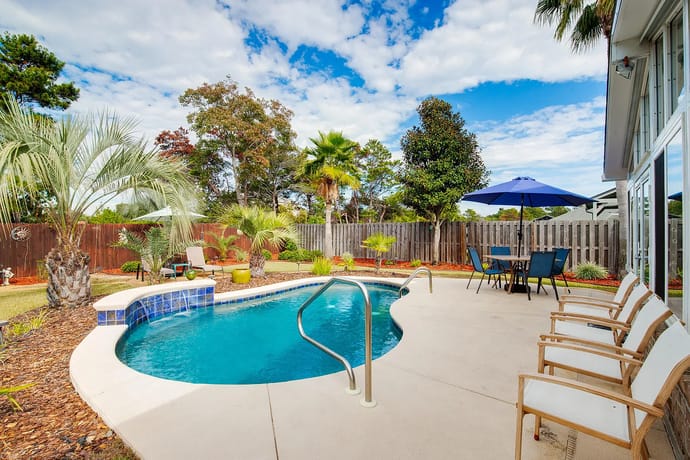
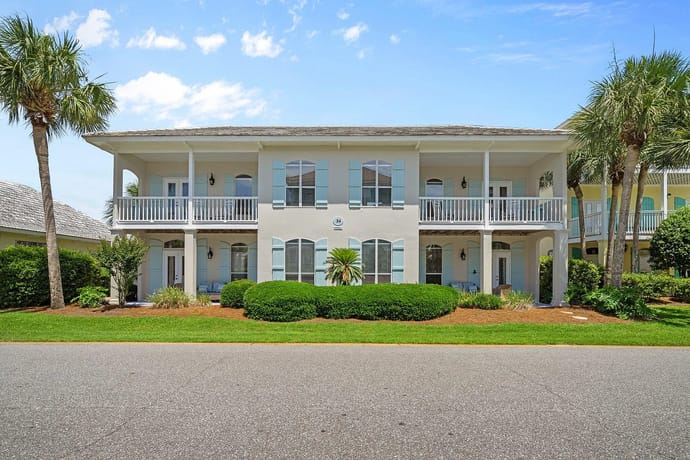
Our Miramar Beach rental sleeps up to 8 in 4 bedrooms with a private pool — great for a group that wants space to unwind after a day on the water. From $225/night. Our Destin rental sleeps up to 12 and is pet-friendly, with 3.5 bedrooms for a bigger crew. From $110/night.