The rock jetties at Destin's East Pass are one of those local spots that visitors drive past without stopping — and then hear about later and wish they'd explored. Two parallel granite walls run from the harbor entrance out into the Gulf of Mexico, marking the boundary where Destin Harbor meets open water. Charter fishing boats navigate this channel every morning. Cobia cruise the rocks in spring. Snorkelers find clear, fish-filled water just below the surface. And at sunset, the view from the jetty tip is some of the best on the Emerald Coast.
This guide covers everything you need for a visit: what the jetties are and how to find them, what to fish for and when, snorkeling conditions, how to watch the charter fleet navigate the pass, and the practical details — parking, safety, and what to bring.

What Are the Destin Jetties and Where Are They?
Destin sits on a thin barrier peninsula between the Gulf of Mexico and Choctawhatchee Bay. The only break in that peninsula is East Pass — a channel roughly 200 feet wide where the Gulf and the bay trade water twice a day on the tides. Every charter fishing boat in Destin's famous harbor has to navigate this pass to reach open water. So does every pontoon heading to Crab Island, every sailboat leaving the marina, and every kayaker paddling out to the Gulf.
The jetties are two parallel walls of granite — quarried in Alabama and shipped down specifically for this project — built to stabilize the East Pass channel and prevent it from migrating or silting over. The east jetty extends about 1,200 feet from the Destin Harbor shoreline out into the Gulf. The west jetty, on the Norriego Point side, is only accessible by boat.
The east jetty is the one you can actually walk to. It sits at the end of a small county access area off Marler Bridge Road, just south of the Destin Bridge. You park, walk about 200 yards along a concrete path, and you're standing at the edge of where the harbor meets the Gulf — clear water below, boats in front of you, open horizon beyond. It's an uncrowded, genuinely interesting spot, and it's free.
- Getting there: Search "Destin East Pass Jetties" in Google Maps. The access point is at the south end of Marler Bridge Road, near the bridge's base. About 2 miles from HarborWalk Village and 1 mile from Henderson Beach State Park.
- Distance from the harbor: The jetties and the harbor entrance are different things. The jetty tip is about a 10-minute walk once you park — not far, but bring shoes you don't mind getting wet if you plan to fish from the rocks.
- What you'll see: On a typical summer morning, charter boats — some 50 to 65 feet long — navigate the pass heading out to the Gulf. They pass close enough to the jetty wall that you can read the boat names. The water on the Gulf side is the classic Destin emerald green; on the harbor side, it runs slightly darker but still clear.

Fishing the East Pass Jetties
The East Pass jetties are one of Destin's best-kept open secrets for shore fishing. The granite rocks create habitat — barnacles, encrusting organisms, baitfish — and the strong tidal current that runs through the pass concentrates predators. You don't need a boat, you don't need a charter, and you don't need exotic gear. What you do need is a Florida saltwater fishing license and some knowledge of what swims through when.
What's Biting and When
- Cobia (April–June & September–October): The spring cobia run is the event that draws serious anglers to the jetties. Cobia follow manta rays and large stingrays through East Pass as they migrate along the coast in April and May. You can often sight-fish them — a large dark shape just below the surface, following a ray. A live pinfish or a big bucktail jig pitched ahead of the fish is the standard approach. The fall run is smaller but still worth watching for.
- Sheepshead (Year-round, best October–March): Sheepshead love structure, and the barnacle-covered jetty rocks are ideal habitat. Use fiddler crabs or sand fleas right on the bottom, near the rock faces. They're finicky biters — wait for the rod tip to load before setting the hook. These are some of the best-eating fish in the Gulf, worth the patience.
- Flounder (September–November): The fall flounder migration through East Pass is well known among local anglers. Live finger mullet on a jighead worked along the rock ledges and sandy patches adjacent to the jetty is the proven method. Expect to find them where the current creates eddies on either side of the pass entrance.
- Spanish Mackerel & Bluefish (Spring & Fall): Fast-moving schools push through East Pass during migration runs. A silver spoon or small jig retrieved quickly is usually enough. Mackerel in particular can be thick from March through May and again in October.
- Jack Crevalle & Ladyfish (Summer): Hard-fighting, not great table fare, but genuinely fun on light tackle. Jacks in particular will test any gear. Good action during the summer months when other species slow down.
- Redfish (Fall & Winter): Reds show up sporadically in the pass, especially on falling tides. Shrimp under a popping cork or DOA Shrimp lures worked along the jetty base are the usual approach.
License note: Florida requires a saltwater fishing license for anyone 16 and older fishing from the shore. Pick one up online at myfwc.com, at Walmart, or at Bass Pro in Destin. The jetties are a public access area — no permit required beyond the standard fishing license.
Best conditions: An incoming tide concentrates bait near the jetty face and brings cleaner Gulf water into the pass. Early morning — before 8 a.m. — gives you fewer people and better chances. Weekday mornings in spring are as good as it gets for cobia visibility.

Snorkeling and Wading Near the Jetties
The base of the east jetty — on the Gulf side — is a legitimate snorkeling spot when conditions are right. The granite rocks create habitat you won't find on an open sand beach: sheepshead working the barnacles, small snapper holding in crevices, blue crabs tucked into rocky pockets, sergeant majors darting in and out of the structure. The water is often clear enough to see the bottom at 8–10 feet.
Safety First — Read This Section
The pass itself is completely off-limits for swimming or snorkeling. The tidal current through East Pass regularly hits 2–3 knots, heavy boat traffic runs all day, and the channel drops quickly. This is emphatically not a swimming area. The only safe snorkeling is at the very base of the east jetty on the Gulf-facing side, in relatively calm conditions, staying well clear of the channel opening.
- Best conditions: Calm Gulf, light winds (south or southwest, under 10 knots), incoming tide (brings cleaner Gulf water). Summer mornings from June through September are typically the best window.
- Visibility: On good days, 10–15 feet of visibility at the rock base. On days after wind or storms, visibility can drop significantly — worth checking the surf report before making the trip.
- What you'll see: Sheepshead (black-and-white striped fish, often in groups near the rocks), small mangrove snapper, flounder on the sandy bottom adjacent to the rocks, blue crabs, sea urchins, and occasionally small reef fish that don't usually appear on open sand beaches.
- Water temperature: 70°F by May, peaking around 84°F in August, still comfortable through October. A thin wetsuit (2mm shortie) is useful before Memorial Day and after Labor Day.
- For beginners: Wading in the shallows near the jetty base is a good start. Leave open-water snorkeling to experienced swimmers who can read currents. If the current feels strong, get out.
For a more structured snorkeling experience with gear rental and guidance, Destin's nearshore reef charters and the Destin Jetties snorkeling trips (run by several harbor operators) take you to the same structure from a boat, with a dive master on board.

Watching Boats Navigate East Pass
If you only do one thing at the jetties, do this: stand on the east jetty in the morning and watch the charter fleet go out. It's genuinely impressive, and it's free.
East Pass is only about 200 feet wide. A 65-foot sportfishing charter — with outriggers deployed and a full load of anglers — nearly fills that channel. These boats pass so close to the jetty wall that you can hear conversations on deck. Seeing that happen 15, 20 times in a single morning is something that photos don't quite capture.
When to Show Up
- Morning departure (6:30–8:00 a.m.): The best show of the day. Destin's charter fleet — one of the largest on the Gulf Coast — heads out en masse for half-day and full-day trips. The parade of sportfishers, party boats, and pontoons heading through the pass over an hour or two is worth the early start.
- Afternoon return (1:00–4:00 p.m.): Boats come back flying "catch flags" — a pennant for each significant fish species caught. Reading the flags as boats return is how locals track who had a good day. Mahi, wahoo, amberjack, and red snapper all have their own flag colors.
- Sunset hour (varies by season): Sailboats, evening cruises, and the occasional private sportfisher heading out for a night trip make for a quieter but atmospheric show as the light goes golden.
The Marler Bridge (the fixed bridge just north of the jetties) also offers elevated views down into the pass — good for a different angle on the boat traffic, and easier for people who have trouble walking the rocks. You can pull over on the bridge approach and watch from the sidewalk.
If boat traffic is your main interest, the HarborWalk Village at the harbor itself is another great vantage point — more amenities, more foot traffic, but a slightly different experience than standing on the jetty itself.

Sunset Views and Photography at the Jetties
The Gulf-facing end of the east jetty faces roughly west-southwest. Sunsets here are legitimately good — open water horizon, no obstructions, and the pass adds boats and motion to an otherwise static sunset. The fall months (September through November) tend to produce the most vivid sunsets because Gulf humidity drops and the sun tracks further southwest, aligning almost perfectly with the channel.
Photography Tips
- Arrive 30–45 minutes early: Good spots on the jetty rocks fill up. The outer tip gets the best open-water view but requires scrambling over uneven granite — bring solid footwear and arrive with enough light to navigate safely.
- Use boats as foreground elements: A charter boat navigating the pass during golden hour frames the shot in a way that distinguishes it from a generic sunset photo. Time your shutter click as a boat is in the channel mouth.
- Pelicans: Brown pelicans roost on the jetty rocks year-round. They're remarkably comfortable with people — close enough for decent wildlife shots with a standard telephoto. Morning is better for pelican activity than evening.
- Sunrise is excellent too: The east jetty faces southeast on its harbor side — sunrise lights the harbor water beautifully. Charter boats heading out in the early light make for good morning photography. Less crowded than sunset.
- Lens choice: Wide-angle (24–35mm equivalent) for the full panorama; 70–200mm for boats in the channel and wildlife on the rocks. Bring a polarizing filter — it cuts through surface glare on the water and deepens the emerald color.
- Tripod caution: The rocks are uneven and sometimes wet. Use a tripod only if you have a solid spot to set it — hand-holding with image stabilization is often safer in practice.
For a full list of the best photo spots in and around Destin, see the Destin photography guide. The jetties rank among the top five locations on that list for boats and water shots.

Getting There, Parking, and Safety Tips
The jetties are an informal, low-amenity spot — no gift shop, no concession stand, no lifeguard. That's part of the appeal, but it means you should come prepared.
Parking
- Jetty Park parking area: A small gravel/paved lot directly off Marler Bridge Road. Roughly 20–30 spaces. On summer weekends it fills by 8 a.m. — arrive before 7:30 or plan to walk from elsewhere.
- Henderson Beach State Park: Paid entry ($6 per vehicle), about a 5-minute walk from the jetty access area. Good backup option on busy days — the park has restrooms, shade, and a proper parking lot.
- Harbor/HarborWalk: If you're combining the jetties with a harbor visit, park at HarborWalk Village and walk south about 15–20 minutes. Not ideal with heavy gear but fine for a short visit.
Getting There
From US-98 (Emerald Coast Pkwy): take Harbor Boulevard south through the harbor area, then turn right on Marler Bridge Road. The parking area is at the road's southern end, just before the bridge. GPS: "Destin East Jetty Park" or "East Pass Jetty Destin FL" both navigate accurately.
Safety — The Non-Negotiables
- Do not swim in the pass channel. Tidal currents run 2–4 knots, boat traffic is constant, and the channel drops sharply. This rule has no exceptions — not for strong swimmers, not on calm days.
- Water shoes are required on the rocks. Flip-flops on wet granite is a reliable way to fall. Closed-toe water shoes or old sneakers — anything with grip. The rocks are manageable with the right footwear, treacherous without it.
- Watch children near the water's edge. Charter boats passing close to the wall create wave wash that can be surprising. Keep small children back from the edge when boats are transiting.
- Sun exposure is significant. Zero shade on the jetty. Sunscreen, hat, and water are essential — the Gulf Coast UV is intense even on partly cloudy days. Bring more water than you think you need.
- No facilities on the jetty itself. Nearest restrooms are at Henderson Beach State Park (a short walk away). Plan accordingly.
Best Times to Visit
- Boat watching + photography: 6:30–9:00 a.m. (morning departure) or golden hour before sunset.
- Cobia fishing: April–June, morning incoming tide.
- Snorkeling: June–September, calm mornings with incoming tide.
- Avoiding crowds: Weekday mornings, or anytime before 9 a.m. in summer. Weekends from 10 a.m.–3 p.m. in July are the busiest.
Stay Close to the Action
Both of our Destin area rentals put you within easy reach of the East Pass jetties, HarborWalk Village, Henderson Beach State Park, and the full charter fishing fleet. You're not driving an hour to find something to do — it's all within 10–15 minutes.
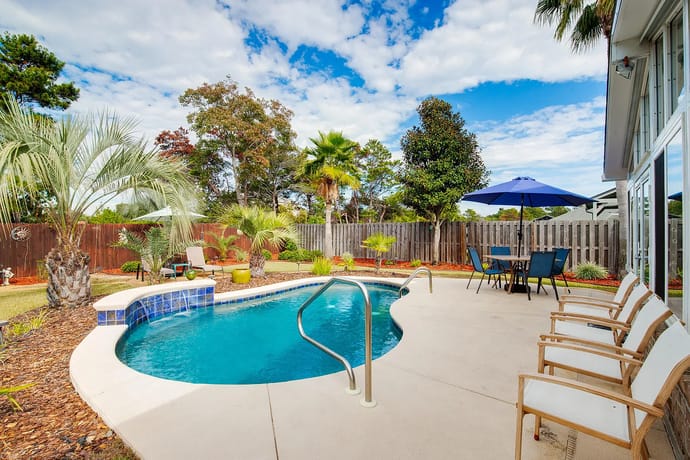
Our Miramar Beach rental is 4 bedrooms, has a private pool, and sleeps 8 from $225/night — ideal for families and groups who want space and a pool to come back to after a morning at the jetties.
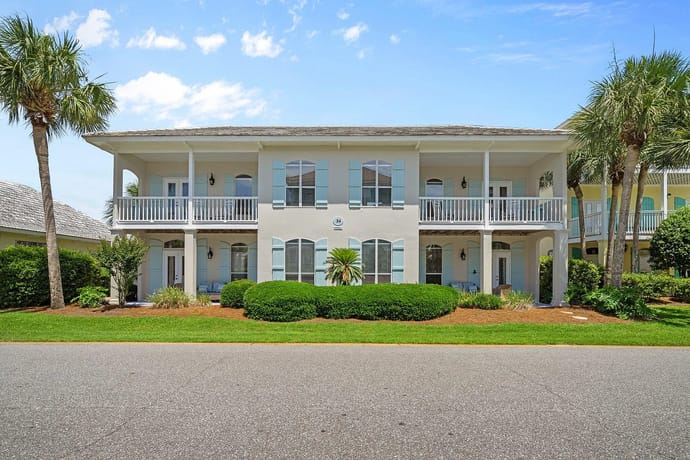
Our Destin rental sleeps up to 12 people across 3.5 bedrooms, starts from $110/night, and is pet-friendly — a good fit for larger groups or anyone bringing a dog along.