Destin and Miramar Beach are among the more permissive beach destinations in Florida when it comes to what visitors can do on the sand. Alcohol is allowed on public beaches. Bonfires are allowed with basic precautions. Larger canopies are generally fine. But a handful of rules catch people off guard every summer — usually around glass containers, dogs during peak season, drone airspace restrictions, and sea turtle lighting ordinances that carry real fines.
This guide covers the actual rules for both Okaloosa County (Destin, Fort Walton Beach) and Walton County (Miramar Beach, 30A). The two counties share similar principles but differ on specifics. Knowing the distinction before you arrive saves the kind of aggravation that shouldn’t have to happen on vacation.
Alcohol on Destin and Miramar Beach: What’s Actually Allowed
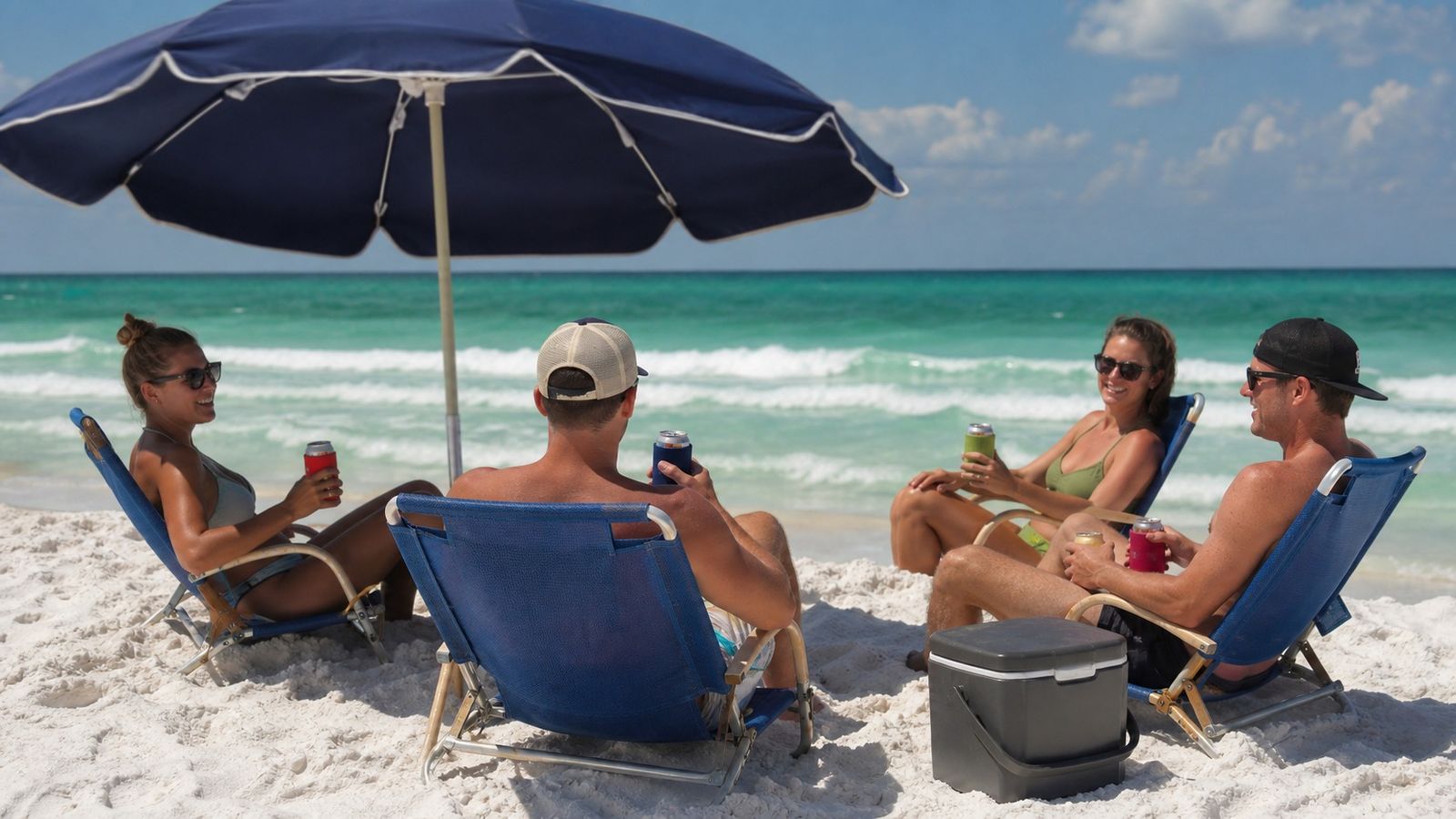
Both Okaloosa County (which covers Destin, Fort Walton Beach, and Okaloosa Island) and Walton County (which covers Miramar Beach, Sandestin, and the 30A corridor) allow alcohol consumption on their public beaches. This isn’t true everywhere in Florida — it’s a meaningful distinction that draws visitors who want a beer on the sand without hunting for a resort pool. Here are the actual rules:
No Glass Containers — Both Counties
This is the primary rule that people don’t know about until they’re told to pour out a bottle of rosé into the sand. Glass is prohibited on the beach in both Okaloosa and Walton counties. The reason is straightforward: broken glass buried in white sugar sand is effectively invisible and dangerous for barefoot beach-goers. Pack your drinks in cans, plastic, or sealed tumblers. Enforcement varies but violations can result in fines, and beach patrol officers issue warnings readily during peak season.
Open Container Laws Don’t Apply on the Beach
Florida’s open container laws apply to public roads and vehicles, not to beach areas. Drinking an open can of beer on the sand is legal. The line that matters is where the beach ends and the road begins — once you’re in a parking lot, on the sidewalk, or near a vehicle, standard open container rules apply. Keep drinks in your beach area and leave them there. The walk back to the car is not the time to carry an open container.
Disorderly Conduct Still Applies
Being legally allowed to drink on the beach doesn’t exempt you from disorderly conduct, public intoxication, or noise ordinances. During Spring Break (especially late March) and peak summer holidays like Fourth of July and Labor Day weekend, Okaloosa County Beach Safety and Walton County Sheriff’s deputies are notably more active. The practical guidance: drink, enjoy the beach, don’t become a situation that requires intervention. The vast majority of visitors do exactly that without issue.
Spring Break Restrictions in Okaloosa County
In recent years, Okaloosa County has occasionally implemented enhanced beach rules during the peak of Spring Break season (typically mid-March through early April), including alcohol restrictions at certain public access points. These restrictions are announced ahead of season and vary year to year. If you’re visiting during Spring Break specifically, check the Okaloosa County website or call the Tourist Development Council before you arrive. Outside of those targeted windows, standard rules apply.
Leave No Trace
Both counties enforce littering ordinances on the beach. Take your cans, bottles, and trash with you when you leave. Trash cans are placed at most beach access points, but not all — plan on packing out what you brought. A beach where everyone drinks responsibly and cleans up after themselves is one that stays permissive. The pattern of counties restricting beach alcohol in Florida almost always follows seasons of excessive litter and enforcement incidents.
Bonfires and Open Flames at Destin Beaches
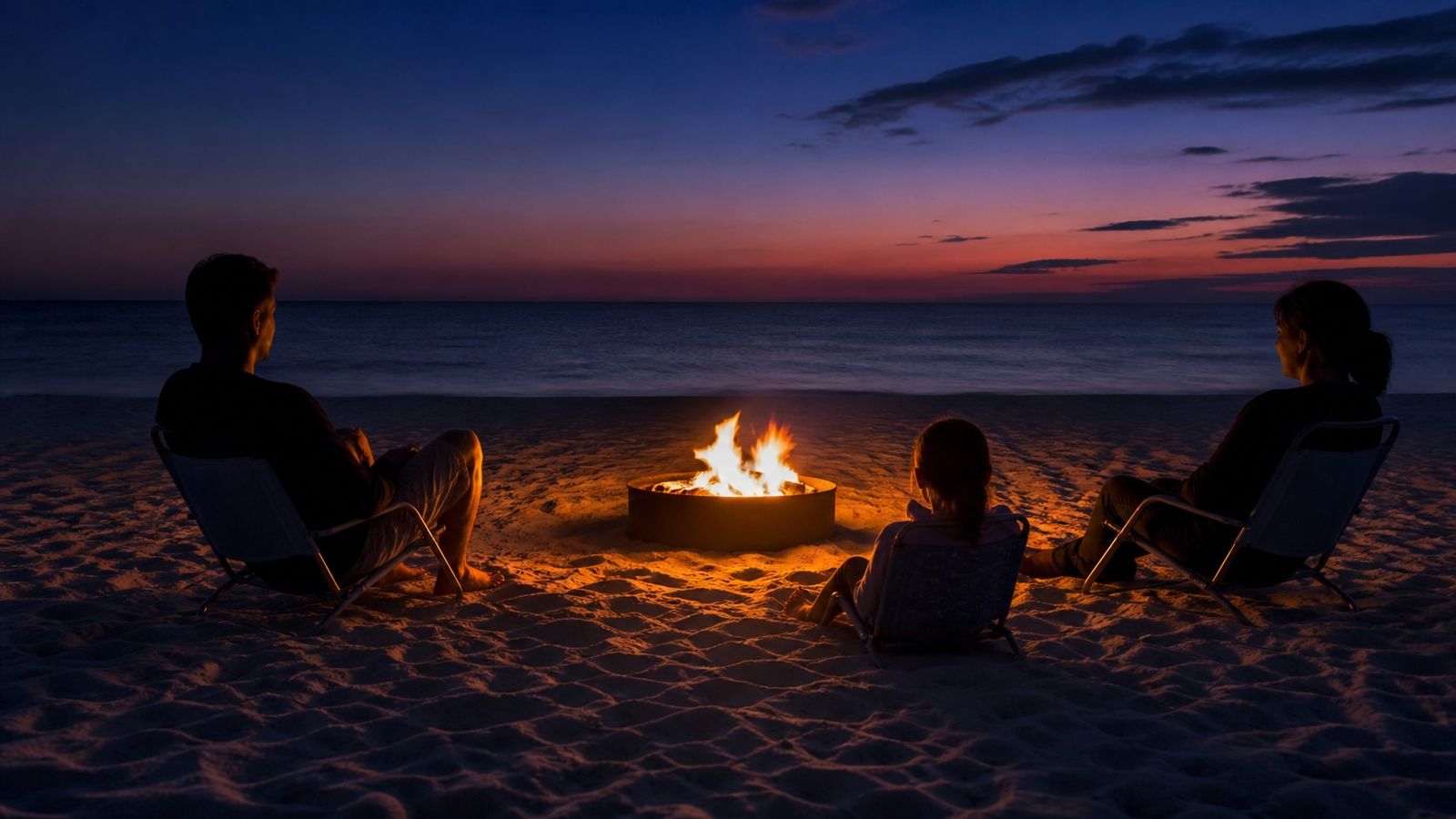
Bonfires on the beach are one of those Destin experiences that sounds more complicated than it is. The short version: fires are permitted on Okaloosa County beaches with a few straightforward conditions. Walton County beaches have more restrictions, particularly near the more developed areas of Miramar Beach and 30A. Our complete beach bonfire guide covers operators, permits, and logistics in detail — here’s what you need to know at a glance:
Okaloosa County: Fires Permitted with Conditions
In Okaloosa County (Destin, Fort Walton Beach, Okaloosa Island beach accesses), you are permitted to build a fire on the beach below the mean high-tide line. Key conditions: fire must be at least 50 feet from sea oats, dune vegetation, and any wooden structures; fire must be fully extinguished and the area cleared before you leave; you must attend the fire at all times while it’s burning. Portable fire rings (available at camp supply stores) are the practical choice — they contain ash and make full extinguishment easier. Bring your own wood; collecting driftwood from protected dune areas is prohibited.
Walton County: More Restricted
Walton County beaches, including Miramar Beach, have more restrictions on open flames, particularly during sea turtle nesting season (May–October). During nesting season, fires on the beach are prohibited after dark in many areas due to the disorientation risk for nesting turtles and hatchlings. Outside of nesting season, small fires below the tide line are generally permitted with the same conditions as Okaloosa County. The 30A corridor tends to have more active enforcement due to higher density of residential and commercial beachfront properties. When in doubt, check with Walton County Tourist Development Council or your rental property host for current rules during your visit dates.
Sea Turtle Season Fire Restrictions
From May 1 through October 31, open flames on any Northwest Florida beach visible from the water can disorient nesting sea turtles or hatchlings making their way to the Gulf. In practice, if you’re building a fire during nesting season, it needs to be below the dune line, in a contained ring, and not creating light visible from the water’s surface. If a turtle patrol volunteer or county officer approaches your fire during this period, that’s why. Fines for disturbing nesting sites or contributing to turtle disorientation under Florida Statute 370.12 can exceed $100,000. The more practical approach during nesting season is to skip the bonfire or book one of the licensed bonfire service operators who know the current restrictions and handle permits.
Dogs and Pets at Destin Beaches: Where They’re Welcome
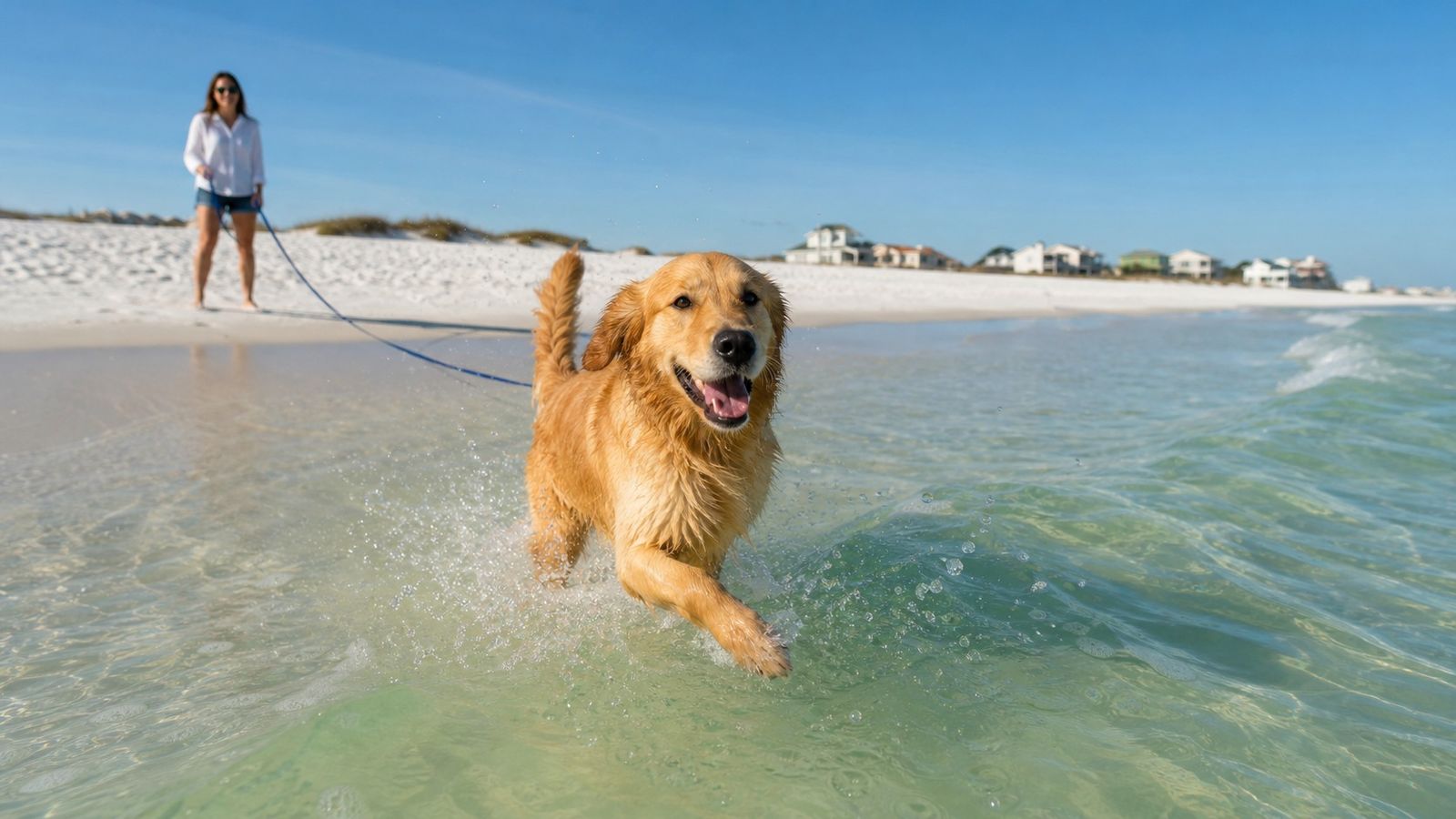
This is the question that changes a vacation plan for many families. Destin is one of the more dog-friendly vacation destinations on the Gulf Coast, but “dog-friendly” comes with seasonal and location-specific nuances. Our Destin with dogs guide covers this in full depth — here’s the essential summary:
Peak Season Restrictions (Memorial Day Through Labor Day)
In Okaloosa County, dogs are prohibited on public beach access points from 9am to 5pm, Memorial Day weekend through Labor Day, unless the specific access point is designated as dog-friendly. Outside those hours, dogs are permitted on the beach during peak season. This means early mornings and evenings with your dog are entirely doable — and honestly, a 7:30am walk on the beach with a dog when the sand is cool and the crowds are thin is one of the better experiences the Emerald Coast offers. Walton County has similar restrictions, with specifics varying by beach access point.
Off-Season (September Through May)
Outside of the Memorial Day through Labor Day peak period, dogs are permitted on most Okaloosa and Walton County public beaches during all hours, with the standard requirement that dogs remain leashed at all times. Off-season dog walks on Destin beaches are genuinely wonderful — the crowds are gone, the Gulf is still warm through October, and you’ll have long stretches of sand mostly to yourselves. If traveling with a dog, late September through early November is one of the best windows for the combination of warm weather, empty beaches, and no daylight hour restrictions.
Henderson Beach State Park: No Dogs
Henderson Beach State Park is one of the most beautiful beach stretches in Destin but prohibits pets entirely — no exceptions and no seasonal windows. If your dog is central to the trip, plan your beach days at the public access points rather than the state park, and save Henderson for days when the dog stays at the rental. Topsail Hill Preserve State Park (Walton County, near 30A) similarly prohibits pets in the beach area.
Leash Required, Always
When dogs are permitted on the beach, leashing is required by county ordinance at all times. There is no off-leash beach in Okaloosa County that is publicly accessible. Fines for unleashed dogs on Okaloosa County beaches can run $100 and up. The ordinance is enforced. If your dog is well-trained and voice-responsive, it’s tempting to let them run — the rule still applies. The early morning hours before 9am are the practical window if you want your dog to have actual beach access, and a 30-foot leash is a reasonable middle ground.
Beach Canopies, Tents, and Shade Structure Rules
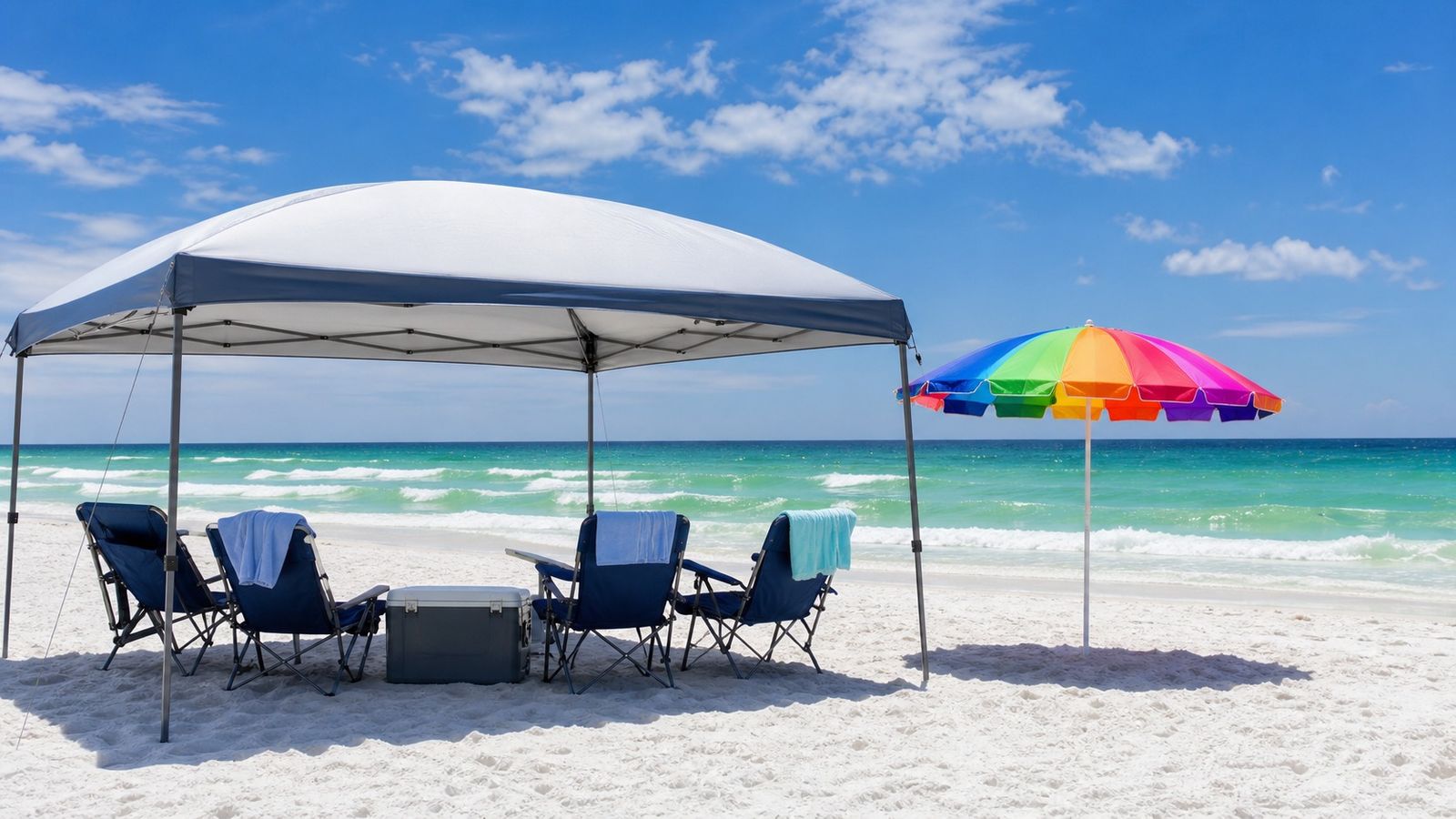
Shade is the central concern for every family with young children on a Florida summer beach, and the rules around how much shade structure you can bring are reasonable but worth knowing in advance. Generally, both counties are permissive about personal shade structures within practical limits.
Personal Umbrellas: Always Fine
Standard beach umbrellas on poles are permitted everywhere without restriction. The main safety rule is anchoring: an umbrella driven into sand without a proper sand anchor can become a projectile in a sea breeze. Standard beach umbrella poles without anchors are not adequate in Okaloosa County, which adopted a beach umbrella safety ordinance following a series of injuries from airborne umbrellas. Use a sand anchor (a screw-type anchor is the most secure) or rent from a service that uses proper equipment. Providers like beach chair rental services typically handle anchoring as part of their setup.
Pop-Up Canopies (10x10 and Under)
Pop-up shade canopies are permitted in both counties on public beaches, with a practical upper limit of around 10x10 feet in most areas. The conditions: structures must not obstruct lifeguard sight lines (which is why tents blocking the view between a lifeguard stand and the water are the ones that get asked to move); structures must remain below the dune line and not interfere with beach access points; and all equipment must be removed when you leave for the day. Overnight beach structures are prohibited in both counties.
Large Tents and Enclosed Structures
Fully enclosed tents, cabana-style structures with walls, and anything larger than approximately 10x10 feet falls into a gray area that varies by specific beach access point. In practice, large enclosed structures are generally not permitted at public access points without advance coordination with county beach management. If you need significant coverage for a family reunion or group event, the more practical approach is to rent from a beach service operator who provides permitted umbrellas and chairs in a configured setup, or to use a private beach access area where the rental property gives you more control over setup.
Walton County and the Tent-Free Zone Controversy
Walton County has experimented with “tent-free” designations at high-traffic public access points along 30A, driven in part by commercial rental operators who objected to free shade structures competing with paid rentals, and in part by genuine sight-line safety concerns. If you’re at a Walton County access point and see signage indicating shade structure restrictions, those signs are legally enforceable. The Destin-side Okaloosa County beaches have not adopted these restrictions to the same degree. When in doubt, set up at or below the high-tide line and leave a clear corridor between your setup and the water.
Drone and Photography Rules at Destin Beaches
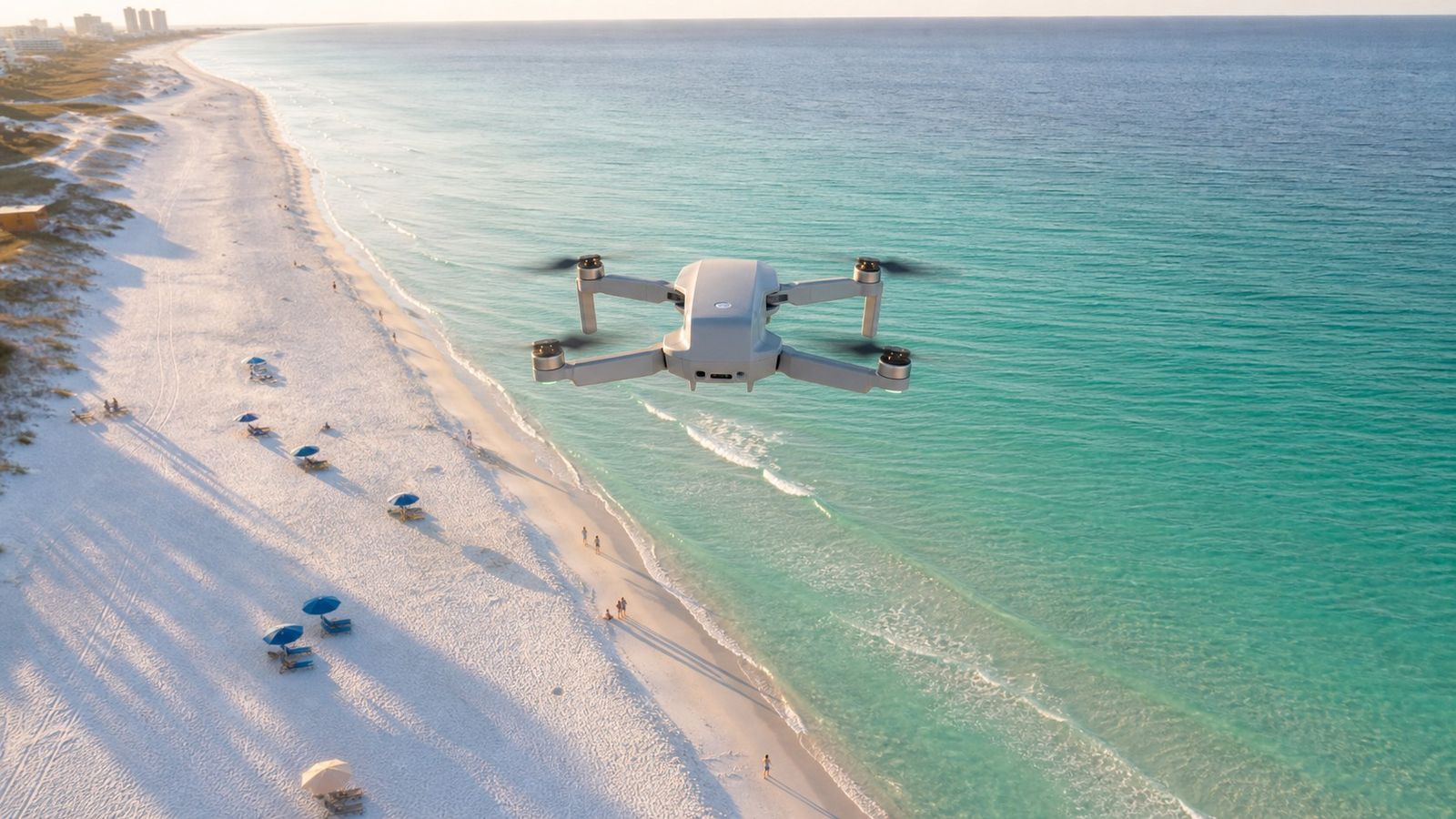
Destin is visually spectacular from the air — the emerald Gulf, the white sand, the harbor activity — and drone footage of this stretch of coast is some of the most shared travel imagery from Florida. Whether you can legally fly depends significantly on where you’re flying and when.
FAA Registration and Basic Rules
Any drone weighing more than 0.55 pounds (250 grams) must be registered with the FAA. Most consumer drones — DJI Mini, Air series, and similar — exceed this threshold. Registration is $5 through the FAA DroneZone portal and covers any number of drones for three years. Flying unregistered is a federal violation. Beyond registration, standard Part 107 rules apply: fly below 400 feet AGL, keep visual line of sight, yield to manned aircraft, and do not fly over people or moving vehicles. On a crowded Destin beach in July, that last rule effectively grounds most recreational beach photography drones during peak hours.
Eglin AFB Airspace: The Major Local Constraint
This is what most people don’t know before they arrive: Destin sits adjacent to Eglin Air Force Base, one of the largest Air Force bases in the world by land area. Eglin controls extensive Military Operations Areas (MOAs) over the Gulf of Mexico and restricted airspace directly above parts of Okaloosa County. Before flying anywhere in the Destin area, open the FAA’s B4UFLY app or the official FAA UAS Data Delivery System (LAANC) and check your specific location. Active MOAs are not always on the charts in LAANC but appear in NOTAMs — military aircraft operating at low altitude over the Gulf are a real hazard that no drone pilot should ignore. During certain training exercises, airspace near Destin can be temporarily restricted at short notice.
Henderson Beach State Park: No Drones
Florida State Parks prohibit unmanned aircraft within park boundaries without a permit. This includes Henderson Beach State Park and Topsail Hill Preserve State Park. Flying a drone in a state park without authorization is a misdemeanor under Florida law. The aerial views of Henderson Beach are genuinely stunning, but they’re not legally accessible without a film permit through Florida State Parks.
General Photography on Public Beaches
Still and video photography on public beaches is legal, subject to the general expectation that you’re not using photography to harass, stalk, or invade the privacy of specific individuals. Photography for personal and journalistic use is protected on Florida’s public beaches. Commercial photography — fashion shoots, paid advertising campaigns, or commercial film production — may require permits from county beach management, and some premium beach locations (like Destin HarborWalk and Sandestin resort areas) actively enforce commercial permit requirements. If you’re shooting a family vacation on your phone or a personal camera, there are no restrictions beyond common courtesy.
Sea Turtle Nesting Season: Rules from May Through October
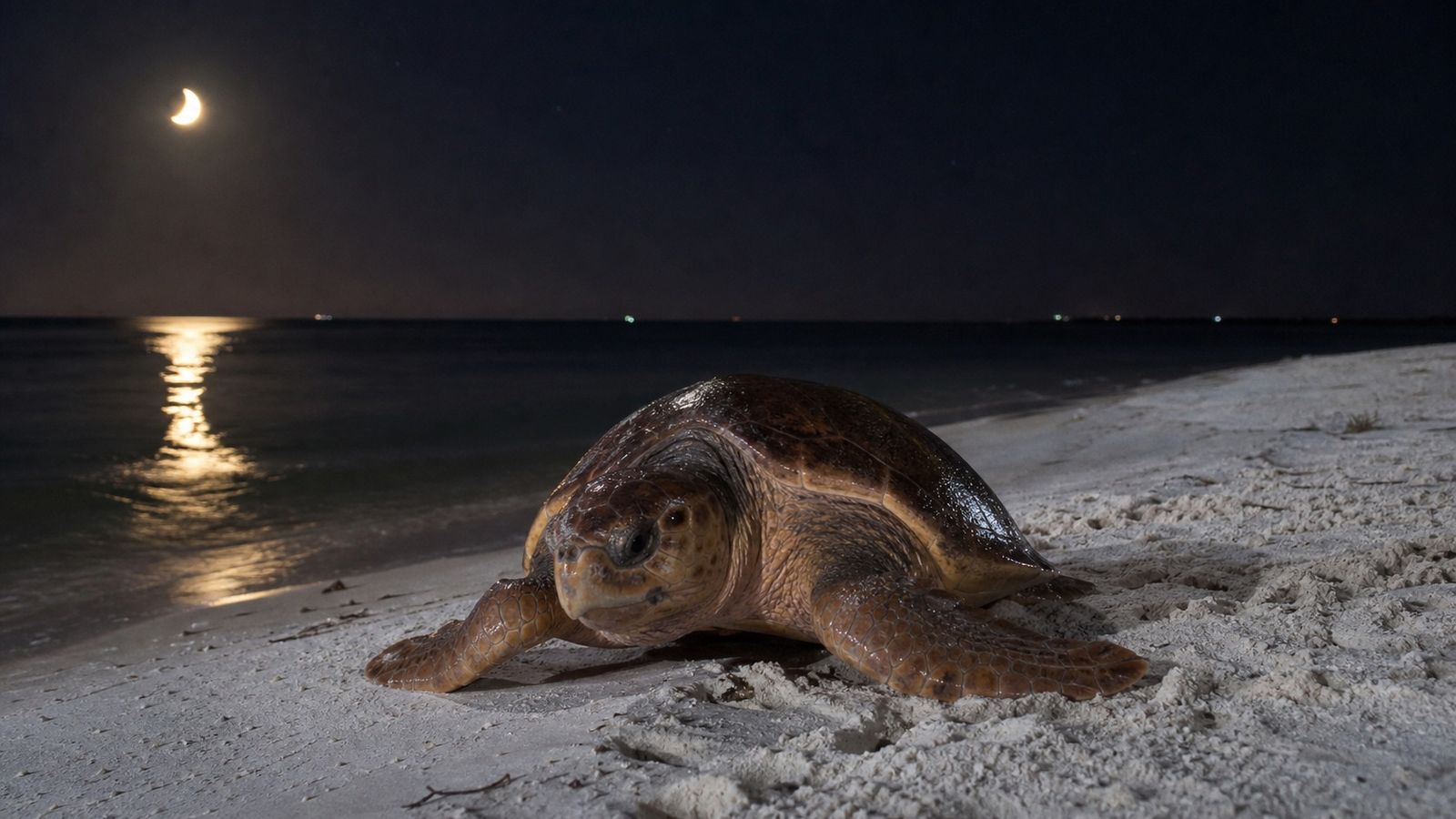
Northwest Florida’s Gulf Coast beaches host nesting loggerhead, green, and leatherhead sea turtles from May through October. Seeing a nesting turtle or fresh hatchlings make their way to the Gulf is one of the most extraordinary wildlife encounters available on the Emerald Coast. The protections in place are also some of the most serious regulations visitors can run afoul of, because they’re backed by both Florida state law and the federal Endangered Species Act. See our complete sea turtle guide for nesting season timing, best viewing practices, and what to do if you encounter a turtle — this section covers the rules that directly affect beach visitors.
The Beach Lighting Ordinance
This is the rule that catches visitors most off guard. Both Okaloosa and Walton counties have beach lighting ordinances in effect from May 1 through October 31 that prohibit artificial light visible from the beach at night. The ordinance applies to coastal property owners primarily — they must use turtle-safe amber lighting rather than white lighting visible seaward — but it directly affects beach visitors too. Using white flashlights, flash photography, or phone flashlights pointed toward the water at night during nesting season is prohibited and can disorient nesting turtles or hatchlings. A hatchling following light away from the Gulf instead of toward it can die from exposure, dehydration, or road traffic. Fines under Florida Statute 370.12 can reach $100,000 per violation. In practice, county and state turtle patrol officers issue warnings before fines for first-time visitor infractions, but they take it seriously.
Fill in Your Holes
This one is so simple it seems trivial, but it matters: fill in any holes you dig in the sand before you leave the beach. A sandcastle moat, a hole dug by kids, or a sand pit from pulling out an umbrella anchor — all of these create pitfall traps for hatchling turtles and shorebirds. Hatchlings making their way from nest to Gulf at night navigate by the natural slope of the sand; an unexpected hole can trap them, where they exhaust themselves trying to escape and may not make it to the water. Fill holes flush with the surrounding sand. It takes 30 seconds.
Remove All Gear from the Beach Before Sunset
Chairs, umbrellas, toys, floats, coolers, and any other equipment left on the beach overnight during nesting season (May–October) can obstruct nesting turtles or trap hatchlings. Both counties require removal of personal beach equipment before sunset during nesting season. This is separate from any county ordinance about overnight structures — it’s specifically driven by turtle protection and carries wildlife-related enforcement authority. Commercial beach chair services know the rule; they pack up equipment before sunset. Visitors need to do the same.
Don’t Disturb Marked Nests
Active nests are marked with orange stakes, yellow caution tape, and typically a stake-and-sign combination. Do not enter marked nest areas, touch the stakes or tape, dig near the nest, or park chairs or equipment within the marked perimeter. Nests hatch overnight 60–80 days after laying; on active hatching nights, turtle patrol volunteers will be present to assist hatchlings. If you encounter a nest hatching without a volunteer present, maintain distance, keep all lights off, and let the hatchlings navigate to the water naturally.
What to Do if You See a Nesting Turtle or Disoriented Hatchling
If you see a nesting turtle on the beach at night: observe from at least 30 feet back, turn off all lights, and do not approach, follow, or photograph with flash. She will leave on her own after nesting, which can take 45–90 minutes. If you see a hatchling that appears disoriented, moving away from the Gulf, or in distress: do not handle it; call the Florida Fish & Wildlife Conservation Commission Wildlife Alert Hotline at 888-404-3922, available 24 hours. Walton County also has a dedicated Turtle Watch hotline through the South Walton Turtle Watch organization. If a sea turtle is injured or stranded, call FWC immediately — moving or handling a sea turtle without authorization is a federal offense.
Stay Close to What You Need
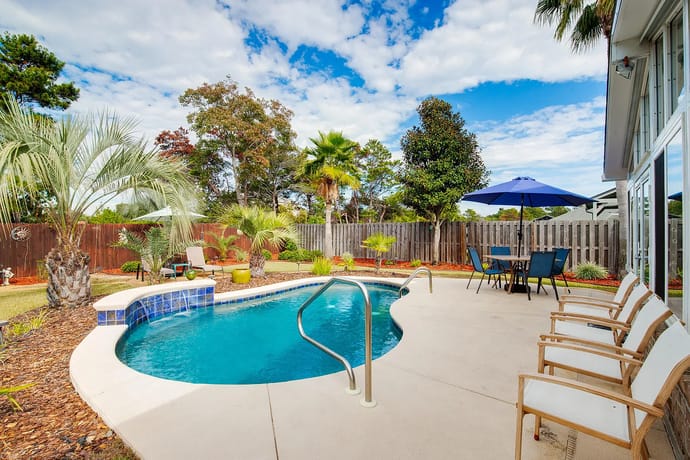
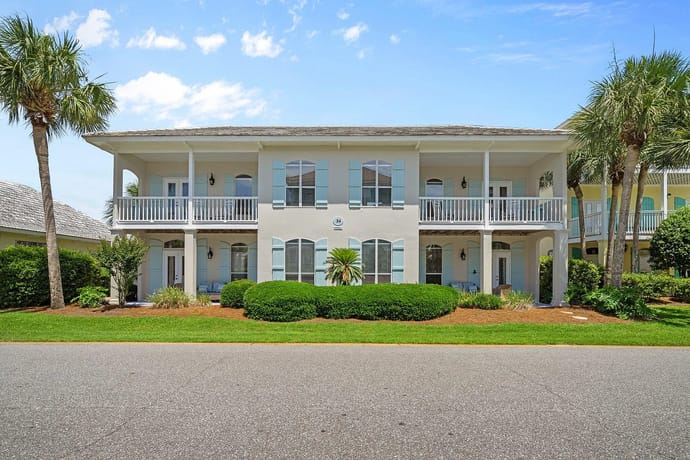
Both of our vacation rentals put you within easy reach of public beach access points in Destin and Miramar Beach, with full kitchens so you can prep beach food in cans and coolers instead of dealing with glass. Our Miramar Beach rental has a private pool for days when the beach rules (or the weather) send you back to the house early — 4 bedrooms, sleeps 8, from $225/night.
Our Destin rental is pet-friendly and sleeps up to 12 across 3 bedrooms plus a bunk room from $110/night — centrally located if you want to divide days between Destin Harbor and the beach.