One of the quiet wildlife highlights of a summer trip to Destin is the presence of nesting sea turtles. Every year from May through October, loggerhead sea turtles — and occasionally green and Kemp's ridley turtles — come ashore at night to lay eggs on the same white quartz beaches that draw vacationers from across the country. The Panhandle's Okaloosa and Walton County beaches host hundreds of nests each season, and the Miramar Beach stretch in particular has consistent nesting activity.
Most visitors have no idea this is happening twenty feet from their beach umbrellas. This guide explains the nesting season, how to spot and respect nests, whether you can watch a hatching, and how to see sea turtles in the water during your trip.

Nesting Season — When It Happens & Which Species
Sea turtle nesting season on the Emerald Coast runs May through October, with peak activity between mid-May and mid-August. The loggerhead sea turtle (Caretta caretta) is by far the most common nesting species on Okaloosa and Walton County beaches — a mature female can weigh 250–350 pounds and has likely returned to nest on this same stretch of beach repeatedly over her decades-long life. Green turtles (Chelonia mydas) also nest here occasionally, and a Kemp's ridley sighting — the world's most endangered sea turtle — is rare but not unheard of.
A nesting female comes ashore at night, typically between 10pm and 5am, crawls above the tide line, excavates a body pit and egg chamber, and deposits 80–120 eggs before covering the nest and returning to the Gulf. She may nest 3–5 times in a single season, spaced about two weeks apart. The eggs incubate for roughly 50–60 days, and hatchlings emerge — also at night — instinctively crawling toward the brightest horizon, which should be the moon's reflection on the Gulf.
Miramar Beach and the Okaloosa County beaches see meaningful nesting activity each season, though counts vary year to year. The Emerald Coast Wildlife Refuge and the Okaloosa County Marine Conservation Program run the official nest monitoring here — volunteers patrol the beach at dawn from May onward, locate new nests from overnight crawl tracks, mark them with wooden stakes and orange tape, and log GPS coordinates. That staked nest in front of your rental was found by a volunteer at 6am this morning.
Walton County's beaches — 30A, Grayton Beach, Dune Allen — tend to see higher nest counts per mile than Okaloosa County, thanks to more natural dune systems and lower density of artificial lighting. But Destin and Miramar Beach see consistent nesting every year, and the counts have trended upward as protection programs have matured over the past two decades.

How to Find Nests — and What Not to Do
If you're walking the beach in the morning — especially from late May onward — you may see the telltale signs of an overnight nesting crawl: a wide flipper-scuff trail leading from the waterline up toward the dune, a disturbed area of sand, and then the return trail back to the water. If volunteers have already been through, the nest will be marked with wooden stakes and orange flagging tape. This usually happens by 8am.
Seeing a marked nest is genuinely exciting — and the rules for being near one are straightforward:
- Never touch, sit on, or disturb the nest or its markers. Sea turtle nests are federally protected under the Endangered Species Act — disturbing a nest is a federal crime with fines up to $50,000. The stakes and tape protect the eggs; they're not a photo backdrop.
- Don't shine lights toward nesting areas at night. Artificial light disorients nesting females (causing them to abandon a crawl before laying) and hatchlings (which crawl toward inland light instead of the Gulf).
- Keep the beach flat near nests. Deep footprints, sandcastles, and especially beach chairs and holes left overnight can trap and kill hatchlings. Okaloosa County requires beach chairs to be removed or stacked above the high-tide line by dark.
- If you see a nesting turtle, stay back and be silent. A female on the beach is in a vulnerable state. Human presence, lights, or noise can cause her to abort the crawl and return to the Gulf without laying. Stay at least 30 feet away, move slowly, keep all lights off, and speak at a whisper.
You can track reported nests in near-real time through the Florida Fish & Wildlife Conservation Commission's Sea Turtle Nesting Beach Survey at myfwc.com — county-level data is updated weekly through nesting season. Watching Okaloosa and Walton County nest counts tick upward through June and July is genuinely satisfying if you're a data person.

Watching a Nest Hatch — The Experience and the Rules
A sea turtle hatching is one of the more remarkable natural events you can witness on the Emerald Coast — dozens to over a hundred tiny turtles boiling up from the sand and scrambling for the Gulf in the dark. The challenge is timing: nests hatch 50–60 days after the eggs were laid, typically between midnight and 5am, and you can't predict the exact night until the nest shows signs of activity.
The Emerald Coast Wildlife Refuge periodically organizes volunteer nest watches near predicted emergence dates, where small groups can be present at a distance when hatchlings emerge. Follow their website or Facebook page to find current-season watch opportunities — they're limited and typically go to regular volunteers first, so getting connected early in the season pays off.
If you're staying near a marked nest and notice the sand above it beginning to visibly collapse inward or "boil," emergence is in progress. Keep your distance, keep all lights completely off, and let it unfold. Do not guide hatchlings to the water — the crawl is a critical navigation-imprinting process. The hatchling's magnetic sense records this beach's precise location, which is how females return to nest on the same beach decades later. A hatchling you carry to the water may never successfully return to reproduce.
Hatchling emergences are most common from July through October, tracking 50–60 days behind the peak nesting period. An August or September trip gives meaningfully better odds of being near an active emergence than an early June visit.

How Visitors Can Protect Nesting Turtles
The biggest threats to sea turtle nesting success on developed beaches are artificial light and beach furniture — both of which visitors directly control.
Beach Lighting Rules (June 1 – October 31)
Florida law and Okaloosa County ordinance restrict beachfront lighting during sea turtle season. Outdoor lights visible from the beach must use amber or red "turtle-safe" bulbs, or be switched off. If you're staying in a beachfront rental, this affects your stay:
- Don't use flashlights, phone flashlights, or camera flash on or near the beach after dark
- Close blinds and curtains on seaward-facing windows after dark — interior lights leaking toward the beach can disorient hatchlings from inside a living room
- Use amber or red light if you need illumination on a beachside porch or deck at night
- No bonfires or tiki torches on the beach after dark during nesting season — Okaloosa County heavily regulates beach fires year-round anyway
Beach Furniture & Holes
Okaloosa County requires beach chairs, umbrellas, and equipment to be removed or stacked above the dune by 9pm — not left flat on the sand. A beach chair left flat overnight is a potential trap for a hatchling or a nesting female. Holes dug during the day should be filled before you leave. Rangers walk the beach at night during nesting season.
Reporting problems: If you see someone disturbing a nest, a stranded or injured sea turtle, or a disoriented hatchling crawling inland during daylight, call the Florida Fish & Wildlife Conservation Commission Wildlife Alert Hotline: 1-888-404-FWCC (3922). FWC responds around the clock during sea turtle season. Do not handle a disoriented hatchling without guidance — call first.

Seeing Sea Turtles in the Water
Sea turtle encounters in the water around Destin are genuinely possible during summer months, though not guaranteed. The East Jetty and the nearshore artificial reefs scattered across the Gulf bottom off Destin and Fort Walton Beach are feeding habitat for loggerheads, which are carnivorous — they prey on horseshoe crabs, whelks, and other hard-shelled invertebrates on the bottom. The seagrass beds in Choctawhatchee Bay are green turtle habitat.
For the best chance of an in-water encounter:
- Guided snorkeling tours that visit the East Jetty or nearshore reefs are the most reliable option. Operators know where to look and how to move quietly. Summer Gulf visibility near Destin is frequently 10–20 feet — enough to spot a large loggerhead from the surface.
- Charter fishing boats report loggerhead sightings regularly during summer trips — the turtles surface to breathe every few minutes, and an attentive angler will see them cruising near the surface on calm mornings.
- Dolphin & snorkel combination cruises out of Destin Harbor often encounter sea turtles as a bonus — the captains know the Gulf well and will call them out when visible.
- Kayaking the backbay on Choctawhatchee Bay occasionally yields green turtle sightings in the grassy shallows near Santa Rosa Beach on early morning paddles.
If you encounter a sea turtle while snorkeling or paddling: don't chase it, touch it, or block its path. Stay still and let it come to you. A relaxed loggerhead that doesn't feel pressured will often circle a diver out of apparent curiosity. The moment you kick toward it, it dives and disappears. Patience is always the better move.
Henderson Beach State Park is also a documented nesting site, and the clear water in front of the park — accessible only through the park entrance — sees far less boat traffic than the main public beaches. The odds of a calm, undisturbed in-water encounter are meaningfully higher here on an early morning swim in July or August.
Stay on the Beach During Nesting Season
Both of our properties sit a short walk from active nesting beaches on the Miramar Beach and Destin side of the coast. Early-morning beach walks to spot crawl tracks — coffee in hand before the crowds arrive — are one of the genuinely memorable parts of a summer week here.
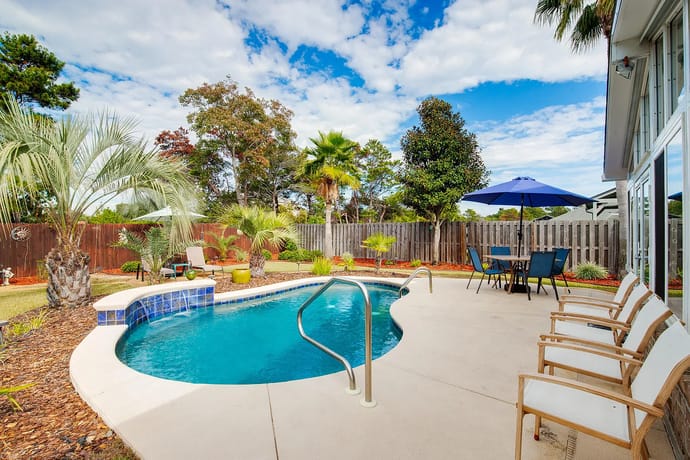
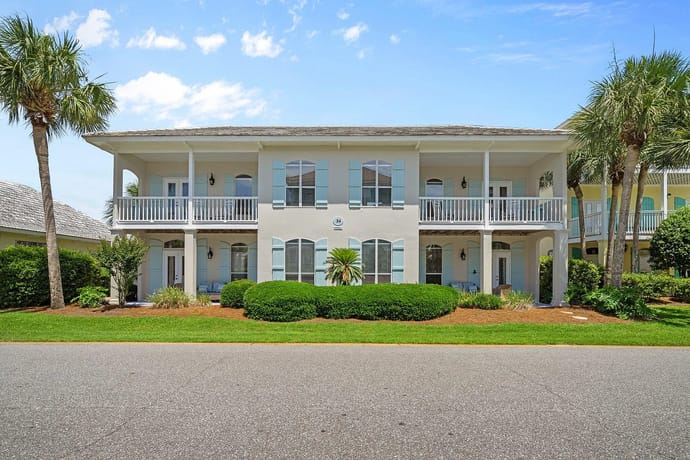
Our Miramar Beach rental has 4 bedrooms, a private pool, and sleeps 8, starting from $225/night — ideal for families or two couples wanting a quieter residential stretch of beach during nesting season. Our Destin rental is a pet-friendly 3-bedroom home sleeping up to 12, starting from $110/night — great for larger groups who want room to spread out while staying close to Henderson Beach and Destin Harbor.