The Emerald Coast runs roughly 100 miles along the Florida Panhandle — from Fort Walton Beach through Destin, Miramar Beach, and the 30A corridor to the edge of Panama City Beach. The name isn't marketing. The water genuinely is that color: a pale, clear emerald in the shallows that shifts to turquoise and then deep blue as the bottom drops away, with white quartz sand visible at 6 feet of depth on a calm day.
But not all Emerald Coast beaches are the same. Some are crowded and convenient; some require a state park pass and a bit of a walk. Some are surrounded by resort infrastructure; some feel genuinely remote. This guide breaks down where the best beaches actually are, what makes each distinct, and how to choose where to base your trip.

What Makes the Emerald Coast's Water That Color?
The answer is the sand. Beaches along this stretch of the Panhandle are made of almost pure quartz crystals — not the calcium-carbonate shell fragments you find on most Florida beaches south of Tampa. Quartz doesn't absorb or scatter light the way shell-based sand does. It reflects it, and the shallow water above it acts like a lens, concentrating that reflection upward into the vivid blue-green you see in photos and assume must be filtered.
The quartz originated in the Appalachian Mountains. Over millions of years, rivers — the Apalachicola, the Choctawhatchee, and others — carried eroded quartz downstream and deposited it along the Gulf shore. What makes it doubly unusual is that the coastal shelf here is shallow and clear, with minimal river runoff turbidity compared to most Gulf shoreline. The water stays clean enough to see the bottom at depths that would be opaque almost anywhere else.
The color shifts by depth and time of day. In knee-deep water at noon the sand appears almost white with a pale green tint. But wade to waist depth, look down through 3 feet of water at sunlight scattered off white sand, and the color locks in — vivid, luminous, unlike anything most visitors have seen at a beach before.
Gulf water temperature at Destin peaks around 84–86°F in August — warm enough to stay in all day. The quartz sand cools quickly overnight, which means the surface is comfortable on bare feet through mid-morning even in July. (Afternoon sand in direct sun is a different story; shoes or surf booties are worth having for mid-day beach walks.)
If you want current conditions before you go, the weather and water temperature page pulls live Gulf data for both Destin and Miramar Beach. The color also follows the flag system: double red flags close the water entirely, but even on a yellow-flag day with moderate chop, the emerald color is still there — the surface haze just cuts the contrast.

Destin's Best Beaches
Destin sits on a narrow peninsula between Choctawhatchee Bay and the Gulf — the beach is never more than half a mile from the bay at any point. Access options range from crowded free county parks to the quieter state park grounds at Henderson Beach. Here's the breakdown:
- Henderson Beach State Park — The best beach in Destin. 208 acres of preserved coastal scrub, a 1-mile boardwalk trail through slash pines to a wide, uncrowded Gulf beach, and a campground for overnight stays. Entry is $6 per vehicle. Pack your own chairs and umbrella — there's no beach chair rental here — but the tradeoff is noticeably fewer people than any county access point. Dogs are welcome on the trail (leashed) and in the campground, but not on the beach itself. Full guide here.
- James Lee County Park — The best free family beach in the Destin area. On Scenic Gulf Drive with multiple access points, restrooms, picnic pavilions, and a playground. Shallow water with a gradual entry makes it ideal for kids. Expect a 10–20 minute parking wait on July and August weekends, but the beach is wide enough to handle summer crowds reasonably well. No entry fee beyond the parking wait.
- Norriego Point — The tip of the Destin peninsula, accessible by a short walk from the harbor or by kayak. Dog-friendly, no fee, with Gulf on one side and the harbor entrance on the other — you can watch charter boats coming through East Pass while sitting on the beach. Gets crowded on summer weekends but quiet on weekday mornings before 9am.
- Crystal Beach / Scenic Gulf Drive Access Points — Half a dozen public beach access points with small parking lots along Scenic Gulf Drive between Henderson Beach and James Lee. First-come lots that fill fast — arrive by 8:30am in summer or lose your spot. Beach width is narrower than James Lee but crowds are lighter than the major parks.
- Crab Island — Technically a sandbar in the harbor, not a Gulf beach, but for the quintessential Destin experience it belongs on any list. Rent a pontoon, anchor in 2–3 feet of crystal-clear water, and spend an afternoon floating with food vendors circling the boats. Nothing else like it on the Gulf Coast.
Parking reality: Public beach parking in Destin in July is genuinely difficult. If your rental has beach access, use it. If you're day-tripping, arrive before 9am or consult the Destin parking guide for the lots that don't fill as quickly.

Miramar Beach and Fort Walton Beach
Neither area is technically Destin — but visitors often lump them together because they share the same highway and the same water color. In practice, they have distinct characters worth knowing before you book:
Miramar Beach sits just east of the Destin city limit, inside Walton County. Same white quartz sand, same emerald water — but the development pattern is quieter and more residential. Miramar Beach is primarily low- to mid-rise condos and vacation rental houses rather than Destin's denser hotel and restaurant strip. Grocery stores (Publix on US-98), Silver Sands Premium Outlets, and several solid restaurants are within 10 minutes. The beach has fewer people than James Lee or the Destin public access points, especially midweek. For families or groups who want the beach experience with less surrounding noise, Miramar Beach is often a better fit than central Destin.
Fort Walton Beach and Okaloosa Island sit west of Destin, across East Pass on Santa Rosa Island. The Boardwalk area has good beach access, a fishing pier, and considerably fewer crowds than Destin in summer. It skews more local — fewer tourist shops, lower prices, more regulars. The tradeoff is that you're separated from Destin Harbor by the bridge, adding 10–15 minutes to any HarborWalk dining or charter boat excursion. For families who want beach access without the Destin crowd level and don't need to be near the charter docks, Okaloosa Island is an underrated base.
Drive time between Miramar Beach and Fort Walton Beach: about 20–25 minutes with no traffic, longer on summer Friday afternoons. Both are close enough to use Destin restaurants and activities easily.

30A: The Crown Jewel Beaches
County Road 30A runs 19 miles along a narrow strip of land between the Gulf and a chain of coastal dune lakes — rare freshwater lakes that occasionally breach the dune line and connect briefly to the sea. The road passes through a series of small communities, each distinct, collectively making up the most scenically pure stretch of developed beach on the Gulf Coast. 30A begins about 25–30 miles east of Destin Harbor, 40–60 minutes by car in summer traffic.
- Grayton Beach State Park — The oldest, most character-filled community on 30A. The state park protects a pristine Gulf shoreline and Western Lake, a coastal dune lake where kayaking and paddleboarding are spectacular on calm mornings. The village has excellent restaurants and bars, and the campground ranks among the best on the Gulf Coast. Entry $6 per vehicle. The beach here is wide and natural, with no condo wall visible from the sand — one of the very few places on the Panhandle where that's true.
- Seaside — The planned community designed in the 1980s as a new urbanism experiment, and yes, where The Truman Show was filmed. The pastel-painted downtown is genuinely charming for a lunch or evening walk, and the restaurants on the central square are good. It's also reliably the most crowded 30A stop in summer. Worth a visit; not where you want to fight for beach parking for a full day.
- WaterColor and Watersound — Resort communities with controlled access and premium pricing. The beaches here are beautiful and quieter than Seaside, and both areas have strong rental options if budget isn't the deciding factor. The 30A Scenic Corridor trails run through both areas and are worth an early morning bike ride.
- Rosemary Beach — Easternmost of the designed 30A communities, with a dense European-village aesthetic and the best concentration of upscale boutiques and restaurants on the corridor. Beach access is through narrow private walkovers between properties. For couples who want a walkable, refined evening base, Rosemary Beach is the top 30A pick. Destin vs. Rosemary Beach comparison here.
- Inlet Beach — At the eastern end of 30A where the road rejoins US-98. Less developed than Seaside, lower key, and the beach is as beautiful as anywhere on the corridor with more room to breathe. Good option when the more famous stops feel too busy.
The coastal dune lakes are globally rare — fewer than 15 such lake systems exist outside of this Walton County corridor, Madagascar, and a handful of other locations. Western Lake at Grayton Beach, Deer Lake at Deer Lake State Park, and Camp Creek Lake are all accessible for kayaking. Swimming is allowed in most. Paddling a dune lake with the sound of the Gulf on the other side of a 20-foot dune is one of the more unique experiences on the coast.
For dining along 30A, the 30A restaurant guide covers the best spots by town. For a day trip from Destin, the 30A day trip guide maps a full itinerary.

Henderson Beach State Park vs Topsail Hill Preserve
Both are state-protected stretches of Gulf shoreline. Both charge $6 per vehicle for day use. Both provide a far better beach experience than any crowded public access point. The differences are significant enough to choose based on what you want:
| Henderson Beach SP | Topsail Hill Preserve | |
|---|---|---|
| Location | Inside Destin city limits | ~12 mi east of Destin |
| Size | 208 acres | 3,000+ acres |
| Beach access | 1-mile trail walk | 1.2-mile trail or free tram |
| Camping | 60 sites (tent + hookups) | 156 RV sites + cabins |
| Coastal dune lakes | No | Yes |
| Summer crowds | Moderate | Lower |
| Best for | Destin day visitors | Full beach + nature day |
Henderson Beach wins on convenience. It's 5 minutes from HarborWalk Village and easy to combine with a morning fishing charter or an evening dinner on the harbor. The trail through coastal scrub is beautiful, the beach is wide and uncrowded relative to the county parks, and you can walk the full trail in 20 minutes each way. For day visitors based in central Destin who want a better-than-average beach without driving far, Henderson is the right call.
Topsail Hill wins on scenery and nature. The beach feels genuinely remote — no condos visible, dramatic dunes, sea turtle nest stakes during nesting season (late May through October). The park tram eliminates the trail walk for families with young kids or anyone who'd rather not hike both ways in summer heat. The coastal dune lakes are a bonus no other state park in the area can match.
Summer note: Both parks have limited parking and fill on summer weekend mornings — Henderson especially, given its Destin location. Arrive by 9am on any Saturday or Sunday in July or August for guaranteed entry. Full guides: Henderson Beach State Park and Topsail Hill Preserve.

Tips for Choosing Where to Stay on the Emerald Coast
The Emerald Coast is easy to drive — the full stretch from Fort Walton Beach to Inlet Beach is about 50 miles — but the experience of each base location is meaningfully different. Here's how to decide:
- Central Destin (near HarborWalk) — Best if the trip is built around fishing charters, nightlife, watersports, and restaurant variety. You're walking distance from charter docks, Crab Island pontoon rentals, and multiple bars and restaurants. The beach is a short drive but not walking distance from most lodging in this area. Good for activity-heavy trips and groups who want to be in the middle of things.
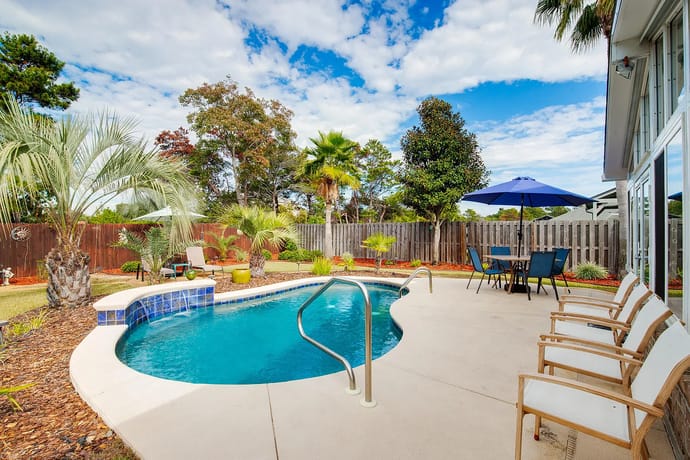
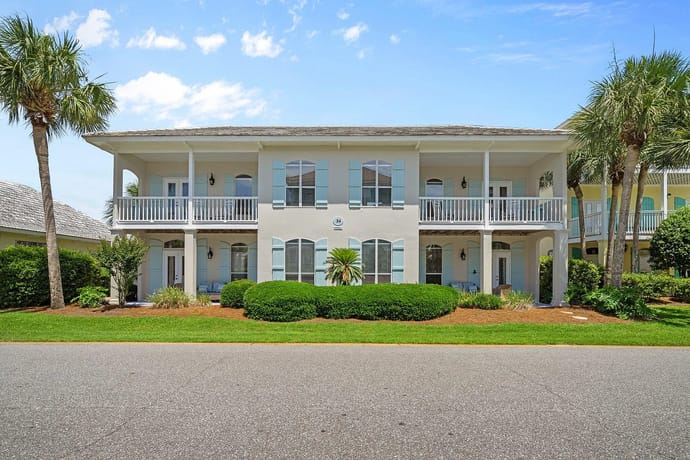
- Miramar Beach — Best if the beach itself is the priority and you want a quieter setting. Vacation rental houses in Miramar Beach typically have better outdoor space, more private pool options, and easier parking than equivalent Destin properties. About 10–15 minutes from HarborWalk by car — a reasonable tradeoff for a calmer environment. Good for families, couples, and groups who plan to cook more than eat out. Our Miramar Beach rental is 4 bedrooms with a private pool, sleeps 8, from $225/night.
- 30A communities — Best for couples or honeymooners whose trip is more about scenery and restaurants than fishing and watersports. Rental prices run 30–50% higher than comparable Destin properties in peak season, but the beach environment and 30A dining quality justify it if that's the focus. You're 45–60 minutes from Destin Harbor, which makes day trips slightly less convenient.
- Fort Walton Beach / Okaloosa Island — Best for budget-conscious visitors who want the same water and beach quality without Destin resort pricing. Lodging runs cheaper, the beach is less crowded, and you're still 15–20 minutes from central Destin.
Rental vs. hotel: For groups of 4 or more, a vacation rental almost always makes more financial sense on the Emerald Coast — lower per-person cost, private pool access, full kitchen, and no resort fees. The vacation rental vs. hotel guide runs the real numbers.
Shoulder season tip: The Emerald Coast is genuinely excellent in September, October, and May. Water temperature stays above 75F through October. Crowds drop sharply after Labor Day. Rental prices fall 30–40% from peak July rates. The beach doesn't change — the water stays emerald, the sand stays white — but the experience becomes dramatically more relaxed. If your schedule allows, the shoulder seasons are when people who know the area prefer to visit.
Stay on the Emerald Coast
Our two properties give you a base for the full Emerald Coast, from Destin Harbor to 30A. The Miramar Beach rental is a 4BR home with a private pool, sleeps 8, from $225/night — ideal for groups who want the beach experience with a private retreat. The Destin rental is pet-friendly, sleeps up to 12 across 3 bedrooms plus a bunk room, from $110/night — best for larger groups who want central access to the harbor and activities.