Destin is famous for fishing and white-sand beaches, but snorkeling gets less attention — partly because the Gulf of Mexico isn't a coral reef destination, and partly because it depends heavily on conditions. When everything lines up — calm seas, no recent rain, midsummer visibility — it's genuinely excellent. When it doesn't, you're looking at murky green water and not much else.
This guide covers the realistic version: what Destin's underwater world actually looks like, where to go, whether to book a tour or wing it, and how to time your trip for the best chance at clear water.

Why Destin Is Actually Worth Snorkeling (And Where to Manage Expectations)
Destin is not the Florida Keys. There's no offshore coral reef system, and you're not going to hover over brain coral in 40-foot visibility like you would in Cozumel. The Emerald Coast's famous water color comes from very fine white quartz sand that scatters green light — beautiful from above, but sand-bottomed inshore areas don't hold much reef structure or marine life.
What Destin does have: rocky jetties, artificial reefs placed specifically for diving and fishing, a handful of natural limestone ledges offshore, and water clarity that can rival the Caribbean on a good day in summer. Offshore reefs sit in 15–30 feet of water and hold a genuine variety of fish — sheepshead, spadefish, red snapper, flounder, Spanish mackerel — plus the occasional sea turtle and, if you're lucky, spotted eagle rays.
The honest bar: if you've snorkeled in Hawaii or the Keys and expect that level of experience, Destin won't match it. If you've never snorkeled and want warm clear water with real fish, Destin delivers well — especially on a tour that takes you to the better spots. And if you've done the beach plenty of times and want to see a completely different side of the Gulf, the natural reefs are a genuine revelation.

Best Snorkeling Spots Near Destin
East Pass Jetties are the most accessible snorkeling in the area without a boat. The rock walls lining the inlet between Destin Harbor and the Gulf hold sheepshead, black sea bass, and small reef fish. You can wade in from the beach on the Crab Island side or shore-enter near the Gulf-side boulders. Warning: tidal current runs through the pass — if you try to swim against it, it wins. Plan your timing around slack tide or go when the current is minimal.
Henderson Beach State Park doesn't have a reef, but the water clarity is reliably better than public beach access points because there's less foot traffic stirring up sand. In calm conditions you'll see small fish in the shallows and some interesting bottom structure if you swim out 50–100 yards. Good for beginners who want clear water without booking a tour.
Destin's Artificial Reefs are where snorkeling gets genuinely impressive, but you need a boat to reach them. Okaloosa County has placed hundreds of reef modules offshore over the decades — concrete pyramids, decommissioned military hardware, purpose-built reef balls — that create real fish habitat in 15–35 feet of water. The county's public reef coordinates are online; a GPS and a boat will get you there. Some rental boats can handle this if you're comfortable navigating offshore.
Natural Limestone Ledges offshore hold the largest fish — red snapper stacked underneath ledges, amberjack circling overhead, the occasional big grouper sitting motionless on the bottom. Depths of 25–50 feet push many sites beyond easy snorkeling range, but the top of a 20-foot ledge in 25 feet of water is reachable on a breath-hold dive. Charter fishing captains know these spots and some offer combination fishing/snorkeling trips.
Crab Island is a sandbar in the harbor channel, so there's no traditional snorkeling — but the water is calm and waist-deep, and small fish and occasional rays pass through. Think of it as wading rather than snorkeling, but kids with masks enjoy it.

Snorkeling Tours vs. DIY: How to Choose
Book a tour if: you don't have a boat, you're unsure which reef coordinates to target, your group includes kids or weak swimmers, or you want someone else managing safety and logistics. Tours typically run $45–$75 per person for a 2–4 hour trip, include all gear, and take you to reefs the captain has pre-scouted for current conditions. If the viz is bad at one site, a good operator will redirect you — a huge advantage over guessing on your own.
Look for tours departing from HarborWalk Village in Destin Harbor. Most operate June through September. Many run combination dolphin-watch/snorkel trips that spend part of the time on the water and part anchored on a reef — a good value for mixed-interest groups where not everyone wants to snorkel for two straight hours.
Go DIY if: you have access to a boat and GPS, are comfortable reading current conditions, can reach the public reef coordinates, and want the freedom to spend as long as you want on each site. The Okaloosa County reef coordinates are posted on the county website and updated regularly. Rent or bring your own gear, download the coordinates, and anchor over the reef. The fish don't care whether you booked a tour or arrived on a rented pontoon.
One middle option: rent a kayak from a beach outfitter and snorkel the jetties or near-shore structure. No captain required, no boat to fuel, and kayaks can reach spots that charter boats avoid due to shallow drafts. Kayak rentals run $25–$40/hour and are widely available on Okaloosa Island near Fort Walton Beach.

What You'll See Underwater
The Gulf off Destin is warmer and more diverse than most first-timers expect. Reef structure — natural or artificial — concentrates marine life in ways open sand doesn't. Here's a realistic rundown:
Fish you'll almost certainly see on a reef site:
- Sheepshead — striped black-and-white fish that pick barnacles off jetty rocks and pier pilings; very common around any structure
- Spadefish — silvery disc-shaped fish that school around buoys and reef tops in large groups; striking in the water
- Red snapper — the Gulf's most iconic reef fish, often hovering just off bottom on natural ledges; large adults can exceed 2 feet
- Black sea bass and triggerfish — territorial around reef base and structure
- Spanish mackerel — fast and silvery, often near the surface around reefs
Fish and wildlife you might see:
- Sea turtles — loggerheads are most common; they surface to breathe, so watching patiently near a reef often pays off
- Cobia — large, dark, curious fish that follow rays and turtles; occasionally approach snorkelers
- Spotted eagle rays — soaring grace underwater, occasionally glide through inshore passes and near-shore reefs
- Sand dollars and starfish — on sandy areas adjacent to reef structure in calm conditions
About sharks: yes, they live in the Gulf. Bull sharks occasionally patrol inshore areas, particularly around fish-cleaning stations and near harbor inlets. At offshore reef sites, blacktip and silky sharks sometimes pass through. Most local guides will tell you the risk is very low and they'd know — but avoid snorkeling at dawn or dusk, and stay away from boat ramps where fish are being cleaned. Most encounters are brief, incurious, and uneventful.

Best Time of Year to Snorkel in Destin
June through September is the prime snorkeling window. Water temperatures hit 80–85°F, visibility peaks at 20–40 feet offshore on good days, and calm Gulf conditions are the norm for weeks at a time. August and early September often have the flattest seas and best clarity — though that's also peak hurricane season, so watch forecasts.
May and October are solid shoulder months — water is still warm (72–79°F in May, 75–80°F in October), crowds are lighter, and prices drop. Visibility can be good but is more variable; a cold front in October will stir things up and close the window for a few days at a time.
November through March — skip it for snorkeling. Water temperatures drop to 58–68°F (doable in a thick wetsuit, miserable in a bathing suit), winter storms keep the Gulf rough and visibility poor for weeks at a time, and most snorkel tour operators close for the season.
Best time of day: morning trips before noon consistently outperform afternoons. Afternoon sea breezes build throughout the day on the Gulf Coast and can put 2-foot chop on what was glassy water at 8 AM. Tour operators know this and most run morning-first schedules. If you're going DIY, plan to be anchored on site by 9–10 AM.

Gear, Rentals, and What to Bring
Gear rentals are easy to find in Destin. Beach vendors, watersports concessions, and snorkel tour operators all rent masks, fins, and snorkels for $15–$25/day. Quality varies — the cheaper beach rentals typically use basic single-window masks that fog easily. If good visibility matters to you, bring your own or rent from a dive shop where equipment is higher grade and properly fitted.
Buying your own gear is worth it if you're snorkeling multiple days or plan to return. A decent mask + snorkel + fins set runs $80–$150 from brands like Cressi, Mares, or U.S. Divers. Walmart on US-98 stocks basic sets around $30 if you're in a pinch — they work, just not as well.
What to bring:
- Reef-safe sunscreen — oxybenzone-based products damage marine life; use mineral-based (zinc or titanium dioxide) or a rash guard instead
- Water shoes or fins — the East Pass jetty rocks are sharp; water shoes help for shore entry
- Anti-fog spray or gel — or spit on the lens and rinse it; fog ruins more snorkel sessions than bad conditions do
- Plenty of water — you'll be in the sun for hours; dehydration sneaks up on you in the Gulf heat
- A towel and change of clothes — salt water plus sun equals wanting to not sit in wet swimwear for the rest of the afternoon
Full-face masks: widely sold at beach shops and they look good in photos. Skip them for actual snorkeling. They limit your downward field of view, make ear equalization harder, and some models have documented CO2 buildup issues during extended use. A traditional separate mask and snorkel gives you better visibility, more control, and easier surface clearing.
Stay Close to the Water
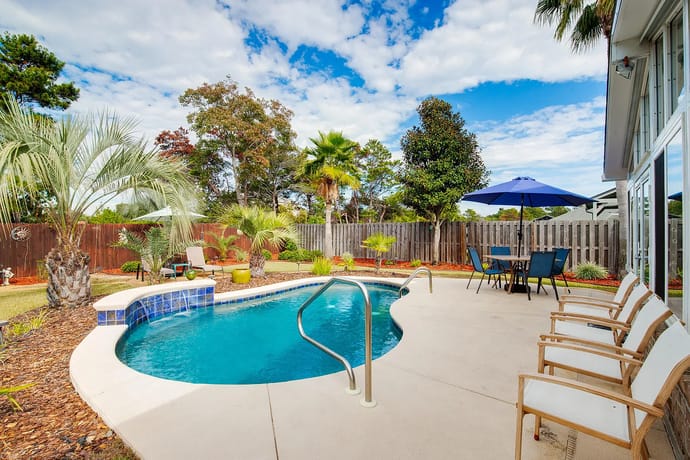
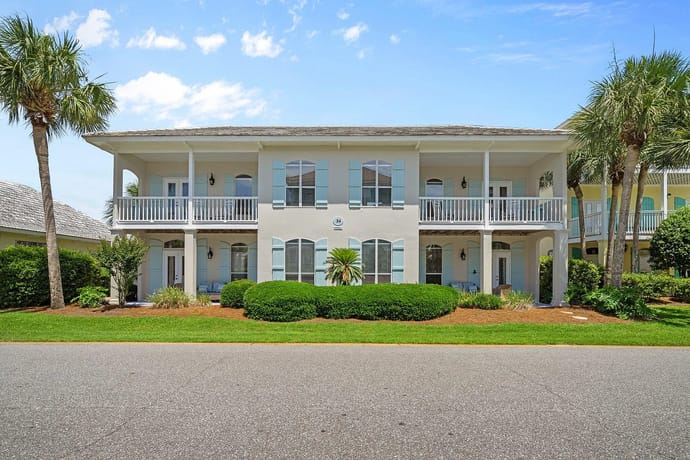
Both of our Destin and Miramar Beach properties put you minutes from the Gulf, the jetties, and the harbor where snorkel tours depart. Private pool, space for up to 12, and no hotel lobby between you and the water.