Most visitors come to Destin for the charter boats — the 150-plus-vessel fleet lined up at HarborWalk before dawn, headed offshore for red snapper and amberjack. But quieter and close enough to reach from many vacation rentals, Choctawhatchee Bay holds one of the most productive inshore fly fishing environments on the northern Gulf Coast. Clear grass flats, abundant redfish populations, speckled sea trout year-round, and a legitimate spring cobia run that brings large fish close enough to sight-cast on the fly — the bay side of Destin is a different experience entirely from the offshore fleet, and one that almost no visitor ever sees.
This guide covers what the area actually offers for fly fishing: which spots hold fish, what species you’ll realistically encounter, what gear you need, and whether hiring a local guide is worth the money. Real information, no charter-industry marketing.

Why Destin Is a Serious Saltwater Fly Fishing Destination
The Gulf Coast is not usually associated with flats fly fishing the way the Florida Keys or Tampa Bay are. But Choctawhatchee Bay — the large protected estuary immediately north of the Destin barrier island — is legitimately exceptional water, and the fly fishing community has been quietly discovering it for years.
The Bay Has What Flats Fish Need
Choctawhatchee Bay spans roughly 17 miles east to west and sits behind the barrier island that protects it from Gulf swells. The result is calm, shallow water across extensive seagrass flats — the habitat that sustains redfish, sea trout, and flounder populations year-round. Water clarity in the bay is typically very good, particularly on the western end near Destin and in the areas around the Rocky Bayou arm to the east. Good visibility is the entire premise of sight fishing on the fly; if the water is too murky to see fish before they see you, you’re not sight fishing. Choctawhatchee Bay delivers that clarity reliably during calm conditions.
The Geography Helps
Destin Pass — the inlet connecting the Gulf to the bay — creates a concentration point where tidal flow pushes baitfish and predators through a narrow channel. In spring, this produces one of the most remarkable cobia events on the Gulf Coast, with fish cruising the surface near the jetties and the pass in numbers that are hard to believe if you haven’t seen it. In fall, the same tidal dynamics concentrate redfish and trout as water temperatures drop and fish begin their seasonal movements. The bay-to-Gulf connection gives fly fishers access to migratory patterns that you simply don’t see in entirely enclosed estuaries.
What to Expect Versus the Florida Keys
This is not the Florida Keys. Expect variability in water clarity, particularly after rain events that push fresh water and sediment into the bay from the surrounding watershed. The fishery is not as heavily managed or as famous as the Keys, which means it receives less pressure from traveling fly fishers — a significant practical advantage. On calm days after two or three days of light wind, sections of the western bay run clear enough to spot individual fish from a poling skiff at 40 feet. Early morning, before afternoon chop builds, is typically when clarity peaks. The emerald clarity that makes Destin’s Gulf beach famous extends into the bay under the right conditions, and when it does, the sight fishing is genuinely excellent.

Target Species on the Fly Around Destin
The inshore fly fishing around Destin covers a wider species mix than most anglers expect. Here’s the realistic picture of what you’ll encounter and when.
Redfish (Red Drum) — The Primary Target
Redfish are the anchor species for Choctawhatchee Bay fly fishing, and for good reason. They’re abundant, they feed in the shallow water ideal for sight fishing, and they take properly presented flies willingly when conditions are right. In fall — September through November — the classic scenario is tailing reds in very skinny water, often a foot deep or less, rooting for crabs and shrimp in the grass. You can see the tails and backs of the fish as they feed head-down. A precisely placed Merkin crab pattern or EP shrimp fly in front of a tailing fish is one of the great moments in saltwater fly fishing. Florida’s redfish slot limit is 18–27 inches total length, 1 per person per day. The majority of the bay’s fish are within the slot; larger fish (bull reds) appear near the pass and in deeper bay channels, particularly in fall.
Speckled Sea Trout
Sea trout are the second pillar of the Choctawhatchee Bay fly fishery and in some ways the more consistent target across seasons. They hold on the same grass flats as redfish but often in slightly deeper water (2–4 feet) over mixed grass and sand. A Clouser Minnow, Crystal Schminnow, or small EP baitfish pattern in white or chartreuse stripped through the flat draws strikes from trout that chase and commit aggressively. Spring (March through May) and fall (September through November) produce the best trout fishing. Water temperature is the key variable — trout prefer 60–75°F and become sluggish in the heat of a Florida summer and the coldest weeks of January and February. Verify current slot limits at myfwc.com before your trip, as Florida sea trout regulations have been adjusted in recent years.
Cobia — Spring’s Premier Fly Target
Every April and May, cobia push through Destin Pass on their northward migration, and the concentration of large fish — 20 to 60 pounds — in visible, accessible water creates one of the Gulf Coast’s best opportunities to catch a big fish on the fly. Cobia are notoriously curious and will approach moving boats and follow stingrays, making them surprisingly approachable for sight fishing. A large EP baitfish, a white 3/0 deceiver, or a heavy tan Clouser cast in front of a cruising cobia in the pass has a real chance of getting eaten. A 10 or 11-weight rod and heavy fluorocarbon are not optional. Florida’s cobia minimum is 33 inches fork length. The spring cobia run at Destin is genuinely world-class for fly fishing; if you can schedule your trip for late April or early May, consider it a priority.
Flounder
Flounder are abundant on the bay grass flats and near hard-bottom areas and are sometimes sight-fished on the fly when they’re visible resting on sandy patches. More often they’re covered by blind-casting a heavily weighted fly — a large Clouser or a chartreuse-and-white bendback — along the edges of grass beds and near shell bars. Fall (October and November) is the best window as they fatten up before their offshore winter migration. Florida’s flounder minimum is currently 12 inches; verify current regulations as they’ve been adjusted in recent years.
Tarpon — Seasonal and Challenging
Tarpon appear in the Destin area from May through September. Small-to-medium fish (30–80 lbs) show in the bay and the pass during the right conditions, and larger fish pass through seasonally. Catching one on a fly is an advanced pursuit requiring a 12-weight rod, large flies, and a heavy shock tippet. If tarpon is your primary goal, hire a guide who specifically targets them — this is not a species where self-directed exploration is efficient. Tarpon are catch-and-release only in Florida; no harvest is permitted.
Ladyfish, Jacks, and Bonus Catches
Ladyfish are the accidental catch that delights almost everyone who hooks one on light gear — they jump four or five times per fight and are entertaining on a 5-weight in a quiet bay corner. Jack crevalle — another fish that won’t stop fighting — are present in the bay year-round and hit streamers aggressively. Spanish mackerel and bluefish reach fly-casting range from the jetties in fall. These aren’t trophy species, but they’re part of a full day on the water.

Best Fly Fishing Spots Near Destin and Miramar Beach
The bay is large and its productive water is spread across many miles. Here are the most reliable locations, accessible to both guided clients and self-directed anglers with a small boat or kayak.
The Western Bay Flats (Near Destin Harbor)
The shallow grass flats immediately north and west of Destin Harbor are the most accessible portion of the bay. Reachable by kayak from several launch points near Destin and within easy range of any bay boat launched at the harbor ramps. These flats hold redfish and trout year-round. The tradeoff is boat traffic from the harbor, which disturbs the flats during peak times. Fish these areas early — the first two hours of daylight, before recreational traffic builds — and on weekdays for the best conditions.
Destin Pass and the East Jetties
Destin Pass isn’t classic wading water — it’s deep and tidal — but it’s a critical location for certain species. The cobia run in April and May concentrates here as fish move through the inlet. A large fly cast across the current and swung through the channel on a sink-tip line will find cobia, large redfish, and flounder. The pass also holds Spanish mackerel and bluefish in fall when they push through on feeding runs. Wading the East Jetty rocks gives foot access to this area at no cost.
Rocky Bayou and the Niceville Arm
The eastern reaches of Choctawhatchee Bay, including Rocky Bayou and the area around Niceville and Valparaiso, receive less pressure than the western bay near Destin. Grass flats here are extensive and the fish-to-angler ratio is better than the more accessible western sections. The tradeoff is the drive — roughly 25–30 minutes from Destin to launch in this area. For anglers who own or rent a skiff and want undisturbed sight-fishing conditions, this is worth the extra time. Redfish and trout are both present; morning sessions on calm days produce the best visibility.
Boggy Bayou and Oyster Bar Edges
Boggy Bayou, off Niceville on the north shore of the bay, holds a mix of grass flats and oyster bars that concentrate redfish and trout. Oyster bar edges are particularly productive at low tide when fish work the edges for prey dislodged by tidal movement. A weedless fly pattern — a bendback, a spoon fly, or a well-tied EP crab — worked along these edges at the right stage of tide produces reliably in fall and spring. Boggy Bayou can be accessed by kayak from the Niceville area.
Wading vs. Boat Access
Most effective bay fly fishing requires a boat — either a shallow-draft skiff (ideally a flats boat drawing less than 12 inches) or a kayak. The water is too expansive to efficiently cover on foot, and fish move enough that mobility matters. A kayak launched from East Jetty area or various bay access points can reach productive shallows within paddling distance. For serious sight fishing, a poled skiff with a raised platform gives the guide height to spot fish at 40 feet — the single biggest operational advantage of a guided trip. The kayak and paddleboard guide covers rental and launch options around the bay.

Fly Fishing Gear and Flies for Gulf Coast Waters
Saltwater fly fishing around Destin requires different gear than freshwater fly fishing. The environment is demanding — saltwater corrodes, Florida sun is intense, and the fish are stronger than their inland counterparts. Here’s what actually works.
Rods
For redfish and sea trout on the flats, an 8-weight fast-action fly rod is the standard. It’s stiff enough to drive a fly into Gulf Coast wind, light enough to make accurate short casts to tailing fish, and matches the fly sizes that work on these species. A 9-weight handles redfish in any condition and is the better choice if you might encounter cobia or are fishing in heavy wind. For cobia, a 10 or 11-weight is appropriate — they run large and fight hard, and delivering a big fly accurately requires a heavier rod. Tarpon anglers use a 12-weight. Bring a backup rod if you have one; saltwater is hard on equipment and rods can break at the worst moments.
Reels and Fly Line
A quality large-arbor saltwater reel with a smooth, powerful drag is non-negotiable. A 30-pound redfish running across a flat has the speed to empty a poorly-dragged reel before you can react. Sealed drag systems rated for saltwater exposure are worth the extra cost. Rinse your reel with fresh water after every session — no exceptions. For fly line, use a tropical or saltwater-specific weight-forward taper. Standard freshwater lines become limp and memory-tangled in Florida heat and won’t shoot cleanly. A short, aggressive head loads the rod quickly for the fast, compact casts that sight fishing requires. Keep a sink-tip line in the bag for fishing the pass or deeper channels.
Leaders and Tippet
A 9-foot tapered leader ending in 20-pound fluorocarbon is the standard starting point for redfish and trout. Fluorocarbon is less visible in water and more abrasion resistant than mono near grass, oysters, and the fish’s rough mouth. For cobia, use 40–60-pound fluorocarbon and add a short section of 80-pound wire tippet. Tarpon leaders require class tippet and bite tippet in specific configurations; your guide will supply the appropriate setup if you’re targeting them.
Essential Flies for Destin Bay
These five patterns cover most situations you’ll encounter on the Choctawhatchee flats:
- Merkin Crab (tan, olive): The standard redfish fly on the Gulf Coast. Lands softly, sits convincingly in front of a tailing red. Carries most of the redfish-on-fly success in this area.
- EP Shrimp (tan, pink, olive): Versatile pattern that catches redfish, trout, and flounder. Cast ahead of the fish and let it sink naturally before a slow strip.
- Clouser Minnow (white/chartreuse, white/olive): The single most versatile saltwater fly. Catches everything in the bay: trout, redfish, flounder, ladyfish, jack crevalle. Carry sizes 2 through 1/0 in two colors and you’re covered for most situations.
- EP Baitfish / Puglisi Minnow (white, silver): For sea trout aggressively chasing baitfish and for cobia. Strip it fast and erratically to trigger reaction strikes.
- Weedless Bendback (chartreuse, red/white): For fishing grass edges and oyster bars where standard hooks pick up vegetation constantly. Hook rides up, fly swims weedlessly through structure where fish hold.
Buy flies before you arrive — local tackle shops along US-98 carry Gulf Coast-specific patterns and can advise on what’s working this week. The answer to “what color of EP shrimp?” changes week to week and a local source is worth asking.
Polarized Sunglasses — Non-Negotiable
You cannot sight fish without polarized glasses. Amber or copper lenses cut through glare on the bay surface and reveal the fish below — brown shapes over the grass, the copper flash of a redfish tail, the silver flash of a trout turning. Any polarized lens in amber or copper from a dedicated fishing brand performs well. Cheap clip-ons do not. This is the single most important piece of gear for this style of fishing.

Hiring a Fly Fishing Guide in Destin
The decision to hire a guide for fly fishing is more consequential than for most other fishing styles. Sight fishing on the flats is heavily location and condition dependent. A guide’s knowledge of where fish are on a specific day, at a specific tide, at a specific water temperature, is what makes the difference between finding fish and not finding them.
What a Good Bay Guide Brings
Beyond local knowledge, a guided flats fishing trip provides a poling platform (the elevated rear platform on a flats skiff that gives the guide height to spot fish at 40+ feet), a properly rigged boat for fly fishing, the right flies for current conditions, and instruction that compresses years of experience into a single morning. First-time saltwater fly fishers benefit enormously from a guide — the mechanics of the cast, the timing of the presentation, reading the fish’s behavior, and setting the hook are all different from freshwater fishing. A day with a patient guide who coaches while fishing can save months of self-guided learning.
What to Expect and What to Ask
Half-day trips (four hours) for one or two anglers typically run $450–600 in the Destin area. Full-day trips (eight hours) run $650–900. These prices include the boat, guide, and terminal tackle and flies. Tip 15–20% for a good trip. Before booking, confirm that the guide specializes in fly fishing specifically — not all inshore guides fish with clients who use fly rods, and a guide who regularly works with fly fishers will rig the boat accordingly and know the specific spots that work for fly presentation distance and angle. Also ask about their preferred tide windows; the best sight fishing typically occurs during the two to three hours around a moving tide, and a good guide builds the day around the tidal schedule rather than a fixed itinerary.
Finding Reputable Guides
Florida Fish and Wildlife Conservation Commission licensing is the baseline requirement for any licensed guide. For fly fishing specifically, look for guides who mention sight fishing, flats fishing, or fly fishing prominently in their listings — not just “inshore fishing.” The fishing charters guide covers the broader Destin charter scene, but bay fly fishing guides are a distinct subset. Check Google reviews from the past year specifically; look for mentions of fish spotted, presentation coaching, and patience with clients who are learning. Also confirm the guide carries a valid U.S. Coast Guard operator license for passenger-carrying vessels — any professional operator will readily show it.
Self-Guided Fly Fishing
A kayak or paddleboard launched from a public bay access point gives you access to shallower flats at a fraction of the cost of a guided trip. You won’t spot fish as effectively without platform height, and you won’t know the specific holding areas as well. But a kayak fly fisher who spends two or three sessions learning to read the water — how tide affects fish position, where the cleaner grass edges are, how to approach a visible fish without spooking it — will find fish. For a first-time visit with limited time, a guided trip is the efficient choice. For a longer stay or a return visitor with some flats experience, self-directed sessions are a reasonable and rewarding option.

When to Go: Fly Fishing Seasons Around Destin
The bay fishes year-round, but the season structure matters significantly for what species are available and how well the sight fishing conditions hold up.
Fall — September Through November (Peak Season)
The best fly fishing of the year. September marks the beginning of the fall redfish transition — fish that spent summer in deeper, cooler water begin moving into shallower flats as water temperatures drop from their summer peak of 84–86°F toward the 75–78°F range that triggers aggressive feeding behavior in the grass. Tailing redfish in skinny water is most reliably encountered in September and October. Trout fishing improves dramatically as water cools. Flounder are fattening on the flats before their offshore winter migration. The beach crowds from summer are gone, the weather is spectacular, and the bay receives far less recreational boat traffic than July — undisturbed fish and better sight fishing conditions. October is often considered the single best month for the combination of species variety, fish activity, and comfortable temperatures. The fall fishing guide covers the broader fishing picture for this season.
Spring — March Through May (Second Best)
March brings improving conditions as water temperatures rise from their winter low of 55–62°F. Trout fishing picks up first as water reaches 65°F. By April, redfish are active on the flats and the spring cobia migration arrives at Destin Pass — the single most exciting fly fishing event in the area. Anglers targeting the cobia run in late April and early May are fishing for some of the largest fish catchable on the fly anywhere on the Gulf Coast, and in conditions where these fish are visible and approachable near the surface. The spring window closes as summer heat arrives; the best conditions are typically April 15 through May 20.
Summer — June Through August (Difficult)
Summer bay fly fishing is possible but requires concessions. Water temperatures at 84–87°F push redfish and trout into deeper, cooler areas of the bay or make them lethargic in the shallows. Sight fishing drops off because the fish aren’t on the shallow flats in the same numbers or with the same energy level. The one window that works: very early morning (first light to 8am) before heat builds. Fish sometimes tail in the shade of grass bank edges on cooler-bottomed sections of the western bay at this hour. If fly fishing is your primary objective and you have scheduling flexibility, fall or spring will produce more opportunities per outing than a mid-July trip.
Winter — December Through February (Slow but Present)
Winter is the most challenging season, particularly during cold fronts when bay temperatures dip below 55°F. Fish become lethargic and move to deeper holes in the bay where they’re difficult to reach on the fly. That said, warm-spell windows — several days of calm weather with air temperatures in the 60s or 70s — occur through winter, and they produce fishing. Redfish concentrate in the warmest available water: dark-bottom areas, shallow protected cuts, and bay shallows where afternoon sun warms the water a few degrees above the main bay temperature. A warm-spell January day with calm wind and sun is worth getting on the water for.
Best Conditions Day-to-Day
Regardless of month, the best sight fishing days share the same conditions: light wind (under 12 mph), moving tide (incoming or outgoing, not high or low slack), and bright sun for maximum subsurface visibility. A partly cloudy day drops sight fishing quality dramatically — you need sun angle on the water to see fish below the surface. Early morning (6–10am) typically offers the best combination of calm wind, favorable sun angle, and undisturbed fish before recreational bay traffic builds. For a Florida fishing license specific to the Destin area, see the Florida fishing license guide.
Base Camp for Bay Fly Fishing
Both of our vacation rentals put you within easy reach of bay launches and the Destin Harbor area — close enough to be on the water at first light, which is when the sight fishing conditions are at their best.
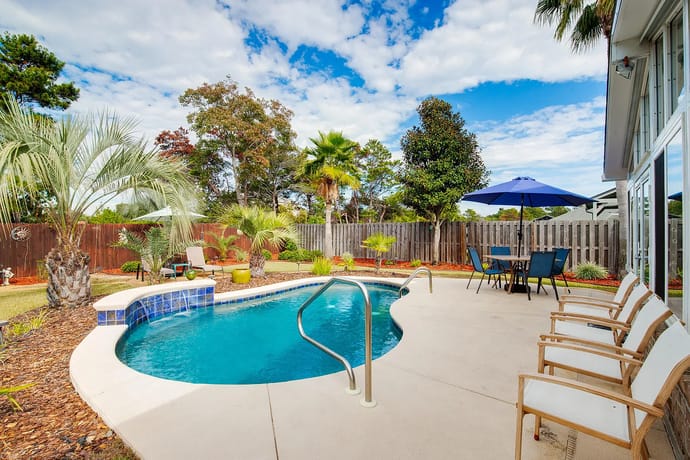
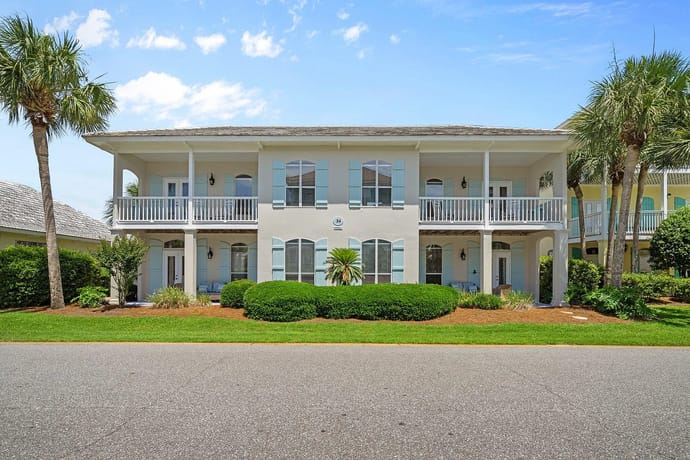
Our Miramar Beach rental has 4 bedrooms, a private pool, sleeps up to 8 guests, and starts from $225/night — centrally located between the western bay flats and the Gulf beach. Our Destin rental has 3.5 bedrooms, is pet-friendly, sleeps up to 12 guests, and starts from $110/night — close to HarborWalk and the East Jetty launch ramps.