On a new moon night in August, the Choctawhatchee Bay side of Destin does something most visitors never find out about: the water glows. Sweep your hand through the dark surface and it erupts in electric blue-green light that trails every movement — your fingers, the paddle blade, the boat wake. The glow is real, it’s natural, and on the right night it’s vivid enough to light up a circle of water around your kayak.
This guide covers the science behind bioluminescence, the exact timing that makes it visible, the backbay locations with the strongest concentrations, how the guided kayak tours work, and everything you need to find it yourself without a guide.

What Is Bioluminescence and Why Does Destin Have It?
Bioluminescence in coastal water is caused by microscopic organisms called dinoflagellates — single-celled marine plankton that produce light through a chemical reaction when physically disturbed. The primary species responsible for glowing Gulf Coast bays is Noctiluca scintillans, sometimes called “sea sparkle,” which accumulates in warm, nutrient-rich protected water during summer and fall.
The reaction is similar to how fireflies light up: a protein called luciferin reacts with oxygen through an enzyme called luciferase, releasing energy as blue-green light rather than heat. When water is agitated — by a paddle stroke, a passing hand, a swimming fish, or even a breaking wave — the dinoflagellates fire their bioluminescent response for a fraction of a second. Dense concentrations produce the glowing trails visible from the surface.
Why the Destin area specifically? The Choctawhatchee Bay — the large protected estuarine bay on the north side of the barrier island — creates near-ideal conditions. It’s warm (water temperatures reach 86–90°F by August), sheltered from Gulf wave action, and contains the nutrient-rich brackish-water mix that dinoflagellate populations thrive in. The bay’s tidal creeks and backwater channels, especially where fresh and salt water meet, often hold the highest concentrations.
One important distinction: bioluminescence in Destin is a bay phenomenon, not a beach phenomenon. The open Gulf can have occasional bioluminescence visible in breaking waves on dark nights, but the dense, reliable concentrations that make kayak tours worthwhile happen on the protected bay side — the Choctawhatchee Bay, its tidal creeks, and the coastal dune lakes of the 30A corridor to the east. If you only spend time on the Gulf beach, you’ll likely miss it entirely.

When to See Bioluminescence in Destin: Season and Moon Phase
The bioluminescence season in northwest Florida runs from roughly late June through mid-October, with the strongest and most reliable activity from late July through September. Two variables drive everything: water temperature and the lunar calendar.
Water temperature: Dinoflagellate populations bloom when water warms above 80°F and reach the highest densities above 84°F. Choctawhatchee Bay hits these temperatures by late June and stays warm through early October. August and early September — when bay water peaks at 86–90°F — typically produce the densest and most visible blooms of the year.
Moon phase — the single most important variable: A full moon washes out bioluminescence almost completely. The ambient lunar light makes the faint natural glow invisible to the naked eye. The best nights are the four to five nights centered on the new moon, when the sky is genuinely dark. Even a half-moon significantly reduces visibility.
How to check: timeanddate.com/moon/usa/destin-florida shows the complete lunar calendar for Destin. Plan your kayak tour or DIY outing to fall within the new moon window — roughly three nights before through four nights after the new moon. That’s about a week of good opportunity each month.
- Best months (in order of reliability): August › Late July › September › Early October › Late June
- Avoid: Full moon nights in any month; nights immediately following heavy rain (freshwater runoff dilutes concentrations); periods with active red tide (which kills dinoflagellates — check FWC’s red tide map at myfwc.com before planning a bioluminescence trip specifically)
- Weather: Calm winds mean calmer water, which makes the glow more visible. Clear nights are better than overcast. Check the National Weather Service marine forecast for Choctawhatchee Bay before heading out.
One useful calibration: Get Up And Go Kayaking (the primary guided tour operator in the area) schedules their bioluminescence tours specifically around the lunar calendar. If you’re unsure whether your travel dates fall in a good window, check their booking calendar — if bioluminescence tours are listed on your date, you’re in a viable window.

Where to See Bioluminescence Near Destin
Choctawhatchee Bay and its connected tidal creeks are the primary bioluminescence location. The bay covers roughly 200 square miles of protected water, but the most reliable concentrations tend to be in the sheltered, dark backwater areas — far from marina and resort lights that wash out the glow.
- Choctawhatchee Bay (general): The entire bay system is the search area. The darker and more sheltered the cove or creek you can reach, the better. The northwest shoreline near Niceville and Rocky Bayou tends to hold good concentrations and is away from Destin’s resort lighting.
- Rocky Bayou State Park (Niceville, ~30 min from Destin): Has its own protected bayou access with minimal light pollution. One of the better DIY launch options — the state park boat ramp gives access to dark, sheltered water. Entry is $3/vehicle. The bayou off the main park road can hold excellent bioluminescence on peak nights.
- Coastal dune lakes along 30A (~45 min east): Western Lake, Oyster Lake, and other rare freshwater-to-Gulf coastal dune lakes in the 30A corridor occasionally have very high bioluminescence concentrations when tidal connections bring in bay water. These can be spectacular but require local knowledge of lake access — check with kayak operators near Grayton Beach or WaterColor for current conditions on any given week.
- Backbay access near Miramar Beach: The bay-side launch points accessible from the Miramar Beach/Sandestin area give access to dark tidal creeks within a 15–20 minute paddle from shore. This is the area Get Up And Go Kayaking uses for most of its tours — well away from the Gulf-side resort lights.
- The Gulf beach (occasional): On very dark nights with high dinoflagellate concentrations, you may see brief pale blue-green flashes in breaking waves on the Gulf-side beach. It’s real when it happens but too inconsistent to plan around. Worth watching for on dark August nights regardless.
Key rule for any location: Distance from light pollution matters more than the specific spot. Paddle at least 10–15 minutes away from lit docks, marinas, and resort shorelines. Let your eyes fully dark-adapt (10–15 minutes in true darkness before you expect to see much). Then agitate the water.

Bioluminescence Kayak Tours: What to Book and What to Expect
Get Up And Go Kayaking is the primary guided operator for bioluminescence tours in the Destin/Miramar Beach area. They schedule tours specifically around the lunar calendar (new moon windows), know the current hotspots on the bay, and provide all equipment. If you’ve never kayaked at night before, the guided tour is the right call — routing through dark backbay water without local knowledge is harder than it sounds.
How their tours work:
- Tours depart after dark — typically 8:30 or 9pm in summer, adjusting later in the season as sunset moves earlier. Confirm your specific tour’s departure time when booking.
- Groups are kept small (typically under 10 people). The guide leads the group through sheltered backbay channels where bioluminescence concentrations are strongest that week.
- All equipment is provided: kayak or paddleboard, paddle, life jacket, and a dim safety light. No experience necessary — the guides manage inexperienced paddlers regularly.
- Duration: 90 minutes to 2 hours on the water, plus a pre-tour orientation.
- Cost: approximately $65–$75 per person. Confirm current pricing when booking; rates adjust seasonally.
What happens on the water: The guide launches the group onto dark bay water. For the first 10–15 minutes, eyes adjust to darkness. Once you’re far from light sources, the guide demonstrates — each paddle entry creates a swirling blue-green comet. A hand dragged through the water leaves a glowing trail. A dripping wet paddle held over the surface appears to rain sparks. It’s quiet, somewhat meditative, and consistently surprising even for people who’ve read about it beforehand.
How to book: Get Up And Go Kayaking lists tour availability and dates online. Book at least 3–5 days in advance during peak season (July–September); new moon nights fill up fast. If your preferred date is sold out, the 2–4 nights immediately after the new moon are often still excellent conditions and typically have more availability than the new moon night itself.
Other operators: A handful of additional paddle-sports shops in the Fort Walton Beach and Navarre area have added night paddle offerings. For guests staying in Destin or Miramar Beach, Get Up And Go Kayaking is the most established option with the most consistent scheduling. If you’re at Sandestin, ask the resort’s activity desk — some bay-side rental operators on Scenic Gulf Drive have begun offering informal night tours as well.

Seeing Bioluminescence on Your Own: DIY Tips
A guided tour guarantees a competent route, safety, and expert knowledge of where concentrations are that week. But you can experience bioluminescence independently with a kayak rental and the right preparation.
Step-by-step for a DIY bioluminescence paddle:
- Rent a kayak or paddleboard from a bay-side operator. Several rental companies along Scenic Gulf Drive and near HarborWalk Village offer hourly rentals. Standard rates run $20–$35/hour for a single kayak. Confirm the operator allows late-evening use or after-dark returns before booking — some close at dusk.
- Check the lunar calendar. Aim for the four-to-five-day window centered on the new moon. A half-moon or larger significantly reduces visibility. A full moon makes it essentially impossible.
- Time your launch for 30–40 minutes after sunset. You need full darkness, not dusk. On an August evening in Destin, that means launching around 9pm.
- Paddle away from resort and marina lights — this is the most important step. Even a mile of dark, sheltered bay water beats sitting close to lit docks. Head toward the darker shorelines and away from the resort corridor.
- Turn off your headlamp. Give your eyes 10–15 minutes to dark-adapt in true darkness. This step is non-negotiable — eyes that have been exposed to white light recently won’t detect dim bioluminescence.
- Agitate the water intentionally. Sweep your hand sideways through the surface, do a figure-eight, or slap the water gently. Watch the spot just after your hand passes through it, not during — the glow appears for a fraction of a second after the disturbance.
- Try dragging your paddle blade through the water: a moving paddle creates a long glowing comet tail behind the blade tip with each stroke.
What to bring:
- A red-filtered headlamp instead of a white one — red light preserves night vision while still letting you navigate. A cheap clip-on red LED works.
- Phone in a waterproof dry bag. Standard camera apps struggle to capture bioluminescence in real-time; long-exposure photography apps (like NightCap on iPhone) can get results if conditions are dense, but the experience is better absorbed in person than through a lens.
- Water and bug spray. Mosquitoes on calm backbay nights can be intense. Apply repellent before launching.
- Life jacket. Required in Florida for paddlers under 18 and strongly recommended for adults in dark open water.
Managing expectations: Bioluminescence intensity varies widely by year, week, and night. On a peak August night in a good bloom year, the glow is vivid enough to clearly see your hand moving from two feet away. On a marginal night, you may need to cup your hand just below the surface and stare hard. If you’re not seeing much, try paddling to a different spot — concentrations can vary dramatically between one channel and the next 100 yards away.
Red tide check: Before planning a bioluminescence trip, check the Florida Fish and Wildlife Conservation Commission’s Harmful Algal Bloom Monitoring page at myfwc.com. Active red tide conditions kill the dinoflagellates responsible for bioluminescence. The FWC map is updated weekly.
Stay Close to the Bay for Your Bioluminescence Night
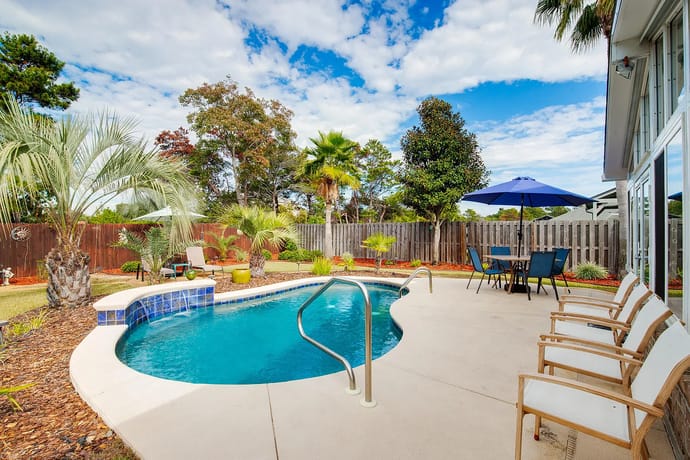
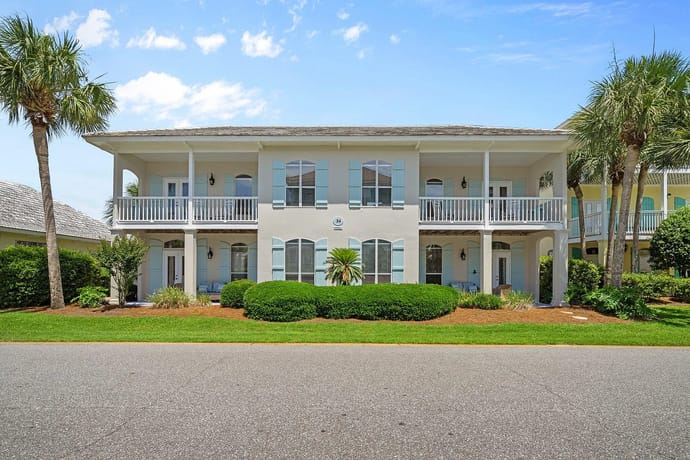
For a bioluminescence night, staying near the bay side matters — you want a short drive to the kayak launch, not a 40-minute detour after dark. Our Miramar Beach rental (4BR, private pool, sleeps 8, from $225/night) is close to the bay-access points and Scenic Gulf Drive kayak operators used by most guided tours. Our Destin rental (3BR + bunk room, sleeps 12, pet-friendly, from $110/night) is equally well-placed for bay-side paddling and has parking for multiple vehicles if your group is transporting rentals.