Most visitors to Destin follow the same pattern: beach from 9am to noon, lunch, pool in the afternoon, dinner, maybe a walk on the boardwalk. The beach clears out by 7pm and people head back to their rentals. What they miss is one of the Emerald Coast’s genuinely special experiences — the beach after dark.
Sea turtles hauling themselves onto the sand under a cloud-studded sky. Ghost crabs darting at the edge of your flashlight beam. Kayaks leaving trails of electric blue-green light through the dark bay water. Stars reflecting off a calm Gulf. The night beach here isn’t just a quieter version of the day beach — it’s its own thing.

Why the Destin Beach After Dark Is Worth Staying Out For
The obvious draw of a daytime Destin beach is the emerald water in full light. What the night beach offers is different: lower density, dramatically cooler temperatures, and encounters with the coast’s wildlife that don’t happen in the day. In July and August, the air temperature still sits around 82–84°F by 9pm but the feels-like temperature drops significantly without direct sun — warm enough to be comfortable, not hot enough to sweat just from standing still.
The beaches thin out fast after sunset. By 8pm, the chair rental setups are gone, the families with young children have headed in, and the stretch of sand that held 300 people at noon might have 20. The tide is audible again. You can see stars. The water, in good conditions, phosphoresces faintly at the wave breaks — a shimmer of pale light that’s subtle but real if you know what to look for.
The night beach also has a different cast of characters. Ghost crabs emerge from burrows near the dune line and sprint toward the water. Shorebirds roost at the tideline. From late May through October, loggerhead sea turtles haul themselves up the sand to nest. Surf fishermen work the evening bite from beach access points. None of this happens at 11am.
The honest caveat: Do not swim at night in the Gulf. Destin’s lifeguards are off duty after hours, rip currents don’t stop at sunset, and visibility in the dark water is effectively zero. The night beach is worth experiencing; just experience it from the sand, not the surf. Shallow wading — ankle to knee depth, in a group, on calm nights — is what most people do. Anything deeper than that is a bad idea.

Sea Turtle Nesting Season: Late May Through October
If you’re on the Destin or Miramar Beach shoreline between late May and October, there’s a genuine chance of witnessing one of the more quietly extraordinary things a Gulf Coast beach produces: a loggerhead sea turtle emerging from the water at night to nest. Loggerheads are the dominant nesting species on the Florida Panhandle. They are federally protected, and the beaches here — both Okaloosa County (Destin side) and Walton County (Miramar Beach, 30A) — host documented nesting activity every year.
When it happens: Nesting peaks in June and July. Females emerge at night, typically between 9pm and 3am, and the process takes 60–90 minutes from crawl to crawl back. The female hauls herself above the high tide line, digs a chamber roughly 18–22 inches deep, deposits 80–120 eggs, covers the nest with sand, and returns to the Gulf. She may nest multiple times in the same season, returning every 10–14 days. Hatchlings emerge 45–60 days after laying, meaning hatchling activity runs mid-July through early October.
What to do if you see a nesting turtle: Stop where you are and don’t approach. Keep your distance — 30 feet at minimum, more is better. Extinguish any white flashlights or phone screens immediately; artificial light causes females to abort the nesting attempt and return to the water. If you have a red-filtered light, that’s acceptable at a respectful distance — red wavelengths are less disorienting to sea turtles than white or blue light. Do not touch the turtle, walk around her, or position yourself between her and the water. Just watch quietly from the side.
Organized turtle walks: Walton County Turtle Watch (waltonturtle.org) runs permitted guided turtle walks during nesting season. These typically run several nights per week starting in June; registration opens in advance. A guide with proper permits takes a small group to active nesting areas once monitoring identifies a female emerging. This is the responsible, authorized way to observe nesting — and the guide can position you correctly so you’re watching without interfering.
Marked nests: Once a nest is found, local volunteers mark it with stakes and tape and log the location. You’ll see these markers on the beach from June onward. Leave the area around marked nests alone. Disturbing a marked nest is a federal violation under the Endangered Species Act. If you see a nest that looks disturbed (animals digging, stakes knocked over), contact the Walton County Turtle Watch or Okaloosa County beach patrol.

Bioluminescent Kayaking: Glowing Water on Dark Nights
Bioluminescence is the emission of light by living organisms — in the context of Florida coastal water, primarily dinoflagellates (microscopic single-celled plankton) that flash blue-green when mechanically disturbed. Dip a paddle into a body of water with high dinoflagellate concentrations on a dark, moonless night and you see your paddle strokes glow. Drag your hand through the water: glowing trails. The effect is faint compared to famous bioluminescent bays in Puerto Rico or the Maldives, but it’s real and it’s genuinely striking the first time you see it.
Where to find it: The open Gulf rarely shows bioluminescence because wave action disperses the organisms. The protected bay waters — especially Choctawhatchee Bay and sheltered inlets along the Miramar Beach side — offer better conditions. Some seasons are stronger than others; concentrations peak in late summer through early fall (August–October) when water is warmest.
Get Up and Go Kayaking is the most consistently recommended operator for bioluminescent kayak tours in this area. They run guided tours specifically targeting bioluminescent conditions and can advise on timing based on current concentrations. Tours typically run in the 8–10pm window; plan for 1.5–2 hours on the water. Cost is approximately $65–85/person. Book at least a week ahead — these fill up quickly on weekends and availability depends on conditions.
Conditions that matter: A new moon (or early crescent) is the critical factor. The brighter the moon, the less visible the bioluminescence — you need darkness to see it. Check the lunar calendar before you book. Calm water amplifies the effect; choppy bay conditions make it harder to hold the kayak still enough to observe. The operator will cancel or reschedule if conditions are poor.
Self-guided version: If guided tours are booked out, some kayak rental operators allow evening bay rentals. A tandem kayak on a calm moonless night in a sheltered bay area with reasonable dinoflagellate concentrations can produce the effect, though without a guide you’re working with less knowledge of where the best concentrations are. Always wear a PFD and carry a white flashlight for safety — just keep it off when you’re trying to observe the water.

Night Fishing: Flounder, Surf Casting & Late-Night Charters
Nighttime fishing is a legitimate Destin tradition, and for a good reason: several of the most sought-after species actively feed after dark. The pier lights, the reduced boat traffic, and the cooling water temperatures change the bite in ways that day fishermen miss entirely.
Destin Fishing Pier at night: The pier on Okaloosa Island (Fort Walton Beach, roughly 15 minutes west of Destin) is one of the better night fishing options in the area. Pier lights attract baitfish, which attracts everything else. Flounder, pompano, ladyfish, Spanish mackerel, and the occasional snook or tarpon work the pier lights from dusk into the night. The pier is open after dark with a small fee ($10–15/night for fishing; check current rates). Bring a cast net for live bait, medium-action spinning rods, and jigs or live shrimp.
Flounder gigging: This is a uniquely Gulf Coast night fishing method. Wade or use a flat-bottomed boat in shallow flats (1–3 feet of water), using a bright LED light to illuminate the sand bottom. Flounder are visible flat on the bottom and can be approached closely; historically they were speared (gigged), but modern catch-and-release-focused gigging uses a gig or dip net. The Choctawhatchee Bay flats near Destin are productive flounder habitat in summer. Check Florida FWC regulations on flounder season and bag limits before you go — they’ve varied in recent years due to conservation measures.
Surf casting at night: The beach access points along Scenic Gulf Drive and Henderson Beach State Park allow night surf fishing. Pompano and whiting work the surf at night on lighter tackle; snook are occasionally caught from the beach at night in the summer. Bring a headlamp, sand spike rod holders, and cut shrimp or sand flea for bait.
Night shark charters: A handful of Destin charter operators run nighttime offshore trips targeting sharks and swordfish. Swordfishing trips in particular are typically done at night — broadbill swordfish are almost exclusively nocturnal feeders. These are serious overnight trips running 10–15+ hours, priced at $1,200–$2,000 for a private charter group. Not for the casual angler, but for a group of dedicated fishermen, an overnight swordfish run out of Destin is a bucket-list Gulf Coast experience. Check with operators on HarborWalk for current availability and target species.

Ghost Crabs, Stargazing & Evening Beach Walks
Ghost crab hunting is one of those free, no-equipment-required activities that Destin vacation rental guests stumble onto and then talk about long after the trip. Ghost crabs — the pale, semi-translucent Ocypode quadrata — live in burrows above the high tide line during the day and emerge at night to scavenge along the waterline. They’re fast, they’re everywhere on the Destin beaches after dark, and spotting them is genuinely entertaining for all ages.
How to do it: Walk to the beach after 9pm with a red-filtered flashlight (absolutely critical — white light freezes them into their burrows and disrupts sea turtles; red light lets you see them moving without spooking everything). Walk slowly along the wet sand near the waterline. Ghost crabs will scatter at your approach — they can run up to 10 mph sideways and are genuinely fast. Look for them near the dune line too, where their burrow entrances are. Don’t grab or handle them — they pinch. Just observe.
Red-filtered flashlights: These are small, inexpensive, and available on Amazon for under $15. A red cellophane wrap over a regular flashlight also works but is less reliable. They matter significantly: they let you see the beach, protect sea turtle nesting activity, and keep ghost crabs visible and moving.
Stargazing from the beach: The Destin coastline has some light pollution from the resort corridor, but the open expanse of the Gulf provides a clear southern horizon that’s hard to match. In summer, the Milky Way band is visible from the beach on clear, moonless nights, rising from the southeast. The beach at Henderson State Park (away from the entrance lighting) or the less-developed sections of Miramar Beach along Scenic Gulf Drive offer the darkest sky conditions in the area. Jupiter and Saturn are particularly vivid when they’re in the southern sky in summer months. A basic star chart app helps identify what you’re seeing.
Evening beach walks: After sunset but before full dark, the beach has a particular quality that daytime visitors never experience: the crowd is gone, the light is low and warm, and the Gulf water at this hour often shows phosphorescent wave breaks — a faint shimmer in the breaking foam caused by the same dinoflagellates responsible for bioluminescence in the bays. It’s subtle and inconsistent, but on the right summer evening it’s visible at the waterline. Walk slowly, let your eyes adjust, and look at the wave foam just as it breaks on the sand.

Safety, Rules & What to Bring for the Night Beach
No swimming after lifeguard hours. This is the single most important safety point. Destin’s lifeguards operate on a seasonal schedule (typically 9am–5pm in summer) and are off duty at night. Rip currents, offshore drop-offs, jellyfish, and surf conditions that are manageable in daylight become dangerous when visibility is zero. Sheriff’s deputies patrol beaches at night in summer; unauthorized swimming after hours can result in fines.
Sea turtle lighting rules. Posted signs on the beach during nesting season outline lighting restrictions — no white lights aimed toward the Gulf between dusk and dawn in designated areas, especially near marked nests. Violations carry significant fines. The rule applies to flashlights, phone screens, and any other light source. Red lights are the exception — they’re turtle-safe at appropriate distances.
Beach bonfires. Open fires on the beach require a permit in both Walton and Okaloosa counties and are restricted to certain beach sections away from sea turtle nesting zones. Don’t build an unauthorized bonfire; the fines are real and the fire risk is serious in dry summer conditions. See our full beach bonfires guide for where and how to get permits.
Insects. July and August nights on the Gulf Coast mean mosquitoes and no-see-ums (biting midges). No-see-ums in particular are nearly invisible and their bite is disproportionately miserable. DEET-based repellent or picaridin spray is essential for evening beach time. Permethrin-treated clothing is even more effective. Don’t try to tough it out without repellent — it ruins the experience.
Jellyfish. Jellyfish are harder to spot in the dark and contact stings happen more easily at night. Check reports of jellyfish presence before going in the water; during heavy jellyfish weeks in late summer, even shallow wading at night is better avoided.
- Red-filtered flashlight — non-negotiable if you’re going near turtle nesting areas ($10–15 on Amazon; bring one per person)
- DEET or picaridin insect repellent — applied generously before you leave the rental
- Lightweight long sleeves and pants — better protection against insects than repellent alone
- Water shoes or sandals — sharp shells, buried debris, and the occasional horseshoe crab are harder to spot at night
- Waterproof phone case — if you’re on the water or near the surf in the dark
- Tide chart — know whether the tide is coming in or going out; a retreating tide is friendlier for beach walking
- Never go alone — always bring at least one other person for night beach activities
Base Camp for After-Dark Adventures
Late-night beach walks, turtle watches, and kayak tours all go better when you’re staying close to the action. Both of our rentals put you within minutes of Gulf beach access points and the bay-side launch areas used by kayak tour operators.
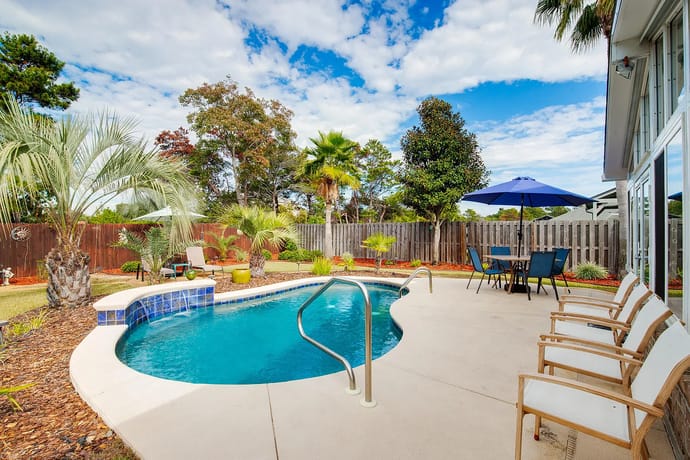
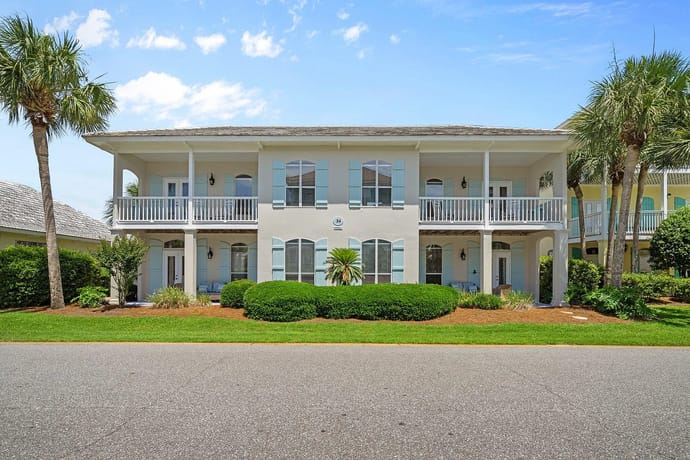
Our Miramar Beach rental has a private pool, 4 bedrooms, and sleeps 8 — from $225/night. The Walton County coastline where Miramar Beach sits is one of the more active sea turtle nesting areas on the Panhandle. Our Destin rental is pet-friendly, sleeps up to 12, and starts from $110/night — a 10-minute drive from the Destin Fishing Pier and easy access to both the Gulf and Choctawhatchee Bay launch points.