Destin's beaches are famously beautiful, but most visitors treat the sand as scenery rather than a place to actually practice. That's a missed opportunity. The wide, flat stretches of white quartz beach, the almost-always-calm early morning water, and the 280-plus sunny days a year make Destin a legitimately excellent outdoor yoga destination — one that the wellness-focused traveler hasn't fully discovered yet.
Whether you want to book a guided SUP yoga session on Choctawhatchee Bay, find the quietest beach access point for a solo sunrise flow, or locate a studio offering drop-in classes between beach days, this guide covers the full picture. Prices are 2026 figures. September through November — the shoulder season — is genuinely the best window for outdoor practice here, and the guide notes specifically when that matters.

Why Destin Is One of the South's Best Spots for Outdoor Yoga
The short answer: the physical environment is genuinely well-suited to it. The longer answer involves a few specifics that set Destin apart from most Gulf Coast and Atlantic beach destinations.
- The sand: Destin's beach is powdery white quartz sand — finely milled, soft underfoot, and dramatically more comfortable than the coarser or darker sand at most Florida beaches. It compacts slightly where the tide has recently pulled back, creating a firm, relatively flat surface that works well for standing poses without sinking. Inflexible joints appreciate this.
- Morning conditions: On most days from April through October, the morning hours (before 9am) are genuinely calm — low wind, glassy water, air temperatures in the low-to-mid 70s. The afternoon is a different story, with sea breezes picking up by 11am-noon. For any outdoor yoga that requires stillness or balance, morning is the window.
- The shoulder season advantage: September, October, and early November are when Destin yoga actually makes the most sense. Summer crowds and heat make early morning beach access competitive for space; by September, the crowds are largely gone (schools are back in session), the beach is quieter, and morning temperatures have dropped to a range that makes vinyasa or power yoga outdoors genuinely comfortable rather than a heat endurance test. The Gulf water stays warm through October (typically 78–82°F in September, 72–75°F in October), so post-practice dips are still very much part of the plan.
- Visual environment: This one is harder to quantify but easier to feel: the combination of white sand, emerald-green water, and open horizon creates a meditative visual field that studio yoga genuinely can't replicate. The color of the Gulf water here — caused by the quartz sand scattering light differently than darker sediment — is one of the few things in Florida that photographs accurately. In person, it's richer.
- Low commercial noise early: Unlike some Florida beach towns where vendors and umbrella rentals set up at dawn, Destin beach operations typically don't start until 8:30–9am. You have a meaningful window of genuinely uncrowded, vendor-free beach time in the early morning — which is when outdoor yoga actually works.
Wind Reality Check
Destin's afternoon winds are consistent enough to be a planning factor. The sea breeze typically arrives between 10am and noon, building to 10–18 mph by early afternoon. For any outdoor yoga that involves balance poses or a mat that might blow around, morning practice (before 9:30am) is considerably more pleasant than afternoon. SUP yoga on the bay is also more reliable in the morning when bay surface is glassy.

SUP Yoga on the Emerald Coast: On the Water, On Your Board
Stand-up paddleboard yoga — practicing yoga poses on an anchored or tethered paddleboard floating on calm water — is one of the more unusual things you can do in Destin, and it's significantly more accessible than it sounds. The experience is different from both studio yoga and regular paddleboarding in ways that reward even experienced practitioners with something genuinely new.
- Where SUP yoga happens: The Gulf is generally too active for SUP yoga — even a 1-foot wave can upend a board mid-pose. The better water is on the bay side: Choctawhatchee Bay, which borders Destin to the north, is protected from Gulf swell and stays glassy on most mornings. Several water sports outfitters operating out of the bay-side marinas, particularly around the Fort Walton Beach end of the bay and the protected coves near Niceville, offer guided SUP yoga sessions in calm-water zones. Ask any paddleboard rental operator in the area — most are familiar with local outfitters who run these sessions even if they don't offer them directly.
- What the class looks like: A typical guided session runs 90 minutes. The first 15–20 minutes are stability-focused: learning to stand, move, and shift weight on the board without falling. Then the instructor leads a modified vinyasa or yin flow adapted for the floating surface — poses that work on the board (cat-cow, seated twists, balancing poses, plank, and bridge are common; full inversions are not). The session typically ends with 10 minutes of floating savasana, which is a quietly profound experience — anchored in open water, looking up at the sky, board rocking slightly. Yes, you will probably fall in at some point. The instructors frame it as part of the practice, and in Gulf Coast water temperatures through October, it's not actually cold.
- Equipment specifics: Operators providing SUP yoga typically use inflatable boards that are wider and more stable than a standard performance SUP — specifically designed for yoga. These boards measure 34–36 inches wide (vs. the standard 30–32 inches) and are significantly more forgiving for balance poses. The difference matters: a first-time paddleboarder can hold warrior II on a yoga SUP board who would fall within seconds on a performance board.
- Cost and booking: Group SUP yoga sessions typically run $50–75 per person, with most sessions limited to 6–8 participants for instruction quality. Private one-on-one sessions are $120–160. Book at least 48 hours in advance during peak season (Memorial Day through Labor Day) — these sell out. In September–November, same-day or next-day booking is usually possible. Prices typically include board, paddle, and a personal flotation device.
- Physical requirements: No prior paddleboarding or yoga experience required, though some core strength helps with stability. The outfitters who do this regularly work with complete beginners. If you're uncertain about swimming confidence, confirm the water depth before booking — most bay sessions are in 4–6 feet of water, making accidental falls low-stakes.
- Best time to book: Morning sessions (typically departing at 7am or 8am) have the most reliable water conditions. If only afternoon sessions are available when you call, ask about weather-related rescheduling policies — afternoon bay conditions can be choppy enough to compromise the experience.
For context on paddleboard rentals generally (if you want to DIY a solo practice), the Destin kayaking and paddleboarding guide covers rental operators, bay launch points, and bay vs. Gulf paddling conditions.

Sunrise Beach Yoga in Destin: Best Spots and Timing
Solo sunrise yoga on the beach doesn't require booking anything. It just requires showing up before 7:30am, knowing which beach access points to use, and bringing the right gear for the surface. Here's the practical breakdown by location.
- Henderson Beach State Park (best overall): The most reliably uncrowded beach in the Destin area for early morning practice. Henderson Beach State Park — located on Scenic Highway 98 just east of downtown Destin — has a mile of undeveloped beach with no private rentals, no umbrellas going up early, and no commercial activity until mid-morning. The park technically opens at 8am, but the beach entrance is accessible earlier via the parking area; call the park for current hours before assuming early entry. Parking is $4/vehicle. The sand here tends to firm up more predictably near the tide line than busier beaches. Full Henderson Beach guide here.
- Miramar Beach public access points (most convenient): Several free public beach access points along Scenic Gulf Drive in Miramar Beach offer small parking areas and direct beach access. The stretch between Sandestin and the Grand Boulevard area has several access points that are uncrowded before 8:30am and offer flat, open sand. The trade-off is that umbrella renters do arrive by 8:30–9am in peak season, limiting the space available for a mat. In September through November, this window extends later and the overall beach is dramatically quieter.
- Topsail Hill Preserve State Park (most peaceful, furthest away): Located about 15 miles east of Destin on Route 30A, Topsail Hill has some of the most undisturbed beach on the Panhandle — dune lake system, no commercial vendors, and far fewer people year-round. It's worth the drive (about 25 minutes from central Destin or Miramar Beach) if you want a longer solo practice without the possibility of beach chair traffic arriving mid-session. Full Topsail Hill guide here. The park opens at 8am.
- Timing specifics: September sunrise in Destin is around 7:05–7:25am (varies through the month). October sunrise is 7:25–7:50am (DST changes in November). The window between 6:30am arrival and 9am beach chair setup is your usable solo practice window. In the off-season (November–March), this window extends considerably — sunrise can be as late as 6:55am and commercial beach activity doesn't pick up until 9–10am on clear days.
- Informal group classes: During summer, informal community yoga sessions do occur on Destin-area beaches — watch local studio Instagram accounts and the Okaloosa/Walton County community Facebook groups for pop-up beach yoga events. These are generally free or donation-based. In shoulder season, the formal pop-ups are rarer, but a search for "Destin beach yoga" on Eventbrite or Meetup around your travel dates may surface something. Some yoga instructors offer private beach sessions (private instruction ranges $80–150/hour) if you want a structured class experience without a group.
Mat on Sand: What Actually Works
A standard studio yoga mat on dry loose sand is frustrating — it shifts, the corners lift, and your hands slip into sand mid-pose. The best surface for beach yoga is the firmly packed, slightly damp sand just above the tide line. For longer sessions, a sand-resistant beach yoga mat (wider, lighter fabric, with corner pocket weights for sand anchoring) is worth bringing — REI, Manduka, and several beach-specific brands sell them. If you're practicing restorative or yin yoga (minimal weight-bearing through hands), a regular mat or beach towel on dry sand works fine.

Yoga Classes and Studios in the Destin Area
The studio yoga scene between Destin, Fort Walton Beach, Niceville, and the 30A corridor is more developed than most visitors expect. These are small, community-oriented studios — not franchise yoga chains — and they tend to welcome drop-ins warmly. Here's how to navigate them as a visitor.
- What's out there: The greater Emerald Coast has a cluster of yoga and pilates studios concentrated in Fort Walton Beach, Niceville, and along 30A (roughly 15–25 minutes from Destin). The studios vary in style — expect a mix of hot yoga, power vinyasa, yin/restorative, barre fusion, and some Pilates-yoga hybrid formats. Bikram and heated vinyasa studios tend to be busiest; yin and restorative classes have smaller enrollment and are easier to drop into.
- Drop-in rates and booking: Most area studios charge $18–28 for a drop-in class. Many offer a first-class deal for new visitors ($12–15 for first visit, or sometimes free). You'll find studios on MindBody — searching "yoga near Destin FL" in the MindBody app will return current schedules, availability, and the ability to book and pay in advance. Book 24–48 hours ahead for peak-season morning classes (6am–9am slots fill first); for shoulder-season travel (September–November), same-day booking is usually fine.
- What to look for when choosing: Check the studio's cancellation policy before booking (24-hour cancellation is standard; shorter policies may mean a charge if your beach day runs long). Also check class length — most drop-in classes run 60 minutes, with some 75 or 90-minute options. For a vacation schedule, the 60-minute format fits more cleanly around a beach day than a 90-minute commitment.
- Private and group instruction: Most local instructors offer private instruction — either in the studio, at your vacation rental, or on the beach. Private sessions at a rental property work particularly well for groups: a bachelorette group, a family reunion, a girls' trip where five or six people want a shared yoga experience without going to a public class. Rates typically run $80–150/hour for a private group session (same price covers the whole group, not per-person). Ask the studio directly — even if they don't advertise this service on their website, most instructors are willing to accommodate the request.
- Resort and hotel yoga: Several larger Destin-area resort properties — particularly in the Sandestin Golf and Beach Resort corridor — offer morning yoga classes for guests, either on the lawn, by the pool, or in a dedicated fitness/wellness space. These are typically free or heavily discounted for resort guests. If you're staying in a vacation rental (rather than a resort), you won't have access to these sessions unless you book through the resort's activity desk; call ahead to ask about day passes or class add-ons.
- 30A yoga studios: The 30A corridor (15–20 minutes east of Miramar Beach) has a well-developed wellness scene with several studios in Seaside, Grayton Beach, and Watercolor. If you're exploring 30A during your trip — and you should, the 30A day trip guide covers the full picture — adding a yoga class there is easy to work into the morning before the beach day starts. The 30A studios tend to lean toward wellness tourism and often have coastal or outdoor-view spaces.

Wellness Beyond Yoga: Spa, Meditation, and Recovery in Destin
Yoga is one entry point into a wellness-focused Destin trip. The surrounding ecosystem — spas, sound baths, float therapy, and the straightforward restorative effect of salt water and sun — gives you more tools than yoga alone.
- Day spa options: The Destin and Miramar Beach area has both resort-based spa facilities and independent day spas offering massage, facial, and body treatments. Resort spa services (Sandestin area properties have the most complete spa programs) typically run $120–180 for a 60-minute massage, plus gratuity. Independent day spas in Fort Walton Beach and Niceville offer comparable quality at $85–130. Booking 3–5 days ahead in peak season; same-week in fall. The full Destin spa guide covers the current options in more detail.
- Sound baths and guided meditation: Several yoga studios and wellness centers in the area run sound bath sessions — 60–90 minutes of guided relaxation accompanied by Tibetan singing bowls, crystal bowls, or gong. These are typically $30–45 per person and don't require any yoga background. They're surprisingly effective after a full beach day: the combination of sun, salt air, and physical activity leaves most people at a parasympathetic baseline that makes sound bath work quickly. Check the same MindBody search results you're using for yoga classes — studios that offer sound baths usually list them there.
- Float therapy: Flotation tanks (sensory deprivation tanks filled with 1,200 lbs of Epsom salt at body temperature) exist in the greater Fort Walton Beach area. A 60-minute float — complete sensory quiet, weightless in warm saline water — is a radically different experience from a massage or yoga class. It's worth trying once if you've never floated; the first 20 minutes of adjustment give way to a depth of mental quiet that most people find genuinely unusual. Rates run $60–90 for a 60-minute session. The Epsom salt is deeply restorative for sore muscles — a float after a few active beach days can feel remarkable.
- The salt water itself: This sounds simple but deserves saying: long submersion in the Gulf — specifically 20–30 minutes of easy floating or swimming in salt water — has measurable recovery effects for sore muscles and mild sun-stressed skin. If you've been practicing intensively, a long Gulf float in the afternoon is part of the recovery protocol. The water temperature in September–October (78–82°F) makes extended submersion genuinely comfortable.
- Post-practice nutrition nearby: The Miramar Beach and Destin area has a reasonable selection of smoothie shops, juice bars, and health-forward cafes that weren't common here five years ago. Expect matcha, cold brew, açaí bowls, and protein-based breakfast options in the Grand Boulevard at Sandestin area and scattered along Route 98. If you're coming off a morning practice, the grocery stores (Publix locations in both Destin and Miramar Beach) are well-stocked for smoothie components and protein-forward breakfast if you prefer to make your own at the rental.
The Gulf as Recovery Tool
Don't overlook the direct recovery benefits of Gulf swimming after yoga practice. The salt concentration in the Gulf of Mexico (average 36–37 parts per thousand along the Florida Panhandle) is high enough to provide some of the muscle-recovery benefits of Epsom salt baths, without the cost. A 15–20 minute swim or float after a morning yoga session — while the beach is still relatively quiet — is one of the genuinely nice combinations a Gulf Coast trip affords that an inland yoga retreat cannot.

What to Pack for Beach Yoga in Destin
The packing list for beach yoga is different from either a studio yoga bag or a standard beach bag. Here's what actually matters, especially for the September–November window.
- The mat situation: A standard 6mm studio mat can work if you practice on the firm, damp sand at the tide line — but it'll shift and collect sand in a way that's mildly annoying. Travel mats (1–2mm, lightweight, rolls tight) are easier to carry but offer less grip on sand. The real solution for a dedicated beach practice is a sand-resistant yoga mat (Manduka eKO Superlite, Jade Travel, or similar fabric-surface mats) that doesn't slide on sand and doesn't hold grit. If you're not traveling with yoga gear, towels on the compacted tide-line sand work fine for yin or gentle flows. For SUP yoga, the operator provides the mat surface — the board top has a traction grip that functions like a mat.
- Sunscreen logistics: Apply 20–30 minutes before your outdoor practice begins. For a practice that involves looking up at the sky — backbends, sun salutations, supine poses — facial sunscreen (SPF 50+ mineral formula) is worth prioritizing. Reef-safe sunscreen formulas are requested at Florida's state parks and are generally better for the Gulf water quality if you're swimming post-practice. Reapply after the swim.
- Water: More than you think. A sunrise yoga session on the beach in 73°F weather is still a sweat event; the combination of sun, humidity, and exertion in coastal Florida is more dehydrating than an air-conditioned studio class. Bring at minimum 20–24 oz of water per person for an hour-long practice. For SUP yoga, a water bottle goes in the dry bag or in the paddleboard's bungee cord.
- Dry bag: Required for SUP yoga; useful for beach yoga if you're placing your phone on the sand near the water. A 5L roll-top dry bag (around $15–25 at any Destin outdoor retailer or on Amazon) holds your phone, keys, and a few cards safely against splash, accidental tide advance, and the occasional rogue wave. Simpler alternative: a zip-lock bag inside a beach bag at a safe distance from the water.
- Seasonal clothing notes for September–November: September mornings in Destin are 68–75°F at the beach — warm enough for athletic swimwear but potentially cool enough for a light long-sleeve layer for the first 10–15 minutes of practice before you're warmed up. October mornings drop to 60–68°F, making a lightweight athletic long-sleeve or hoodie useful until mid-practice. November is genuinely variable (50–65°F at dawn) — layering becomes important and a wetsuit top is worth considering for late November SUP yoga. The afternoon and midday beach in all three months is still warm (75–85°F); the temperature drop is specifically the pre-dawn/dawn window.
- Leave these behind: Heavy mats (awkward to carry wet; a 5mm mat full of sand weighs significantly more than expected on the walk back). Shoes for the practice itself (bare feet on sand are stable enough; shoes just collect sand). Jewelry (salt water is hard on metal, and rings complicate handstands and plank poses).
For a full Destin packing list that goes beyond yoga, the complete Destin packing guide covers clothing, beach gear, and logistics for the full trip.
Yoga-Friendly Bases in Destin and Miramar Beach
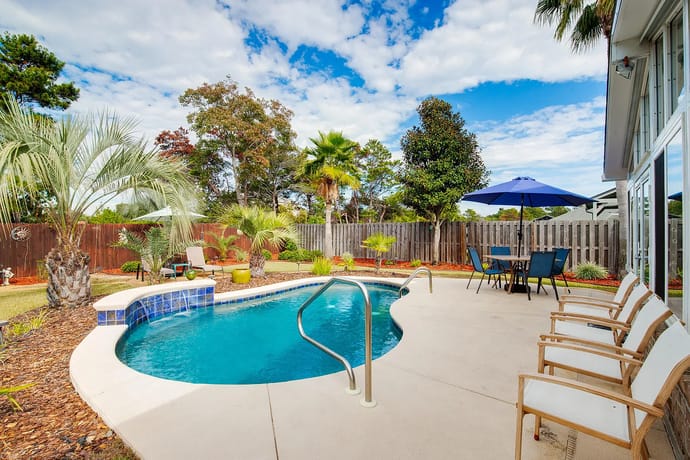
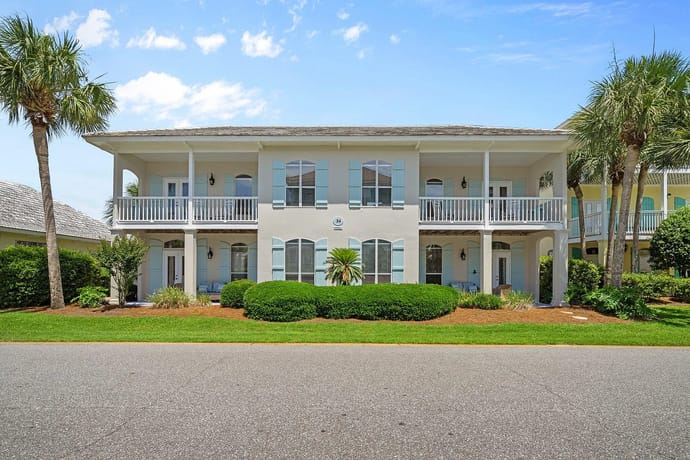
A vacation rental with a real kitchen and outdoor space changes the morning routine: you can return from a beach yoga session, rinse off, and make breakfast rather than hunting for a café at 8am. Our Miramar Beach house — 4 bedrooms, private pool, sleeps 8 — is a short drive from the Miramar Beach public access points on Scenic Gulf Drive and about 10 minutes from the 30A yoga studios corridor. From $225/night. Our Destin property — 3.5 bedrooms, pet-friendly, sleeps 12 — sits close to Henderson Beach State Park and the HarborWalk area, with outdoor entertaining space for a morning stretch before heading out. From $110/night.