Most Destin visitors stay in Destin. The ones who rent a car and drive about 30 minutes east discover something that doesn't quite exist anywhere else on the Gulf — 26 miles of state-protected beach threading through a string of small towns, each built with its own architectural identity and none of them taller than the trees. That's Scenic Highway 30A, and the beaches along it are some of the most beautiful and least-crowded you'll find on the Gulf Coast.
This guide covers the main beach communities along 30A in order from west to east, what's actually worth the stop at each one, the practical parking and access information, and how to structure the day from Destin or Miramar Beach.

What Makes 30A Different from Destin
The short version: no high-rises, no chain hotels, and strict development limits that have been in place for decades. South Walton County passed some of the most aggressive coastal protection rules in Florida in the 1990s, capping building heights and preserving vast stretches of coastal scrub and dune forest. The result is a stretch of coast that still looks the way the Florida Panhandle did before mass tourism arrived.
The sand is the same quartz-white as Destin — this is the same Gulf Coast geology, the same sugary fine texture underfoot. The water is the same turquoise-to-emerald color, with the same calm Gulf character. What changes is the scale. The beach communities along 30A are small by design. Seaside, the most famous of them, has a population of a few hundred permanent residents. Rosemary Beach and Alys Beach are similar — dense, walkable, and capped at a human scale that's genuinely unusual for a resort destination.
The other thing that makes 30A different is the coastal dune lakes — a geological feature found in only three places on earth (here, Madagascar, and parts of Australia). These freshwater lakes sit just behind the dune line, occasionally breaching and mixing with the Gulf during heavy rain events. Several 30A communities are built around these lakes, and some offer canoe and paddleboard rentals for lake access. They're worth seeing even on a drive-through visit.
The honest tradeoff: 30A is 30 to 45 minutes from Destin or Miramar Beach, parking at some access points is worse than Destin on summer weekends (fewer spaces, more competition), and the restaurant and bar scene — while genuinely good — is quieter than Destin Harbor. This isn't a nightlife destination. It's a beach, walking, and architecture destination.
For logistics help planning the drive, see our 30A day trip guide. For restaurant recommendations along the corridor, see 30A restaurants.

Grayton Beach — The Real One
Grayton Beach is where 30A starts to make sense. It's the oldest community on the corridor, founded in the early 1900s, and it has a character that the newer planned towns haven't fully replicated: genuinely local, a little rough around the edges, and anchored by a state park that is one of the best public beaches in Florida.
Grayton Beach State Park
Grayton Beach State Park charges $5 per vehicle and offers a level of natural beach that's rare along the developed Gulf Coast. The park preserves an unbroken stretch of dune habitat — towering white sand dunes, sea oats, scrub oaks, and coastal lakes — with beach access that isn't lined with umbrella rentals and jet ski operators. Western Lake, the coastal dune lake inside the park, has a canoe and kayak launch; rentals are available at the park concession. Parking fills on summer mornings by 10am, so arrive early or go mid-week.
The park campground books out months ahead for summer weekends. If you want to wake up on 30A rather than commuting from Destin, book the state park campground through the Florida state parks reservation system well in advance — walk-in availability is essentially zero from May through August.
Grayton Beach Town
The residential part of Grayton Beach is a quirky grid of small beach cottages, art studios, and a few bars and restaurants that look unchanged from 30 years ago. The Red Bar is a local institution worth the stop for its live blues music and eccentric interior — check their schedule before going because they have live music most nights and the lineup varies. Prices are mid-range, the food is solid, and it's one of the few places on 30A that feels genuinely earned rather than stage-managed for visitors.
Beach Access at Grayton
Beyond the state park, Grayton Beach town has several public beach access points with small lots. These fill fast on summer weekends. The local strategy: park on the street near the Red Bar or Eastern Lake Road early and walk to the beach — the town is small enough that nothing is far from the water.

Seaside and WaterColor — The Postcard Towns
Seaside is the one most people have seen without realizing it. Built starting in 1981 as an experiment in New Urbanist town planning, it became famous enough to be used as the set for the 1998 film The Truman Show, and images of its pastel clapboard homes and white picket fences circulate constantly as the idealized American beach town. It is as photogenic in person as it looks in photos.
Seaside Beach Access and Layout
Seaside's beach access is through narrow public corridors between the private Gulf-front homes. The town square sits on US-98 about a 3-minute walk from the beach — it has the famous Airstream food truck court (a rotating collection of vendors in vintage trailers) and an open-air amphitheater. The beach itself is wide, well-maintained, and has some of the most consistent sand and water quality on the corridor.
In summer, Seaside is one of the more crowded 30A beaches because it's the most accessible and best-known. Arrive by 9am on summer weekends to get a good spot. The parking situation is genuinely difficult on summer weekends — the town's central lot fills by mid-morning. The best solution is to park at WaterColor (a larger lot roughly half a mile east) and walk or bike to Seaside. The two communities connect via the multi-use trail.
WaterColor
WaterColor is a planned community immediately east of Seaside, built around a private lake and with Gulf beach access through a beach club available to resort guests and vacation rental guests within the community. The beach here sees fewer casual visitors than Seaside because it's harder to access from the street. The WaterColor Inn is a full-service hotel option if you want to stay in this stretch rather than commuting from Destin. The bike path between WaterColor and Seaside is some of the best riding on the corridor — flat, well-paved, and flanked by coastal scrub vegetation.
What to Do Beyond the Beach
Seaside's central square has shops, galleries, and an outdoor cinema screen — Films on the Square runs weekly in summer (check the Seaside town events calendar). The Airstream food truck mix varies by season; there's typically a solid spread of BBQ, tacos, burgers, and coffee. For sit-down restaurants along this stretch, see our 30A restaurant guide for current picks.

Rosemary Beach and Alys Beach — The Architecture Towns
The eastern end of 30A has two communities notable for architectural ambition. Rosemary Beach came first — a dense, walkable town built in a West Indies vernacular style, with white stucco buildings climbing over each other on a compact grid of pedestrian lanes. Alys Beach followed with an even more rigorous identity: all-white structures, curved rooflines, lush courtyard gardens — the whole community looks like it was transplanted from a Greek island.
Rosemary Beach
Rosemary Beach's town center is one of the most pleasant places to walk on all of 30A. The pedestrian lanes are lined with boutique shops, galleries, and restaurants with outdoor seating, and the whole town prioritizes walkers over cars. Beach access here is through a narrow boardwalk to the Gulf — the beach is wide and relatively quiet compared to Seaside because Rosemary Beach is farther east and most day-trippers don't make it this far. Parking is in a central lot within the community.
The retail in Rosemary Beach skews upscale — curated boutiques, jewelry, and home goods rather than beach novelties. Restaurants are more consistently polished as well. It's the most finished community on the corridor, which some people love and others find a bit precious. Both reactions are fair.
Alys Beach
Alys Beach is worth driving through even if you don't stop. The visual impact of the all-white architecture against the Gulf backdrop is striking and photographs beautifully. Community access is mostly limited to residents and guests, but there's a public beach access parking lot that puts you on the Gulf without entering the private portion. The beach here is one of the least crowded on the entire 30A corridor — far enough east, hard enough to reach casually, that it never gets the volume of Seaside or Grayton on a summer weekend.
A practical approach: park at Rosemary Beach, walk the town center, then drive the short distance east to Alys Beach to see the architecture and use the public beach access before heading back west toward Destin.

Blue Mountain Beach and Santa Rosa Beach — The Quieter Options
If the photogenic fame of Seaside and the architectural showmanship of Rosemary Beach and Alys Beach aren't what you're after, the western end of the 30A corridor has a different character. Blue Mountain Beach and the broader Santa Rosa Beach area are where 30A's year-round residents actually live, and the result is a more down-to-earth experience with less tourist infrastructure and less competition for parking and beach space.
Blue Mountain Beach
Blue Mountain Beach is named for the bluish hue that wild lupine flowers once gave to the sand dunes here — the lupine is mostly gone, but the name stuck and the dunes remain. The beach access point here is uncomplicated: a small public lot, a dune walkover, and a stretch of beach that on a Tuesday in September might have fewer than a dozen people on it. The dune elevation at Blue Mountain is the other notable feature — at roughly 65 feet above sea level, these are the highest natural dunes in Florida, and the view from the crest looking south over the Gulf is one of the best on the entire corridor.
The community itself is a quiet neighborhood of vacation homes and a handful of small restaurants and shops tucked into the scrub oak forest. There's no real town center — it's genuinely residential, which is exactly what makes it appealing to people who want to avoid the summer crowds at Seaside and Grayton.
Santa Rosa Beach and Topsail Hill
Santa Rosa Beach is more of an area designation than a specific town, covering a sprawling stretch of South Walton that includes both Gulf-front and bay-side development. The Grove at Grand Boulevard on US-98 is the practical hub for the western 30A corridor — full-service Publix grocery, pharmacy, restaurants, and retail in a walkable village format. If you're spending a week in this area and need to stock a rental kitchen, this is where you go.
Topsail Hill Preserve State Park, west of the main 30A towns on US-98, is worth flagging separately. It has some of the most intact coastal ecosystem remaining on the Emerald Coast: three coastal dune lakes, miles of undeveloped beach, and camping in both traditional sites and furnished bungalows. The beach here is among the most pristine and uncrowded on the entire Panhandle — the park requires visitors to take a tram from the entrance to the beach, which keeps foot traffic low. Parking fills on summer weekends; get there by 9am or book the tram in advance.
Point Washington State Forest
Between the 30A communities and Choctawhatchee Bay, Point Washington State Forest offers quiet hiking and paddling that most 30A visitors skip entirely. Trail access from multiple points along 30A and Eastern Lake Road connects you to miles of pine flatwoods and bayhead swamp habitat — a completely different ecosystem from the Gulf side. Worth the detour if wildlife viewing or quiet nature time is part of what you want from a 30A day.

Getting There from Destin and Miramar Beach
The drive from Destin or Miramar Beach to 30A is straightforward but requires a route decision. Most GPS apps route you on US-98 east to Inlet Beach, which drops you at the eastern end near Rosemary Beach and Alys Beach. That works well if you want to start at the architecture towns and work your way west. To start at Grayton Beach or Seaside, take US-98 east to County Road 393 (the main western entrance to 30A) — about 30–35 minutes from Miramar Beach.
Driving the Corridor
Scenic Highway 30A is a two-lane road posted at 25 mph through most communities, and it gets genuinely congested on summer afternoons — particularly between Seaside and Rosemary Beach. Plan your drive to avoid the 2–6pm window on summer weekends when everyone leaves the beach at once. Morning arrivals before 10am are dramatically smoother: better parking, more beach space, cooler air, and no traffic.
Driving the full 30A corridor from end to end is about 26 miles. Hitting multiple communities in one trip is very doable — the spacing between them is 3–10 minutes by car. A realistic day-trip from Miramar Beach: arrive at Grayton Beach State Park by 9am, spend the morning at the beach and coastal dune lake, drive to Seaside for lunch at the food trucks, browse Rosemary Beach in the early afternoon, and return to Miramar Beach or Destin by 4pm ahead of the worst traffic. That's about 6–7 hours and covers the highlights without feeling rushed.
Biking 30A
A paved multi-use path runs along much of the corridor, and bike rentals are available from several outfitters between Grayton Beach and Inlet Beach. Biking between communities — particularly the Grayton Beach to Seaside to WaterColor stretch — is one of the most enjoyable ways to experience 30A. The path is flat, well-maintained, and passes through sections of coastal scrub that you miss entirely in a car. Rental prices run $20–35 per day for a beach cruiser or hybrid. If you're bringing bikes from your Destin or Miramar Beach rental, the path enters from County Road 393 at the western end and runs continuously past Rosemary Beach.
Our Miramar Beach rental is a 25-minute drive from Grayton Beach — close enough to make 30A a genuine day trip on any day of the week, including rainy days when the weather improves by midday. The Destin rental is about 35 minutes. Both give you easy access to both the main Destin Harbor and the 30A corridor without choosing one or the other.
Best time of year for 30A: September and October are the locals' answer. The summer crowds are gone, water is still warm (78–82°F in September, 70–76°F in October), and you can often park at Seaside without circling the lot three times. Weekday visits in any shoulder season are dramatically better than summer weekends. See our best time to visit Destin guide for the full seasonal breakdown.
Stay Close to Both Destin and 30A
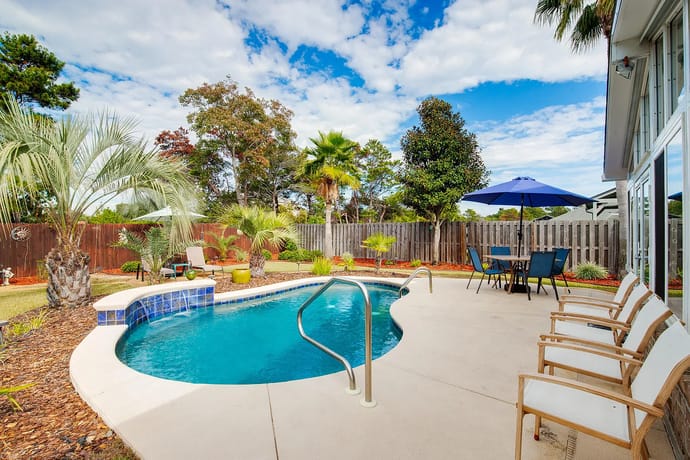
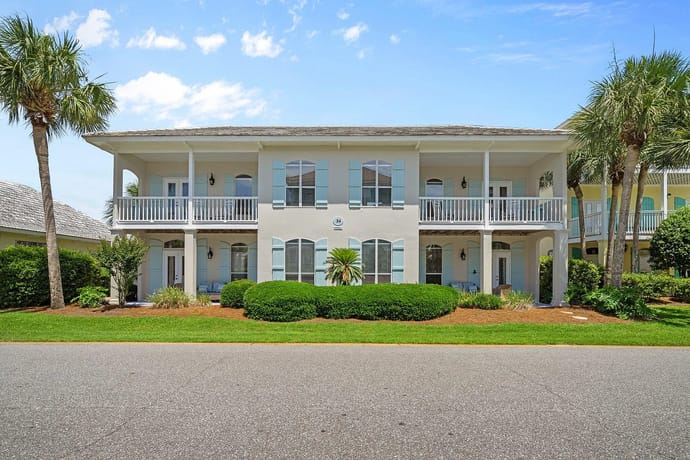
Both our vacation rentals put you within easy reach of 30A for a day trip while keeping you close to Destin Harbor, Crab Island, and the rest of the main Destin area. Our Miramar Beach rental sleeps 8 with 4 bedrooms and a private pool — from $225/night. Our Destin rental sleeps 12 across 3.5 bedrooms and is pet-friendly — from $110/night.